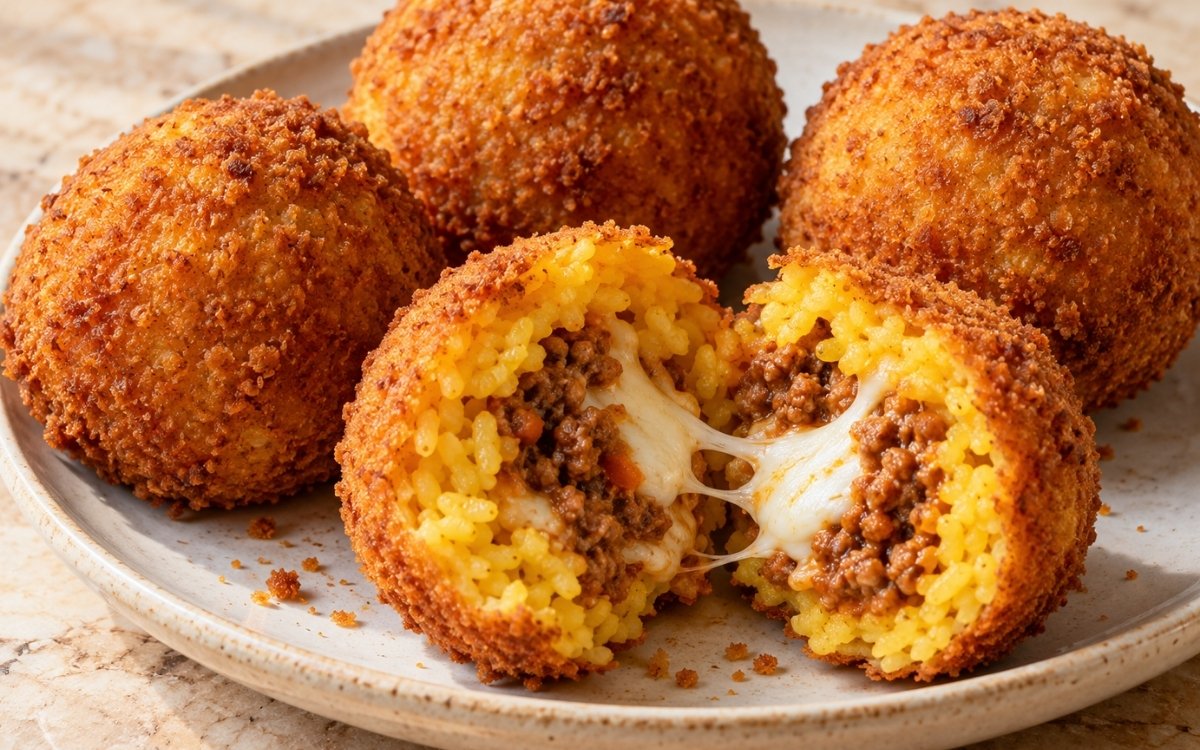
Ingredients
Method
Make the Rice
- Steep the saffron in 2 tbsp hot water for 5–10 minutes. In a wide pot, melt the butter over medium heat. Add the onion and cook for 4–5 minutes until soft but not browned. Add the rice and stir for 1–2 minutes so the grains are coated and slightly translucent on the edges. Add the saffron water, then gradually add the stock. Cook the rice until tender but still with a little structure, about 15–18 minutes, stirring often. The finished rice should be thick and relatively dry, not loose like a flowing risotto. Off the heat, stir in the grated cheese, salt and pepper. Let cool for 5 minutes, then mix in the egg yolks. Spread the rice onto a tray or large dish in an even layer and cool completely. The rice must cool fully before shaping. Warm rice is too soft and will not hold the filling cleanly. The rice should feel sticky and compactable, but the grains should still remain visible. Spread out, the rice loses heat quickly and evenly; left in the pot, the center stays warm long after the top has cooled.
Make the Meat Filling
- Heat the olive oil in a skillet over medium heat. Add the onion, carrot and celery and cook for 6–8 minutes until softened. Add the garlic and cook for 30 seconds. Add the beef and pork. Cook, breaking it up well, until browned and no longer pink. Add the tomato paste and cook for 1 minute. Deglaze with the white wine and let it reduce almost completely. Add the passata, bay leaf, a small splash of water or stock, salt and pepper. Simmer gently for 12–15 minutes until thick. If using peas, stir them in during the last 3–4 minutes. Remove the bay leaf and cool completely. The filling must be thick, concentrated and not watery. If it is loose, it will break the rice shell and cause leaking during frying. Don't stop the reduction early: any liquid left in the filling has nowhere to go in the hot oil except out through the rice shell.
Prepare the Cheese
- Cut the mozzarella or caciocavallo into 12 small cubes. If using mozzarella, blot it dry well with paper towels. Wet cheese creates steam and can split the arancini while frying. That thorough blotting removes surface moisture that would otherwise convert to steam inside the sealed rice shell, building pressure that risks cracking the arancino open during its time in the hot oil.
Shape the Arancini
- Set out the cooled rice, cooled meat filling and cheese cubes. Lightly wet your hands. Take about 85–95g rice and flatten it into your palm. Make a shallow cup. Add about 1 tbsp meat filling and 1 cube cheese in the center. Cover with a little more rice if needed and seal completely, shaping into a compact round ball. Repeat to make 12 arancini. Transfer to a tray and chill for 30–60 minutes. The filling must stay centered and fully enclosed by rice. Any weak thin spots will open in the oil. Press firmly enough that the balls are compact, but not so aggressively that the rice turns mashed. That deliberate balance — firm enough for real compactness, gentle enough to preserve the rice's own texture — is exactly what produces a shell strong enough to survive frying without ever turning the rice into paste.
Bread the Arancini
- Prepare 3 bowls: flour, eggs beaten with 2–3 tbsp water, and breadcrumbs. Coat each arancino first in flour, then egg, then breadcrumbs. Press the crumbs on evenly. Return to the tray and let them rest for 10–15 minutes. Even coating is important for an intact crisp crust. If needed, you can re-dip thin spots in egg and crumbs. That brief resting period after breading lets the egg wash begin properly binding the crumb coating to the rice shell beneath it, before the whole arancino faces the sudden shock of hot oil.
Fry
- Heat neutral oil to 170–175°C. Fry the arancini in batches for about 4–5 minutes, turning as needed, until evenly deep golden brown and heated through. Transfer to a rack or paper towel-lined tray. Do not overcrowd the fryer or pot. If the oil temperature drops too much, the arancini absorb oil and the crust softens. If the oil is too hot, the outside browns before the center is heated and the cheese melts unevenly. The crust should be a deep golden brown and audibly crisp; the center should be hot enough for the cheese to melt fully. Hold the oil in this range for every batch: below it the arancini soak up oil before they crisp, and above it the outside darkens before the filling is hot.
Serve
- Let rest for 5 minutes before serving. Finish with a little grated Parmesan and parsley if desired. Serve hot so the center stays creamy and molten. That brief rest lets the exterior's own residual heat settle slightly, making the arancini easier to handle, while still serving them hot enough for the cheese center to remain molten and stretchy.
Notes
Cool both the rice and the meat filling completely before you start shaping. Warm rice is simply too soft to compact and hold a filling cleanly, so rushing this step weakens every stage that follows.
Reduce the meat filling until it's thick and concentrated, with no loose liquid. Any residual looseness in that filling has nowhere else to go once sealed inside the rice shell except directly out through it during frying, which is exactly why the recipe treats this reduction as a real, non-negotiable step rather than a rough guideline.
Blot the mozzarella thoroughly dry before it goes into the center; it's a small step that protects the shell. Wet cheese converts to steam inside a sealed shell, and that steam builds real pressure with nowhere to escape, which is directly what causes an arancino to crack open unexpectedly in the hot oil.
Keep the oil temperature steady throughout frying; the crust's texture depends on it.