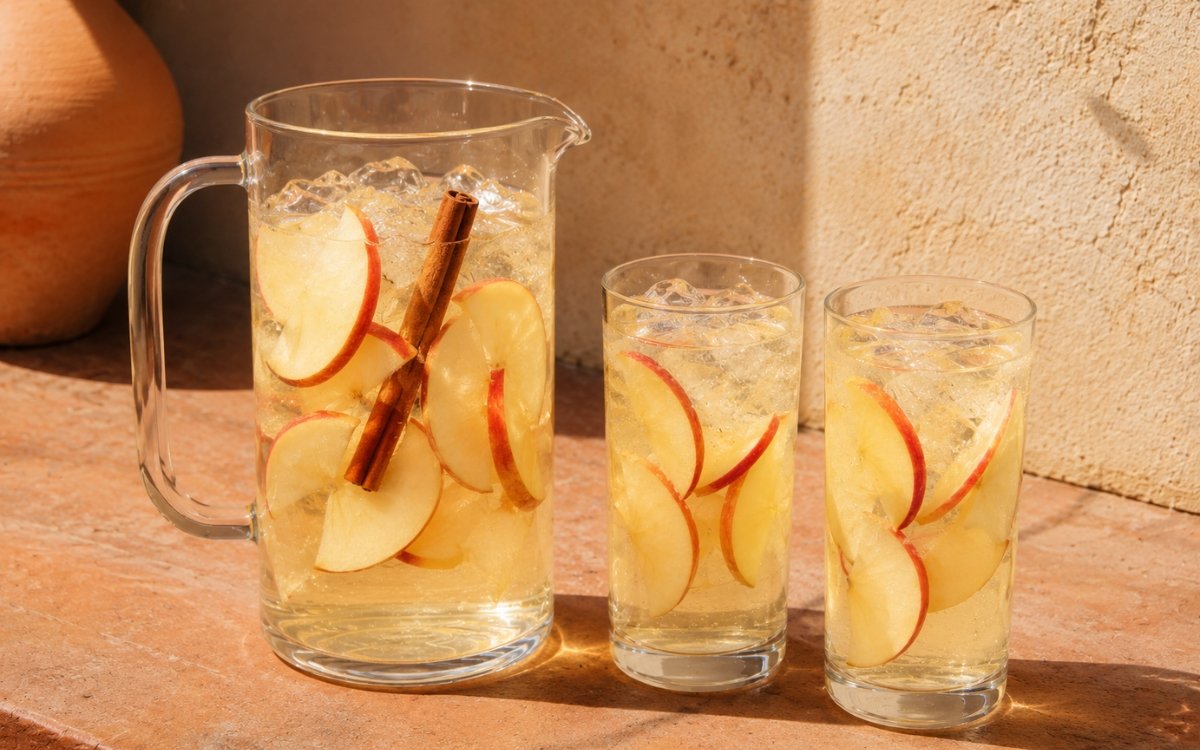
Ingredients
Method
Prepare and Lightly Mash the Apple Base
- Core the 2–3 apples and cut into rough 2–3cm cubes — skin on. Apple skin contains the highest concentration of the pleasant aromatic compounds and a small amount of natural colour contribution; skin-on preparation also marginally slows the oxidation browning that apple flesh is specifically prone to once cut. Add the apple cubes to the large pitcher. Using a muddler or the back of a large spoon, press each cube once — firmly enough to crack the flesh and release juice and fragrance without reducing the cubes to apple sauce. Apple's denser flesh compared to peach requires slightly more deliberate pressure; the visual indicator is cracked, juice-releasing pieces with the skin split at the press point. Apple's cell structure releases a specifically crisp, fresh, apple-ester aromatic compound that is distinct from apple juice's slightly cooked character — the cold-process preservation of these fresh apple volatile compounds is the preparation's specific quality goal. Apple oxidation is the specific quality concern unique to this preparation: once cut apple flesh is exposed to oxygen, the enzyme polyphenol oxidase converts phenolic compounds to quinones, producing the characteristic brown colour. The cold temperature of the pitcher and water significantly slows this reaction; the skin-on approach provides some limited barrier. If visual appearance is specifically important — for serving at a table or event where the pitcher's contents are visible — the optional small splash of lemon juice on the sliced garnish apples (not the muddled base) provides the acid needed to inhibit the oxidation enzyme without any detectable lemon flavour contribution at the minimal quantity.
Add the Cinnamon Sticks
- Add 1 or 2 cinnamon sticks to the pitcher alongside the mashed apple base. The quantity decision is the preparation's most important calibration choice. Ceylon cinnamon sticks (lighter brown, more delicate, more specifically sweet and floral) produce a softer, more floral cinnamon character at equivalent quantity compared to Cassia cinnamon sticks (darker, more assertive, more specifically warm and sharp). If using Ceylon cinnamon, 2 sticks is appropriate for a clearly present note; if using Cassia, 1 stick is sufficient.
Optional Honey
- Pre-dissolve any honey in warm water. Add to the pitcher. Apple's natural sugar content is moderate — lower than pineapple but higher than berries — meaning the minimum honey quantity (15g) is appropriate when used.
Build and Infuse
- Pour the 3 litres of ice-cold water into the pitcher. If preparing the apple slices with the optional lemon juice toss, toss 2–3 thinly sliced apples briefly with a very small amount (approximately 5–10ml) of fresh lemon juice and add immediately — the acid prevents oxidation browning on the sliced garnish pieces. Add the sliced apples to the pitcher. Stir gently once or twice. Cover and refrigerate for 1–4 hours. The infusion develops progressively: at 1 hour the apple character is soft and fresh with barely perceptible cinnamon warmth; at 2 hours both apple and cinnamon are more present; at 4 hours the preparation is at its most specifically apple-cinnamon aromatic within the pleasantly infused range. The cinnamon extraction continues throughout the infusion period — at 4 hours the 1-stick version is at its maximum pleasant concentration while the 2-stick version is approaching the upper edge of the comfortable range. After 4 hours, remove all apple pieces and cinnamon sticks. The cinnamon extraction in cold water continues as long as the sticks are present — there is no natural stopping point — meaning extended infusion beyond 4 hours progressively increases the cinnamon concentration toward the dominance level. The apple pieces oxidise progressively and turn the water slightly murky beyond the 4-hour point. Serve well chilled directly from the pitcher, or over ice.
Notes
Ceylon cinnamon (Cinnamomum verum, also called true cinnamon) versus Cassia cinnamon (Cinnamomum cassia or aromaticum, the standard supermarket cinnamon in most Western markets) produce noticeably different infused water results. Ceylon's cinnamaldehyde content is lower and its eugenol content is higher, producing a more specifically floral, more specifically sweet, more complex cinnamon character at any given quantity. Cassia's high cinnamaldehyde dominance produces a more immediately warm, more specifically sharp, more assertively spiced result. Ceylon cinnamon is preferable for the most refined version of this preparation; Cassia is more commonly available and produces a good result at the lower end of the quantity range.
The absence of citrus from this preparation is intentional and specifically reflects the apple-cinnamon combination's complete character. Lemon or lime as a flavour component would shift the character away from the specifically warm, sweet, autumnal direction toward a more mixed-citrus-spice result. The optional lemon juice for apple slice browning prevention is specifically a visual quality measure at a quantity (5–10ml in the entire pitcher) where it produces no detectable lemon flavour.