
Tamarind Chili Agua Fresca Mocktail
Deep amber tamarind, chili-salt rim, and lime over crushed ice. Tamarind is among the most specifically complex base ingredients in any mocktail in this collection — simultaneously deeply tart, earthy, and sweet with a specifically sticky, almost thick fruitiness that makes it the defining flavour of dozens of Mexican and South Asian preparations. The tamarind syrup built with brown sugar, fresh chilies, and a brief simmer that deepens and loosens the concentrate into the surrounding liquid; lime zest added off heat for the preserved aromatic brightness; lime juice stirred in while warm but not hot. The syrup intentionally bold — assertively sweet, sour, earthy, and spiced — because every millilitre will be diluted by crushed ice and club soda on its way to the glass and needs to carry through both. The chili-salt rim on part of the glass rather than the entire circumference — so each sip can be chosen: the clean, sparkling drink from the unrimmed side or the specifically savoury, spiced bite from the chili-salt edge. The Mexican-inspired agua fresca mocktail that is sharp, savoury, sweet-tart, lightly spicy, and dangerously easy to keep drinking.

Prep Time : 10 min
Cook Time : 5–8 min
Servings : 4
10 min
5–8 min
4
Ingredients
For the Tamarind Chili Syrup
• 120g light brown sugar — this one on Amazon
• 240ml water
• 80g tamarind paste or concentrate — this one on Amazon
• 1–2 fresh red chilies, sliced — seeds removed for milder heat, left in for full spic
• Zest of 1 lime
• 80–100ml fresh lime juice — start with 80ml, adjust to taste
For the Chili-Salt Rim
• 1 tsp chili powder
• 1 tsp fine sea salt
• ½ tsp light brown sugar — optional, for a sweet-salty-spiced rim
• Used lime halves or lime wedges, for rubbing the rim
For Serving
• 500–700ml chilled club soda or sparkling water — this one on Amazon
• Crushed ice
• Lime slices or wedges
This post may contain affiliate links. As an Amazon Associate I earn from qualifying purchases, at no additional cost to you.
Directions
- Build the Tamarind Chili Syrup
Add the 120g of light brown sugar, 240ml of water, 80g of tamarind paste, and the sliced fresh chilies to a small saucepan. Place over medium heat. Stir continuously as the mixture heats, working the tamarind paste into the surrounding water and sugar — tamarind concentrate requires this active stirring to fully loosen and distribute rather than sitting as a dense mass at the bottom of the pan. Bring to a gentle simmer and cook for 5–8 minutes, continuing to stir occasionally. Do not allow the mixture to reach an aggressive boil — vigorous boiling drives off the tamarind’s most volatile aromatic compounds and can develop a slightly scorched, flat note in a sugar-based syrup at the high temperature end. The goal is a steady, gentle simmer that deepens the tamarind’s character and fully dissolves the brown sugar into a unified, glossy syrup. Tamarind paste or concentrate — made from the dried pulp of the tamarind pod, a leguminous tree fruit used throughout Mexico, South Asia, and Southeast Asia — has a specifically complex flavour profile that makes it unlike any other souring agent in this collection. Its primary acids (tartaric acid and malic acid) produce a sharp, deeply sour character; its significant natural sugar content balances this with sweetness; and its unique aromatic compounds contribute the specifically earthy, slightly dried-fruit, almost smoky depth that makes tamarind immediately identifiable and irreplaceable. The brown sugar in this syrup specifically amplifies the tamarind’s own natural caramel-adjacent warmth in a way that white sugar’s neutral sweetness would not. - Add Lime Zest Off Heat and Steep
Remove the saucepan from the heat. Add the zest of 1 lime immediately. Cover and allow to steep for 10–15 minutes. The same principle applied across this collection: lime zest’s aromatic volatile compounds (primarily limonene and various terpene esters) evaporate within seconds at cooking temperature but infuse fully into a warm, covered liquid at off-heat steeping temperature. The 10–15 minutes of off-heat steeping with the chilies still present also extracts additional chili character into the deepening syrup. - Strain and Add Lime Juice
Strain the syrup through a fine-mesh sieve into a clean jug, pressing lightly on the tamarind and chili solids to extract maximum flavour without pressing so hard that the chili seeds’ bitter compounds over-extract. Discard all solids. Allow the strained syrup to cool for 5–8 minutes until it is warm but no longer hot — approximately 50–60°C. Stir in 80ml of fresh lime juice. Taste immediately. The syrup at this stage should taste specifically assertive — intensely sweet-sour from the tamarind, warm and building in heat from the chili, earthy and complex, and brightened by the lime. The flavour should feel almost too bold in isolation: this is the correct calibration for a concentrate that will be poured at 60ml per glass and then diluted by 120–150ml of club soda and crushed ice. A syrup that tastes pleasantly balanced before dilution will taste flat and mild in the glass. Adjust: if additional lime brightness is needed, add the remaining 20ml of lime juice; if the sweetness is insufficient for the tamarind’s assertiveness, the brown sugar quantity can be slightly increased in the next batch. Allow to cool completely to room temperature, then refrigerate until thoroughly cold. - Prepare the Chili-Salt Rim
Combine the 1 tsp of chili powder, 1 tsp of fine sea salt, and optional ½ tsp of brown sugar on a small plate — mixing with a finger to distribute evenly. The optional brown sugar is specifically the addition that shifts the rim from the standard Mexican chili-salt (Tajín-adjacent) character into something slightly more balanced — the sweetness specifically tempering the rim’s salinity and making each rimmed sip specifically more pleasant rather than simply salty and spiced. Take each glass and rub the rim partially — approximately half the circumference — with a used lime half or lime wedge, applying gentle pressure so the lime juice coats the glass rim consistently. Dip the rubbed section into the chili-salt mixture. The partial rim is the specific technique decision that separates a thoughtful rimmed drink from an aggressively over-rimmed one. Rimming the entire circumference of a glass means every single sip carries the chili-salt character regardless of preference — the rim dominates the experience. Rimming half the circumference allows the drinker to rotate the glass, choosing each sip between the clean sparkling drink from the unrimmed side and the specifically savoury, spiced hit from the chili-salt edge. This choice-availability makes the drink more interesting and more personal to each person’s preference in the moment. - Build the Glass and Serve
Fill each rimmed glass generously with crushed ice — crushed ice rather than cubed ice is the specific choice for this preparation. Crushed ice melts faster and chills the drink more immediately on contact, diluting the assertive syrup progressively as the drink is consumed rather than concentrating it heavily at first and then diluting it unevenly. The progressive dilution specifically works in this mocktail’s favour — the first sip is the most intensely tamarind and lime; subsequent sips become lighter and more sparkling as the ice continues melting through the glass. Pour 60ml of the chilled tamarind chili syrup over the crushed ice. If additional lime brightness is desired — recommended for those who enjoy vivid citrus — add 15–20ml of fresh lime juice directly into the glass. Top with 120–150ml of chilled club soda or sparkling water, poured gently. Stir once or twice with a bar spoon. Add a lime slice inside the glass against the ice and a lime wedge on the rim for squeezing. Serve immediately.
*Notes :
- Tamarind paste and tamarind concentrate are not always consistent between brands in their flavour intensity and acidity level. Tamarind paste — produced by dissolving compressed dried tamarind pulp in water — is thicker and slightly less concentrated than prepared tamarind concentrate. Both work in this recipe; if using tamarind concentrate (the slightly runnier, more processed version), start at 60g and taste before adjusting. If using fresh tamarind pods — available at some Asian and Latin grocery stores — crack the pods, remove the pulp from the seeds, and dissolve approximately 120g of raw pulp in 60ml of warm water before straining out the seeds and fibres to produce the equivalent of commercial tamarind paste.
- This agua fresca is specifically Mexican in inspiration — tamarind is one of the most widely consumed flavours in Mexican agua fresca culture alongside hibiscus (jamaica) and horchata. The combination of sweet, sour, earthy tamarind with chili and lime is the flavour profile of multiple Mexican street food preparations including tamarind candy, Lucas, and various agua preparada styles.
Why This Mocktail Works
This recipe works because the syrup is calibrated to taste assertively bold in isolation — the necessary starting point for a concentrate that will be diluted by 120–150ml of liquid per glass. The lime zest is added off heat to preserve its aromatic vivacity.
The chili-salt rim is applied to only half the circumference for the choice-per-sip drinking experience. And the crushed ice provides progressive dilution that makes the drink more interesting through its length rather than uniform from start to finish.
Ingredient Breakdown
Tamarind Paste (Simmered with Brown Sugar and Chili)
The primary complex flavour — tartaric acid’s deep sourness, natural sugars’ fruity sweetness, and unique aromatic compounds producing the specifically irreplaceable tamarind character.
Brown Sugar (Rather Than White)
The flavour-amplifying sweetener — caramel-adjacent warmth specifically complementary to the tamarind’s earthy depth.
Fresh Red Chilies (Simmered and Steeped)
The dual-stage heat extraction — oil-soluble capsaicin and aromatic compounds releasing into the surrounding syrup during both the simmer and the off-heat steep.
Lime Zest Off Heat and Lime Juice Warm-but-Not-Hot
The dual citrus preservation technique — zest steeped at protected off-heat temperature; juice added while warm enough to integrate but cool enough to retain fresh character.
Partial Chili-Salt Rim
The drinking choice architecture — half-rimmed glass allowing the choice between clean sparkling drink and savoury-spiced bite with each rotation.
Crushed Ice
The progressive dilution medium — faster-melting than cubed ice, providing a drink that evolves from bold to lighter as it is consumed.
Flavor Structure Explained
This Tamarind chili agua fresca follows a layered balance model:
- Sweet-sour earthy core (tamarind)
- Warm spiced depth (chili)
- Bright citrus lift (lime juice, zest)
- Savory mineral contrast (chili-salt rim)
- Crisp sparkling finish (club soda)
Tamarind defines the foundation with a uniquely complex balance of sweetness, tartness, and earthy depth that cannot be replicated by citrus alone. Chili adds a gradual warmth that builds across successive sips, giving the drink energy and persistence. Lime sharpens the profile with vivid acidity and aromatic citrus oils, making the tamarind feel brighter and more refreshing. The chili-salt rim introduces a savory, mineral edge that amplifies both the fruit and spice while reinforcing the drink’s distinctly Mexican character. Club soda finishes the structure with clean carbonation that lightens the palate and keeps the intense flavors refreshing rather than heavy.
Common Mistakes to Avoid
- Boiling the Syrup Aggressively – Hard boiling drives off aromatic compounds and can produce a flat, slightly scorched note. Always a gentle simmer.
- Adding Lime Juice While the Syrup Is Hot – Hot lime juice loses its fresh acidity and vivid character. Always wait until warm but not hot.
- Making the Syrup Too Mild – The syrup must taste assertively bold in isolation because it will be diluted significantly at serving. If it tastes pleasantly balanced before dilution, it will taste flat in the glass.
- Fully Rimming the Entire Glass – A full chili-salt rim means every sip is salty and spiced without the choice. Always partial — approximately half the rim.
- Using Cubed Ice Rather Than Crushed – Crushed ice provides the specific progressive dilution and immediate chill that makes the agua fresca format work correctly.
Variations
With Mango
Add 100g of ripe mango chunks to the saucepan with the tamarind, sugar, and chili — the mango’s tropical sweetness and fruitiness amplifying the tamarind’s own fruitiness while softening its sharpness. Strain with the other solids.
With Hibiscus
dd 5g of dried hibiscus flowers to the saucepan during the simmer — the hibiscus’s tart, floral character alongside the tamarind’s earthy depth produces a more complex, more deeply coloured syrup.
Smokier Version
Add ½ tsp of smoked paprika to the chili-salt rim mixture — the smoked paprika’s specific roasted, smoky character against the tamarind’s earthiness produces a particularly compelling rim-flavour.
Agua Preparada Style
Omit the club soda and serve the 60ml syrup with 15ml extra lime juice over crushed ice with just 60ml of still water — a more concentrated, less effervescent version closer to the Mexican street food agua preparada style.
Storage & Make-Ahead
Tamarind chili syrup can be refrigerated in a sealed jar for up to 2 weeks. The acidity from both the tamarind and lime helps preserve it, and the flavor continues to deepen and integrate over the first several days. It is one of the most stable make-ahead syrups in this collection.
The chili-salt rim mixture can be stored indefinitely at room temperature in a small sealed jar. Because it is a completely dry mixture, there is no meaningful risk of spoilage.
Once assembled, the drinks are not suitable for storage and should be served immediately.
Frequently Asked Questions
What is tamarind paste?
Tamarind paste is produced from the dried pulp of the tamarind pod — a tropical leguminous tree fruit used throughout Mexico, South Asia, and Southeast Asia for its specifically complex sour-sweet-earthy flavour. It is available as a thick paste or as a slightly runnier concentrate at Mexican and Asian grocery stores and increasingly at mainstream supermarkets. Its flavour is not approximated by any other ingredient — it is a specific flavour that the recipe requires rather than a technique that can be adapted to other acids.
Why brown sugar rather than white?
Brown sugar’s molasses content adds a caramel-adjacent warmth that specifically amplifies the tamarind’s own earthy, slightly caramelised depth. White sugar’s neutral sweetness sweetens without adding depth; brown sugar sweetens and simultaneously deepens the tamarind’s complexity.
Why partial rather than full chili-salt rim?
A full rim means every sip carries the chili-salt character regardless of preference and regardless of how the glass is held. A partial rim — approximately half the circumference — gives the drinker the choice of rotating the glass for a clean sip or a chili-salt sip with each drink. This choice-per-sip architecture makes the drink more interesting through its length.
Why crushed ice rather than cubed?
Crushed ice has significantly more surface area than cubed ice and melts faster, providing more immediate chill and progressive dilution through the drinking experience. The tamarind syrup’s boldness specifically benefits from this progressive dilution — the drink evolves from assertive to lighter and more sparkling as the ice melts, providing a more interesting and more varied drinking experience than uniform concentration throughout.
How bold should the syrup taste before dilution?
Significantly more assertive than the intended final drink — specifically bold enough to feel almost too sweet-sour-earthy in isolation. If it tastes pleasantly balanced at the syrup stage, it will taste flat and mild after being diluted by crushed ice and 120–150ml of club soda.
Nutrition Facts
( per serving )
Calories
~110 kcal
Protein
0 g
Fat
0 g
Carbs
29 g
Calories
~110 kcal
Protein
0 g
Fat
0 g
Carbs
29 g
Related Recipes
Related Recipes

Non-Alcoholic Limoncello Spritz Mocktail
Bright, aromatic spritz built around lemon oleo saccharum, fresh lemon juice, and crisp club soda.
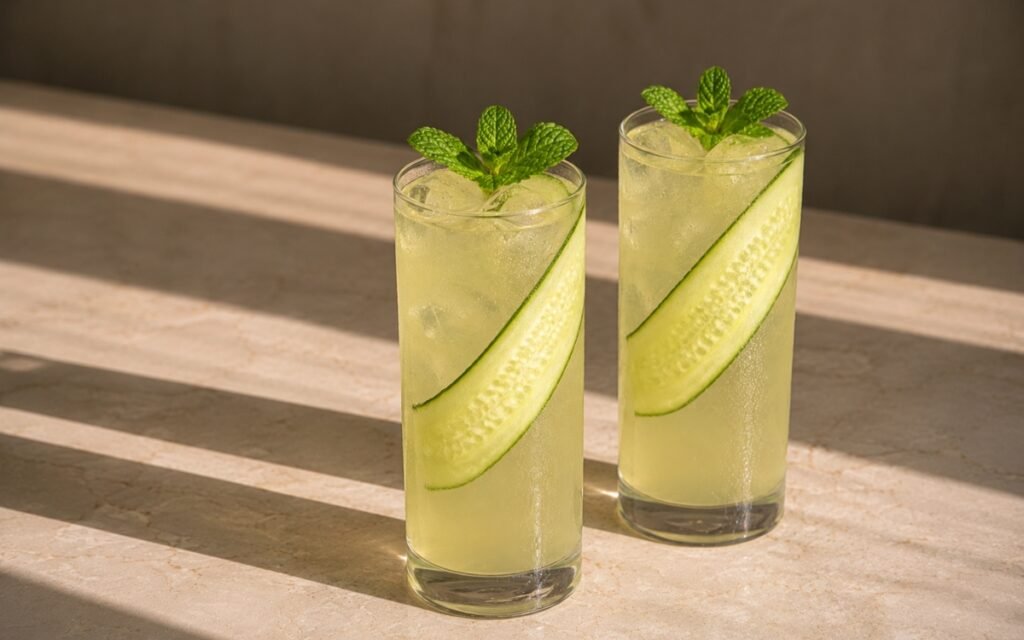
Cucumber Agua Fresca
Ultra-refreshing cucumber agua fresca with lime and subtle jalapeño heat, light, crisp, deeply hydrating green refreshment.
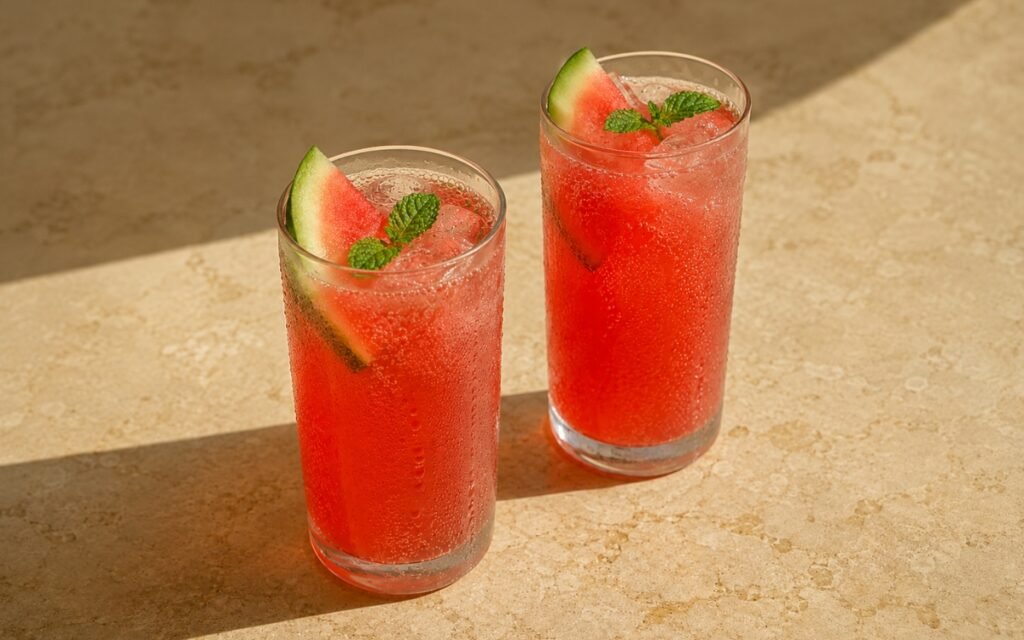
Watermelon Mint Fizz Mocktail
Blended strained watermelon with lime and cold-infused mint over club soda — vivid pink and cool.

You might also like
You might also like
Mango Green Tea Lemonade
Mango blended with honey, green tea at 75–80°C — chilled and layered with sharp lemonade poured over a spoon. Golden gradient, fruit-forward.
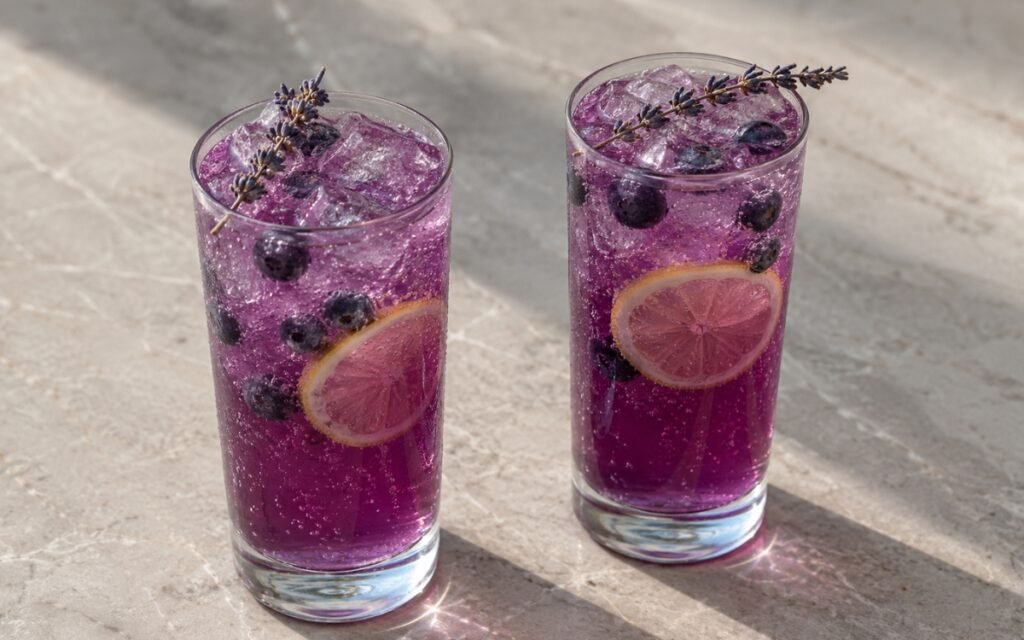
Blueberry Lavender Lemonade
Lavender steeped off heat for exactly 15–25 minutes — blueberries blended with lemon juice for vivid purple, club soda added right before serving. Deep purple and floral.
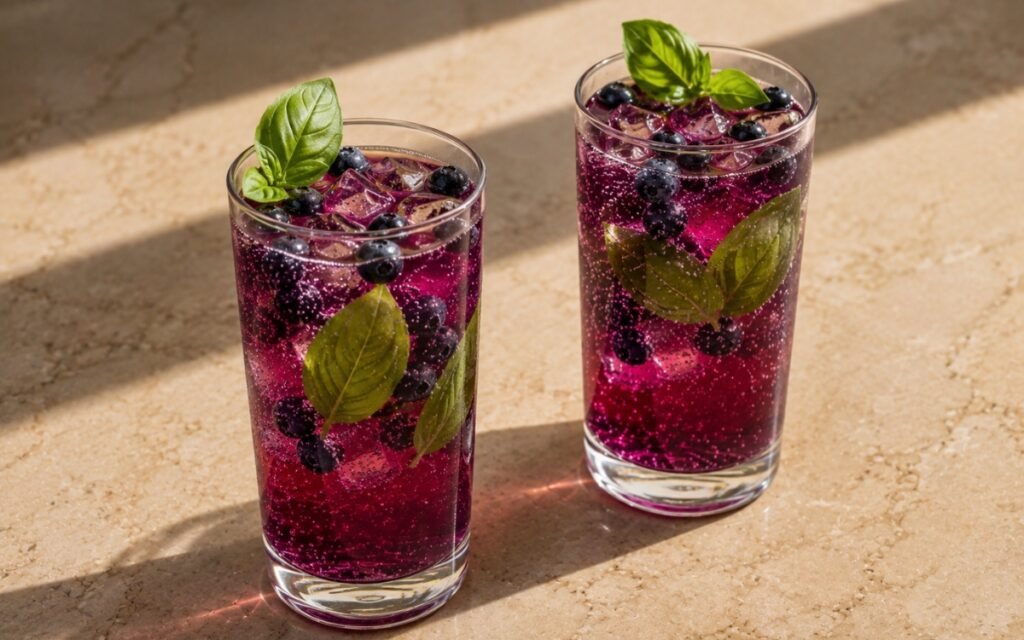
Basil Blueberry Sparkling Herbal Cooler
Concentrated white tea, basil blended into blueberries and strained — combined with the tea, finished with gentle club soda, chilled. Herbal and lively.


Tamarind Chili Agua Fresca Mocktail
Ingredients
Method
- Add the 120g of light brown sugar, 240ml of water, 80g of tamarind paste, and the sliced fresh chilies to a small saucepan. Place over medium heat. Stir continuously as the mixture heats, working the tamarind paste into the surrounding water and sugar — tamarind concentrate requires this active stirring to fully loosen and distribute rather than sitting as a dense mass at the bottom of the pan. Bring to a gentle simmer and cook for 5–8 minutes, continuing to stir occasionally. Do not allow the mixture to reach an aggressive boil — vigorous boiling drives off the tamarind’s most volatile aromatic compounds and can develop a slightly scorched, flat note in a sugar-based syrup at the high temperature end. The goal is a steady, gentle simmer that deepens the tamarind’s character and fully dissolves the brown sugar into a unified, glossy syrup. Tamarind paste or concentrate — made from the dried pulp of the tamarind pod, a leguminous tree fruit used throughout Mexico, South Asia, and Southeast Asia — has a specifically complex flavour profile that makes it unlike any other souring agent in this collection. Its primary acids (tartaric acid and malic acid) produce a sharp, deeply sour character; its significant natural sugar content balances this with sweetness; and its unique aromatic compounds contribute the specifically earthy, slightly dried-fruit, almost smoky depth that makes tamarind immediately identifiable and irreplaceable. The brown sugar in this syrup specifically amplifies the tamarind’s own natural caramel-adjacent warmth in a way that white sugar’s neutral sweetness would not.
- Remove the saucepan from the heat. Add the zest of 1 lime immediately. Cover and allow to steep for 10–15 minutes. The same principle applied across this collection: lime zest’s aromatic volatile compounds (primarily limonene and various terpene esters) evaporate within seconds at cooking temperature but infuse fully into a warm, covered liquid at off-heat steeping temperature. The 10–15 minutes of off-heat steeping with the chilies still present also extracts additional chili character into the deepening syrup.
- Strain the syrup through a fine-mesh sieve into a clean jug, pressing lightly on the tamarind and chili solids to extract maximum flavour without pressing so hard that the chili seeds’ bitter compounds over-extract. Discard all solids. Allow the strained syrup to cool for 5–8 minutes until it is warm but no longer hot — approximately 50–60°C. Stir in 80ml of fresh lime juice. Taste immediately. The syrup at this stage should taste specifically assertive — intensely sweet-sour from the tamarind, warm and building in heat from the chili, earthy and complex, and brightened by the lime. The flavour should feel almost too bold in isolation: this is the correct calibration for a concentrate that will be poured at 60ml per glass and then diluted by 120–150ml of club soda and crushed ice. A syrup that tastes pleasantly balanced before dilution will taste flat and mild in the glass. Adjust: if additional lime brightness is needed, add the remaining 20ml of lime juice; if the sweetness is insufficient for the tamarind’s assertiveness, the brown sugar quantity can be slightly increased in the next batch. Allow to cool completely to room temperature, then refrigerate until thoroughly cold.
- Combine the 1 tsp of chili powder, 1 tsp of fine sea salt, and optional ½ tsp of brown sugar on a small plate — mixing with a finger to distribute evenly. The optional brown sugar is specifically the addition that shifts the rim from the standard Mexican chili-salt (Tajín-adjacent) character into something slightly more balanced — the sweetness specifically tempering the rim’s salinity and making each rimmed sip specifically more pleasant rather than simply salty and spiced. Take each glass and rub the rim partially — approximately half the circumference — with a used lime half or lime wedge, applying gentle pressure so the lime juice coats the glass rim consistently. Dip the rubbed section into the chili-salt mixture. The partial rim is the specific technique decision that separates a thoughtful rimmed drink from an aggressively over-rimmed one. Rimming the entire circumference of a glass means every single sip carries the chili-salt character regardless of preference — the rim dominates the experience. Rimming half the circumference allows the drinker to rotate the glass, choosing each sip between the clean sparkling drink from the unrimmed side and the specifically savoury, spiced hit from the chili-salt edge. This choice-availability makes the drink more interesting and more personal to each person’s preference in the moment.
- Fill each rimmed glass generously with crushed ice — crushed ice rather than cubed ice is the specific choice for this preparation. Crushed ice melts faster and chills the drink more immediately on contact, diluting the assertive syrup progressively as the drink is consumed rather than concentrating it heavily at first and then diluting it unevenly. The progressive dilution specifically works in this mocktail’s favour — the first sip is the most intensely tamarind and lime; subsequent sips become lighter and more sparkling as the ice continues melting through the glass. Pour 60ml of the chilled tamarind chili syrup over the crushed ice. If additional lime brightness is desired — recommended for those who enjoy vivid citrus — add 15–20ml of fresh lime juice directly into the glass. Top with 120–150ml of chilled club soda or sparkling water, poured gently. Stir once or twice with a bar spoon. Add a lime slice inside the glass against the ice and a lime wedge on the rim for squeezing. Serve immediately.