
Peach Mango Smoothie
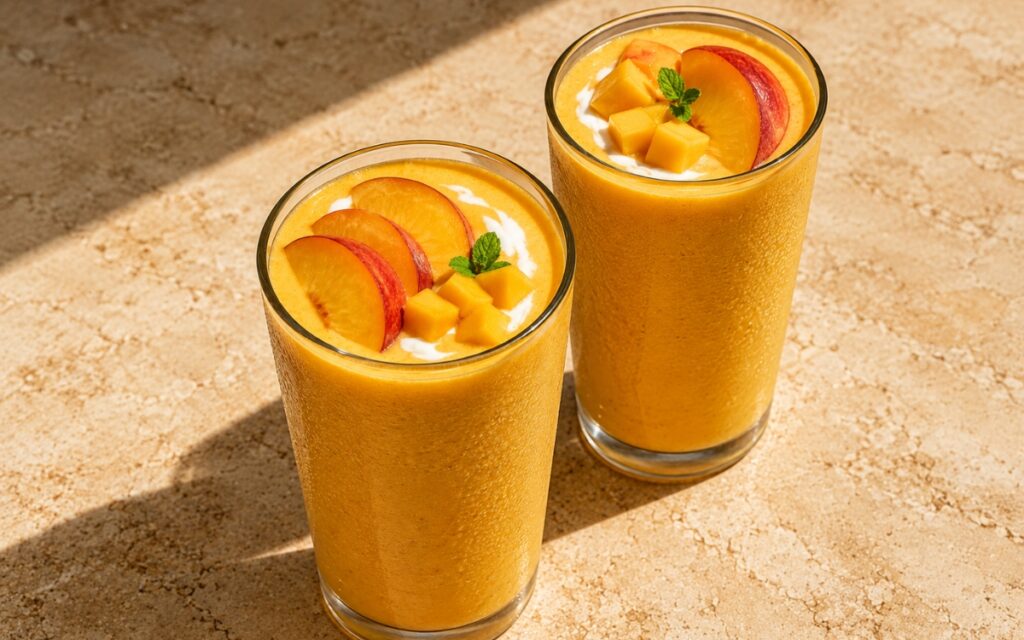
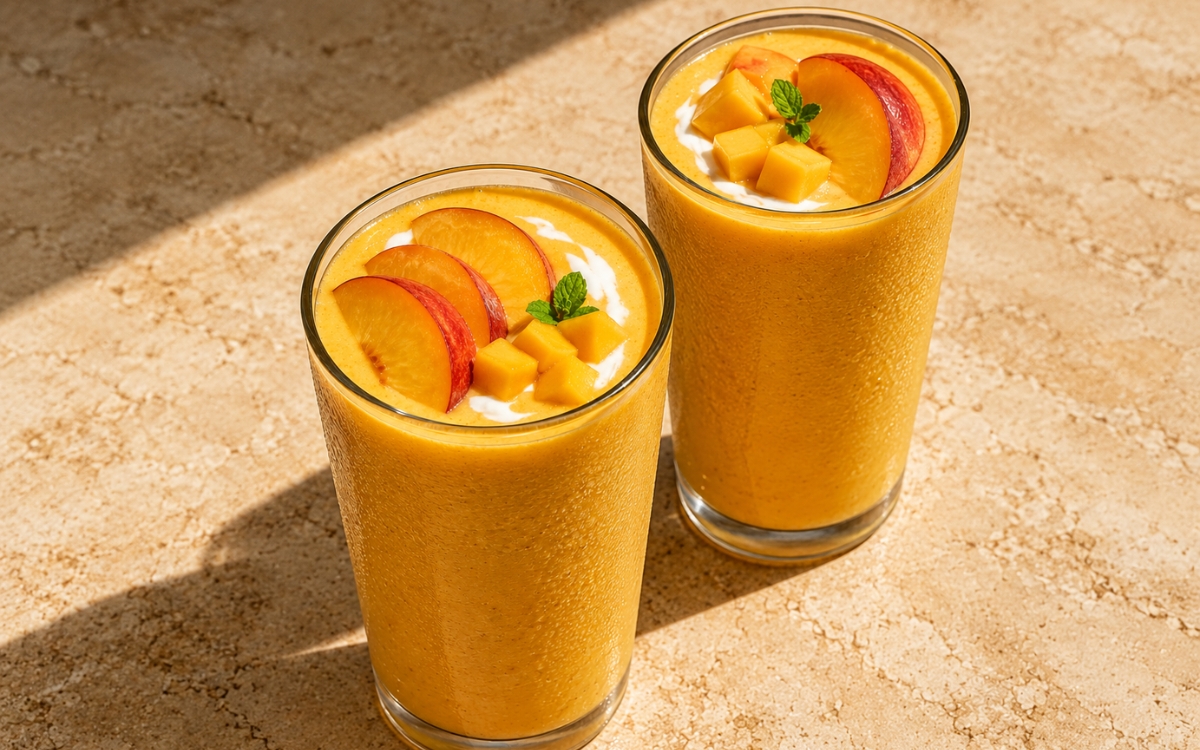
A thick, creamy peach mango smoothie with a silky orange-gold texture, blended from ripe peaches, sweet mango, yogurt, and a small amount of cold liquid, fruity, fresh, and naturally sweet, with enough body to hold a soft yogurt swirl and fruit garnish on top. Using genuinely frozen peach and mango, rather than relying on a lot of ice, is the technique this whole smoothie depends on for real thickness without watering down the flavour — frozen fruit keeps the flavour concentrated while delivering genuine cold and body, the same frozen-fruit-not-ice principle used elsewhere in this collection whenever a blended drink’s own thick, creamy texture depends on the fruit itself carrying the chill rather than diluting ice cubes. Blending first on low to break up the fruit, then increasing to high, is what builds a smooth, glossy texture without overworking the mixture too early. Including fresh lemon or lime juice is what sharpens the flavour and keeps the peach and mango from tasting overly sweet or flat. The payoff is a smoothie with real, silky contrast — thick, glossy, orange-gold body finished with a yogurt swirl, peach slices, and mango cubes.
Prep Time : 10 min
Total Time : 10 min
Servings : 4
10 min
10 min
4
Ingredients
For the Smoothie
• 300g ripe peach flesh, from about 3 medium peaches, peeled if desired and roughly chopped
• 300g ripe mango flesh, from about 2 medium mangoes, roughly chopped
• 200g Greek yogurt or thick plain yogurt
• 180–240ml cold milk, coconut milk, or orange juice
• 1–2 tbsp honey or maple syrup, optional, only if needed
• 1 tbsp fresh lemon juice or lime juice
• 1 tsp vanilla extract, optional
• 1 small pinch fine salt
• 1 to 1½ cups ice cubes, if using fresh fruit, or use frozen peach and/or mango for a thicker smoothie without dilution
For the Garnish
• 2–3 tbsp Greek yogurt
• Thin peach slices
• Small mango cubes
Directions
- Prepare the Fruit
Wash the peaches, remove the pits, and roughly chop the flesh. Peel and dice the mango. For the best thick texture, chill the fruit well, or freeze the peach and mango pieces for 1–2 hours until very cold and lightly firm. Use fully ripe peaches and mangoes. If the fruit is underripe, the smoothie will taste flat, fibrous, and less naturally sweet. That genuine ripeness carries directly through into the finished smoothie’s own flavour — underripe fruit simply doesn’t offer the same natural sweetness or smooth, less fibrous texture ripe fruit provides. - Build the Blender
Add the cold liquid, yogurt, lemon or lime juice, salt, and vanilla to the blender first. Add the peach and mango on top. If using fresh fruit, add the ice now. If using frozen fruit, start with the lower amount of liquid. That specific layering order gives the blades genuine liquid and yogurt to work with immediately, letting the denser fruit settle into a mixture already moving rather than sitting resistant above the blades. - Blend Until Smooth
Blend on low first to break up the fruit, then increase to high speed and blend until fully smooth, thick, and creamy. Stop and scrape down the sides as needed. The smoothie should look glossy and evenly orange-gold, with no obvious fruit chunks and only very tiny natural fruit flecks remaining. That low-then-high progression lets the fruit break down gradually before the blender is asked to fully smooth and homogenize the whole mixture at higher speed. - Adjust the Consistency
Check the texture. If it is too thick to blend or pour, add more cold liquid 1 tablespoon at a time. If it is too thin, add a few more ice cubes or a little more frozen fruit and blend again. Taste and add honey only if needed. Add extra liquid gradually. Too much at once will make the smoothie loose and unable to support the garnish. That deliberate, incremental approach to loosening protects the smoothie’s own structural ability to hold the yogurt swirl and fruit garnish still to come — a smoothie loosened too far would simply let that garnish sink in rather than sit visibly on top. - Serve
Pour into 4 glasses, about 250ml each. Top each with a small yogurt swirl, a few peach slices, and a few mango cubes. Serve immediately. That immediate serving captures the smoothie at its genuinely thickest and glossiest, before it has any real chance to thin and separate.
*Notes :
- Using genuinely frozen peach and mango, rather than relying on a lot of ice, deserves recognition as the technique most directly responsible for this smoothie’s real body without diluted flavour. The recipe’s own explicit note that frozen fruit “gives the thickest, creamiest smoothie and keeps the flavor concentrated” reflects a direct trade-off ice alone simply cannot match — frozen fruit chills and thickens at once, without ever watering anything down.
- Building the blender with liquid and yogurt first, then the fruit on top, deserves genuine attention as a real, functional technique rather than an arbitrary sequence. That order gives the blades genuine liquid to work with immediately, letting the denser fruit settle into an already-moving mixture rather than sitting resistant above the blades.
- Including fresh lemon or lime juice deserves genuine respect as the technique responsible for keeping this smoothie’s flavour properly balanced. The recipe’s own explicit note that this juice “sharpens the flavor and keeps the peach and mango from tasting overly sweet or flat” reflects real understanding of how directly that acidity brings the fruit’s own natural sweetness into sharper focus.
- Adding extra liquid only gradually, rather than all at once, deserves attention as the detail responsible for whether the finished smoothie can actually support its own garnish. The recipe’s own explicit warning that too much liquid at once “will make the smoothie loose and unable to support the garnish” reflects a real, direct structural consequence this careful, incremental approach protects against.
Why This Recipe Works
This recipe works because genuinely frozen peach and mango build real body and concentrated flavour without the dilution ice alone would introduce. The blender is loaded with liquid and yogurt first, letting the denser fruit settle into an already-moving mixture. Blending first on low, then high, lets the fruit break down gradually before full homogenization. Fresh lemon or lime juice sharpens the overall flavour, keeping the fruit from tasting flat, and loosening the texture only gradually protects the smoothie’s own ability to visibly hold its yogurt swirl and fruit garnish right through to serving.
Ingredient Breakdown
Frozen Peach and Mango
The critical technique — builds real thickness and concentrated flavour without the dilution ice alone would cause.
Liquid-and-Yogurt-First Blender Order
The critical technique — lets the denser fruit settle into an already-moving mixture rather than resisting the blades.
Low-Then-High Blending Progression
The critical technique — lets the fruit break down gradually before the mixture is fully homogenized.
Fresh Lemon or Lime Juice
The critical technique — sharpens the overall flavour, keeping the fruit from tasting overly sweet or flat.
Greek Yogurt
The critical ingredient choice — gives the most body and helps the finished smoothie actually hold its own garnish on top.
Gradual, Incremental Liquid Addition
The critical technique — protects the smoothie’s own structural ability to support the yogurt swirl and fruit garnish.
Flavor Structure Explained
This peach mango smoothie follows a layered balance model:
- Thick, glossy foundation (Greek yogurt, cold liquid, frozen fruit)
- Sweet, silky body (ripe peach, ripe mango)
- Sharp, brightening accent (fresh lemon or lime juice)
- Warm, rounding note (vanilla, optional honey)
- Fresh finishing garnish (yogurt swirl, peach slices, mango cubes)
Greek yogurt, cold liquid, and frozen fruit together provide this smoothie’s thick, genuinely glossy foundation. Ripe peach and mango contribute sweet, silky body, their frozen state building real thickness without dilution. Fresh lemon or lime juice adds a sharp, brightening accent that keeps the fruit’s own sweetness in balance. Vanilla and optional honey round out the flavour with a warm, gentle note. A final yogurt swirl, peach slices, and mango cubes finish each glass with a fresh, visually appealing garnish that completes this naturally sweet, creamy smoothie.
Common Mistakes to Avoid
- Relying on a Lot of Ice Instead of Frozen Fruit – This waters down the smoothie’s concentrated flavour. Always use frozen peach and/or mango for the thickest, most flavourful result.
- Using Underripe Fruit – This leaves the smoothie tasting flat, fibrous, and less naturally sweet. Always use fully ripe peaches and mangoes.
- Adding Too Much Liquid at Once – This leaves the smoothie too loose to support the garnish. Always loosen it gradually, tablespoon by tablespoon.
- Skipping the Lemon or Lime Juice – This leaves the smoothie tasting overly sweet or flat. Always include it to sharpen the overall flavour.
- Letting the Smoothie Sit Before Serving – This lets it thin and begin separating. Always serve immediately after blending.
Variations
Coconut Milk Version
Use coconut milk as the liquid, per the recipe’s own note on it being more tropical and richer, for a more indulgent, creamier finished smoothie.
Orange Juice Version
Use orange juice instead, per the recipe’s own note on it being brighter and fruitier but slightly less creamy, for a lighter, more citrus-forward result.
Spiced Version
Add a very small pinch of ground cardamom or ginger, per the recipe’s own optional suggestion, keeping it light so the peach and mango stay dominant.
Extra-Thick Frozen Version
Freeze both the peach and mango fully, per the recipe’s own guidance, for the thickest, creamiest possible finished texture.
Storage & Make-Ahead
Frozen fruit gives the thickest, creamiest smoothie here and keeps the flavour genuinely concentrated, so plan ahead and freeze the peach and mango pieces for 1 to 2 hours if time allows.
Choose your liquid based on the result you want: milk for something soft, creamy, and neutral; coconut milk for a more tropical, richer result; or orange juice for something brighter and fruitier, though slightly less creamy.
Greek yogurt gives this smoothie the most body and helps it hold the garnish on top, and lemon or lime juice sharpens the flavour, keeping the peach and mango from tasting overly sweet or flat.
If the smoothie turns out too tart, add a little honey; if too sweet, add a little more lemon or lime juice; and if the peaches are very juicy, start with less liquid than you think you need.
To avoid a watery result, use frozen fruit instead of relying on a lot of ice, and serve the smoothie immediately, since it’s best right after blending, before it has any chance to thin and separate.
Frequently Asked Questions
Why is frozen fruit preferred over using a lot of ice?
Frozen fruit gives the thickest, creamiest smoothie while keeping the flavour genuinely concentrated. Ice alone chills the drink but also dilutes it, working against the rich, naturally sweet character this smoothie depends on.
Why does the liquid and yogurt go into the blender before the fruit?
That order gives the blades genuine liquid to work with immediately, letting the denser peach and mango settle into an already-moving mixture rather than sitting resistant above the blades.
Why is fresh lemon or lime juice included in a smoothie made from sweet fruit?
That juice sharpens the overall flavour and keeps the peach and mango from tasting overly sweet or flat. Without it, the fruit’s own natural sweetness reads as noticeably less balanced.
Why does extra liquid need to be added so gradually rather than all at once?
Too much liquid added at once makes the smoothie loose and unable to support the yogurt swirl and fruit garnish on top. Gradual, tablespoon-by-tablespoon additions protect that structural ability.
Are there other classic peach, mango, or fruit-forward smoothie and drink recipes worth trying?
Raspberry Peach Smoothie and Strawberry Mango Smoothie both offer other classic fruit-forward smoothie directions worth exploring. Orange Mango Creamsicle Smoothie is also worth trying for a brighter, citrus-forward variation, and Peach Lemonade and Mango Coconut Smoothie Bowl offer other fresh, fruity drinks and bowls worth exploring.
Nutrition Facts
( Per Serving — 250ml )
Calories
~200 kcal
Protein
8 g
Fat
3 g
Carbs
38 g
Calories
~200 kcal
Protein
8 g
Fat
3 g
Carbs
38 g
Related Recipes
Related Recipes
-

Mixed Berry Protein Smoothie
A thick, creamy deep-pink mixed berry smoothie blended with berries, Greek yogurt and protein powder, finished with a yogurt swirl and fresh berry garnish.
-
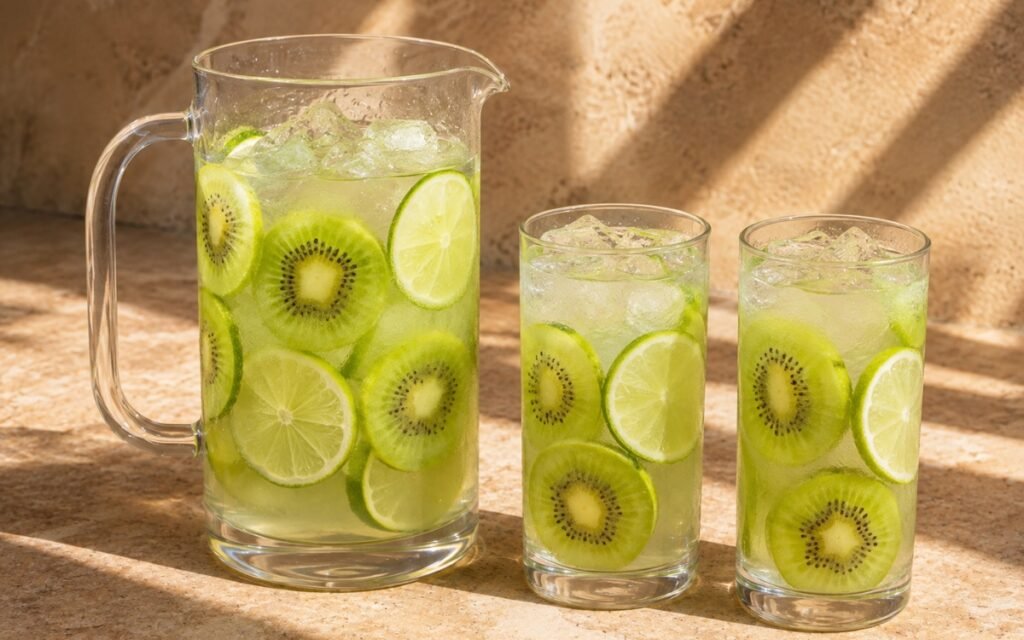
Kiwi Lime Infused Water
Thin peeled kiwi slices and fresh sliced lime infused cold for a very clean, light, bright, almost clear water.
-
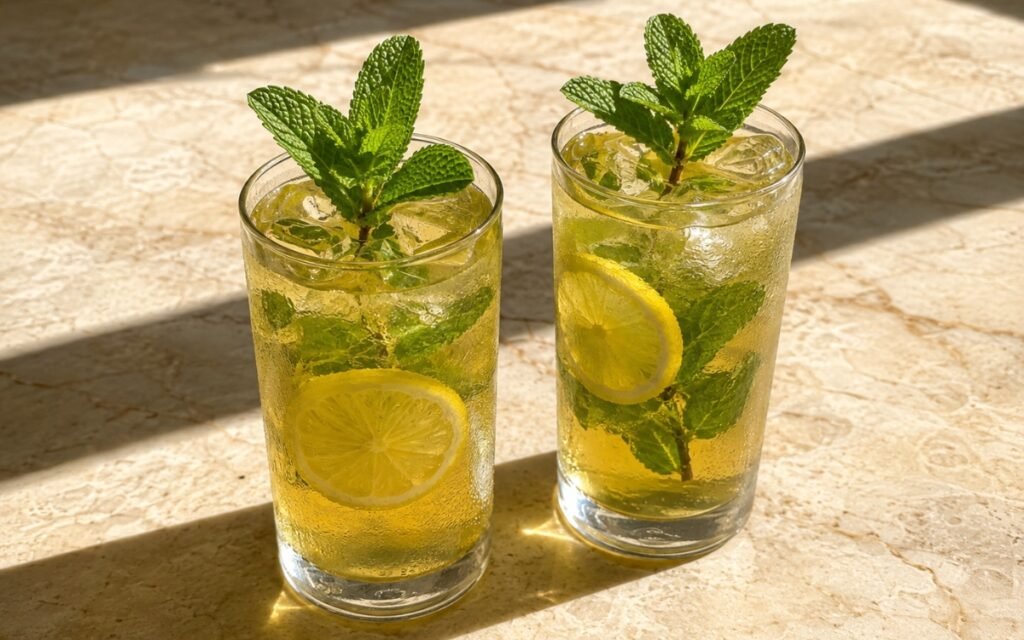
Jasmine Mint Iced Green Tea
Properly brewed jasmine green tea finished with a cold mint infusion and fresh lemon for a light, floral, clean-tasting iced tea.

You might also like
You might also like
-
Spinach Banana Greek Yogurt Smoothie
A creamy light green smoothie made with spinach, ripe banana, and Greek yogurt, finished with banana slices, yogurt, and spinach leaves.
-
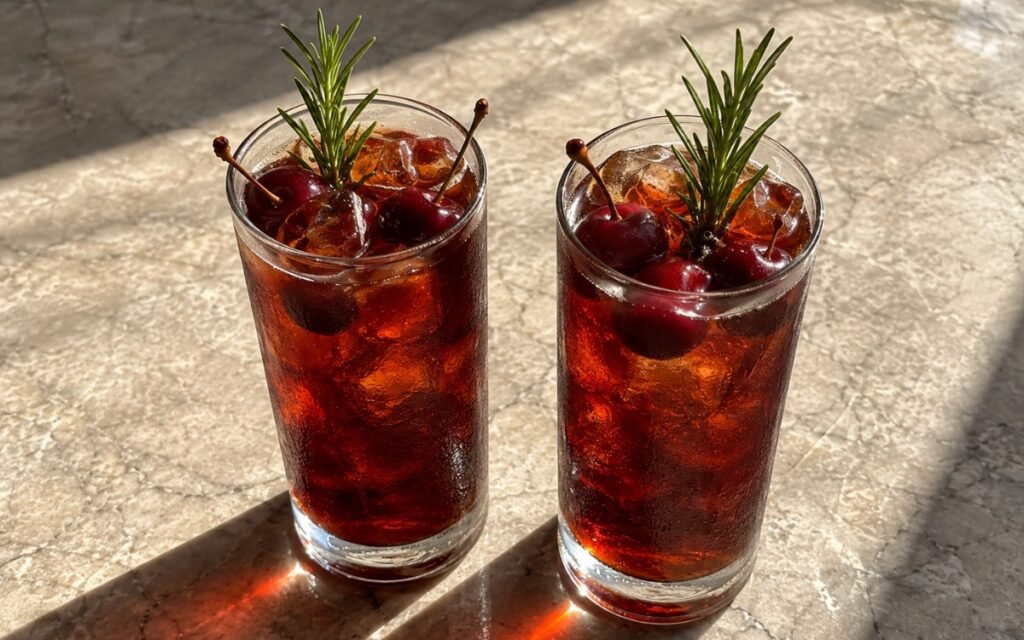
Cherry Rosemary Black Iced Tea
Properly brewed black tea layered with a gently simmered cherry concentrate and an off-heat rosemary infusion for a deep, fruity iced tea.
-
Blueberry Almond Butter Smoothie
A thick, creamy blueberry smoothie with a deep purple color, rich body, and a nutty almond butter finish, finished with almond butter swirls and fresh fruit.

Peach Mango Smoothie
Ingredients
Method
- Wash the peaches, remove the pits, and roughly chop the flesh. Peel and dice the mango. For the best thick texture, chill the fruit well, or freeze the peach and mango pieces for 1–2 hours until very cold and lightly firm. Use fully ripe peaches and mangoes. If the fruit is underripe, the smoothie will taste flat, fibrous, and less naturally sweet. That genuine ripeness carries directly through into the finished smoothie’s own flavour — underripe fruit simply doesn’t offer the same natural sweetness or smooth, less fibrous texture ripe fruit provides.
- Add the cold liquid, yogurt, lemon or lime juice, salt, and vanilla to the blender first. Add the peach and mango on top. If using fresh fruit, add the ice now. If using frozen fruit, start with the lower amount of liquid. That specific layering order gives the blades genuine liquid and yogurt to work with immediately, letting the denser fruit settle into a mixture already moving rather than sitting resistant above the blades.
- Blend on low first to break up the fruit, then increase to high speed and blend until fully smooth, thick, and creamy. Stop and scrape down the sides as needed. The smoothie should look glossy and evenly orange-gold, with no obvious fruit chunks and only very tiny natural fruit flecks remaining. That low-then-high progression lets the fruit break down gradually before the blender is asked to fully smooth and homogenize the whole mixture at higher speed.
- Check the texture. If it is too thick to blend or pour, add more cold liquid 1 tablespoon at a time. If it is too thin, add a few more ice cubes or a little more frozen fruit and blend again. Taste and add honey only if needed. Add extra liquid gradually. Too much at once will make the smoothie loose and unable to support the garnish. That deliberate, incremental approach to loosening protects the smoothie’s own structural ability to hold the yogurt swirl and fruit garnish still to come — a smoothie loosened too far would simply let that garnish sink in rather than sit visibly on top.
- Pour into 4 glasses, about 250ml each. Top each with a small yogurt swirl, a few peach slices, and a few mango cubes. Serve immediately. That immediate serving captures the smoothie at its genuinely thickest and glossiest, before it has any real chance to thin and separate.