
Classic Cold Brew Iced Black Tea
Classic Cold Brew Iced Black Tea is the smoothest, most naturally mellow preparation in this collection’s black tea lineup — and the one that most clearly demonstrates what cold water extraction does differently from hot brewing. Hot brewing at 90–95°C extracts black tea’s pleasant theaflavins and thearubigins within a tight 2½–3 minute window, but it also begins pulling the harsher, more astringent tannin compounds that make hot-brewed tea taste sharp when over-steeped. Cold water extracts far more selectively: given 6 to 12 hours in the refrigerator, it draws out the pleasant aromatic and flavour compounds while leaving most of the harsh tannin fraction behind. The result is a tea that is naturally sweet-tasting, noticeably smoother, and significantly less bitter than its hot-brewed counterpart, without requiring any compensation from additional sweetener. The honey here is specifically loosened with a small amount of warm water before being stirred in, since cold brew straight from the refrigerator is far too cold to dissolve undiluted honey evenly — a small practical step that prevents the pooled, uneven sweetness that skipping it would produce. The lemon peel follows the same cold, brief infusion protocol as in every other preparation in this collection: fragrance only, removed promptly, contributing nothing that could be described as acidity.

Prep Time : 10 min
Cold Brew Time : 6–12 hr
Servings : 8
10 min
6–12 hr
8
Ingredients
For the Black Tea Base
• 1.65 litres cold filtered water
• 5–6 black tea bags — Ceylon or light breakfast tea; or 12–16g loose-leaf black tea — this one on Amazon
For the Flavoring
• 2–3 Tbsp mild honey — to taste; start with 2 Tbsp — this one on Amazon
• 1–2 Tbsp warm water — only to loosen the honey before adding
• 1 strip lemon peel — yellow part only, no white pith
For Serving
• Ice
• Lemon slice or twist
This post may contain affiliate links. As an Amazon Associate I earn from qualifying purchases, at no additional cost to you.
Directions
- Cold Brew the Black Tea
Place the tea bags, or loose leaves in a filter, into a large pitcher. Add the 1.65 litres of cold filtered water, cover tightly, and refrigerate for 6 to 12 hours depending on the desired strength. Six hours produces a lighter, cleaner tea with a more delicate character; 10 to 12 hours produces a fuller, slightly more structured cold brew with noticeably more body. Both are correct — the choice reflects preference rather than technique, and the absence of bitterness at either end of the window is precisely what makes cold brewing different from hot brewing with equivalent steeping time. - Remove the Tea Bags
Remove the tea bags or strain out the loose-leaf tea once the brew time is complete. Do not squeeze the bags even in cold brew — while cold extraction is inherently gentler than hot, squeezing still forces out fine sediment and extra concentration from within the bags that muddies an otherwise clear, smooth result. The cold-brewed tea should look clear, taste naturally mellow and lightly sweet, and have none of the sharp tannic edge that hot-brewed black tea can develop. - Dissolve the Honey
In a small bowl or jug, stir the honey with 1 to 2 tablespoons of warm water until it loosens into a pourable syrup. Add this honey syrup to the cold-brewed tea and stir well until fully combined. Start with 2 tablespoons of honey and add more only if needed after tasting. The cold brew’s natural mellowness means it requires less sweetener than a hot-brewed version would — the perceived sweetness comes partly from the tea itself, and over-sweetening erases the clean, smooth character that cold brewing specifically produces. - Infuse the Lemon Peel
Add the strip of lemon peel to the sweetened cold brew and refrigerate for 10 to 15 minutes only, just until a gentle citrus aroma develops in the liquid. Remove the peel promptly once that fragrance is present. This is the same purely aromatic step used throughout this collection — the peel contributes citrus oil fragrance without acidity, and leaving it in for long storage would allow it to develop bitterness as the pith’s compounds gradually leach into the cold liquid. - Serve
Fill glasses with ice, pour over the cold brew iced black tea, and garnish with a lemon slice or twist if desired. Serve cold, smooth, lightly sweet, and clean.
*Notes :
- For a stronger cold brew that holds up better over ice — particularly important if serving in glasses that will sit for any length of time — use 6 tea bags or the full 16g of loose-leaf tea and brew for the longer end of the window. At the lighter end, a 5-bag 6-hour cold brew will become noticeably diluted as the ice melts.
- Do not leave the lemon peel in the pitcher for long-term storage. The brief 10–15 minute infusion is calibrated to extract fragrant peel oils without pith bitterness; extended contact during refrigerator storage crosses that line progressively.
- Sweeten with the honey syrup rather than undiluted honey regardless of how long you stir — honey added directly to cold liquid always leaves at least some settling at the bottom that stirring alone cannot fully resolve.
Why This Recipe Works
This recipe works because cold water extraction specifically avoids the harsh tannin fraction that hot brewing pulls out even with careful timing, producing a naturally smooth, naturally sweet-tasting tea without requiring technique compensation. The honey is pre-dissolved in warm water before being added to the cold base, ensuring even integration.
The lemon peel infuses cold and briefly, contributing fragrance without any of the bitterness that extended or warm-liquid contact would introduce. And the cold brew window of 6 to 12 hours is flexible enough to accommodate personal preference for body without ever producing a result that is harsh.
Ingredient Breakdown
Black Tea Cold Brewed 6–12 Hours
The smooth, naturally mellow backbone — cold extraction specifically avoiding the harsh tannin compounds that hot brewing pulls out.
Honey Loosened in Warm Water First
The practical sweetening step — the only way to dissolve honey evenly into a liquid that is already fridge-cold.
1 Strip Lemon Peel, Infused Cold 10–15 Minutes
The background fragrance — citrus oil aroma only, removed before pith bitterness can develop.
Flavor Structure Explained
This Classic Cold Brew Iced Black Tea follows a minimalist balance model:
- Smooth tea core (cold-brewed black tea)
- Gentle balancing sweetness (honey)
- Delicate citrus aromatics (lemon peel)
- Naturally mellow structure (cold extraction)
- Clean refreshing finish (pure tea expression)
Cold-brewed black tea defines the foundation with a naturally smooth body, subtle sweetness, and gentle aromatic depth that develop without extracting the harsher tannins associated with hot brewing. The result is a softer, rounder tea profile that emphasizes clarity and drinkability over intensity. Honey quietly smooths the tea’s natural edges, contributing balance without becoming a noticeable source of sweetness. Lemon peel adds only the faintest citrus fragrance through its aromatic oils, lifting the aroma while remaining firmly in the background. The result is an iced tea built around purity and restraint, allowing the naturally mellow character of cold-brewed black tea to remain the central experience.
Common Mistakes to Avoid
- Using Warm or Room-Temperature Water – Defeats the purpose of cold brewing entirely. Always start with cold, ideally filtered water.
- Squeezing the Bags at Removal – Still pulls out sediment and extra concentration even in cold brew. Always remove gently.
- Adding Undiluted Honey Directly to the Cold Brew – Settles unevenly regardless of stirring. Always loosen with warm water first.
- Leaving the Lemon Peel In During Long Storage – Progressively releases pith bitterness into cold liquid over time. Always remove after 10–15 minutes.
- Expecting Hot-Brew Flavour – Cold brew produces a specifically mellower, less tannic result — if the flavour feels too light, brew for longer or use more bags rather than applying heat.
Variations
With Orange
Replace the lemon peel with orange peel for a warmer, rounder citrus direction, as in the Orange Cold Brew Iced Tea.
With More Lemon
Replace the single peel strip with two strips and extend the infusion to 15 minutes for a slightly more present lemon fragrance, as in the Lemon Peel Black Iced Tea.
Hot-Brewed Version
For the precisely timed hot-brewed counterpart to this recipe, see the Classic Iced Black Tea.
With Rosemary
Add a lightly clapped rosemary sprig alongside the lemon peel during the cold infusion for a drier, more botanical direction.
Storage & Make-Ahead
The cold brew base, before the honey and lemon peel are added, can be refrigerated in a sealed pitcher for up to 3 days.
Once assembled and the honey and lemon peel have been removed, the tea can be refrigerated for up to 2 days. For the freshest flavor and aroma, it is best enjoyed within 24 hours.
Frequently Asked Questions
Why does cold brewing produce a smoother, less bitter tea than hot brewing?
Cold water extracts selectively, drawing out black tea’s pleasant aromatic and flavour compounds over 6 to 12 hours while leaving most of the harsh tannin fraction behind. Hot water at 90–95°C pulls those tannins out within minutes, so the cold brew stays mellow without precise timing.
Why should the honey be loosened in warm water before it goes into the tea?
Tea straight from the refrigerator is far too cold for undiluted honey to dissolve, so it sinks and settles however long you stir. One to two tablespoons of warm water turns it into a pourable syrup that blends evenly into the cold brew with no pooled sweetness.
Why does the lemon peel come out after only 10 to 15 minutes?
That brief cold infusion is long enough to release the peel’s fragrant citrus oils but too short for the pith’s bitter compounds to leach into the tea. Left in the pitcher during storage, the peel crosses that line gradually and turns the clean finish faintly bitter.
Why does the cold brew start to taste flat when it steeps much longer than 12 hours?
Cold water’s selectivity keeps most of the harsh tannins out even with extra time, so a longer steep never turns sharp like oversteeped hot tea. Beyond 14 to 16 hours, though, the tea becomes over-extracted and loses the brightness of a correctly timed brew.
Are there other classic cold brew, iced black tea, or fruit-infused tea recipes worth trying?
Orange Cold Brew Iced Tea offers another classic cold brew citrus direction worth exploring. Cherry Rosemary Black Iced Tea and Cold Brew White Tea are also worth trying for other fruit-forward and delicate tea directions, and Cold Brew Green Tea and Rosemary Lemon Cold Brew Black Tea offer other fresh, botanical cold brews worth exploring.
Nutrition Facts
( per serving )
Calories
~25 kcal
Protein
0 g
Fat
0 g
Carbs
7 g
Calories
~25 kcal
Protein
0 g
Fat
0 g
Carbs
7 g
Related Recipes
Related Recipes

Grapefruit Green Iced Tea (Peel-Infused)
Green tea at 75–80°C for 2–3 minutes, grapefruit peel infused cold 3–5 minutes — honey and a pinch of salt, no juice, chilled. Bold, aromatic, acid-free.
Grilled Peach Black Iced Tea
Black tea at 90–95°C for 2½–3 minutes, peaches grilled and simmered into a light unreduced syrup, warm lemon zest infusion — chilled. Warm and lightly smoky.
Fresh Berry Green Iced Tea
Green tea at 75–80°C for 2–3 minutes, mixed berries lightly crushed and cold-infused 30–45 minutes — strained cleanly, honey, chilled. Light, crisp, delicately fruity.



You might also like
You might also like
Verbena Peach Iced Black Tea
Light black tea at 90–95°C for 2½–3 minutes, peach syrup made separately, verbena clapped and infused cold 8–12 minutes — lemon peel, chilled. Floral, aromatic, softly fruity.
Hibiscus Peach White Iced Tea
White tea at 75–80°C for 3–4 minutes, hibiscus infused 6–8 minutes for vivid ruby color, light peach syrup made separately and strained — chilled. Floral and softly fruity.
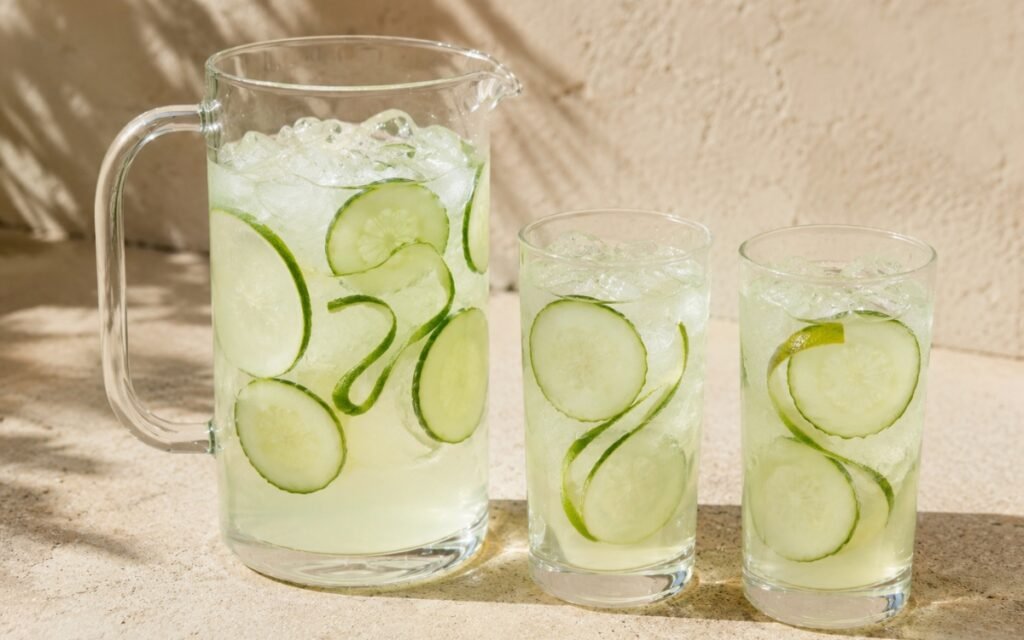
Green Tea Cucumber Pitcher
Green tea at 75–80°C for 2–2½ minutes, lime zest 4–6 minutes — 750g cucumber blended with lime juice, strained, combined with tea and cold water, chilled. Cool and pale.



Classic Cold Brew Iced Black Tea
Ingredients
Method
- Place the tea bags, or loose leaves in a filter, into a large pitcher. Add the 1.65 litres of cold filtered water, cover tightly, and refrigerate for 6 to 12 hours depending on the desired strength. Six hours produces a lighter, cleaner tea with a more delicate character; 10 to 12 hours produces a fuller, slightly more structured cold brew with noticeably more body. Both are correct — the choice reflects preference rather than technique, and the absence of bitterness at either end of the window is precisely what makes cold brewing different from hot brewing with equivalent steeping time.
- Remove the tea bags or strain out the loose-leaf tea once the brew time is complete. Do not squeeze the bags even in cold brew — while cold extraction is inherently gentler than hot, squeezing still forces out fine sediment and extra concentration from within the bags that muddies an otherwise clear, smooth result. The cold-brewed tea should look clear, taste naturally mellow and lightly sweet, and have none of the sharp tannic edge that hot-brewed black tea can develop.
- In a small bowl or jug, stir the honey with 1 to 2 tablespoons of warm water until it loosens into a pourable syrup. Add this honey syrup to the cold-brewed tea and stir well until fully combined. Start with 2 tablespoons of honey and add more only if needed after tasting. The cold brew’s natural mellowness means it requires less sweetener than a hot-brewed version would — the perceived sweetness comes partly from the tea itself, and over-sweetening erases the clean, smooth character that cold brewing specifically produces.
- Add the strip of lemon peel to the sweetened cold brew and refrigerate for 10 to 15 minutes only, just until a gentle citrus aroma develops in the liquid. Remove the peel promptly once that fragrance is present. This is the same purely aromatic step used throughout this collection — the peel contributes citrus oil fragrance without acidity, and leaving it in for long storage would allow it to develop bitterness as the pith’s compounds gradually leach into the cold liquid.
- Fill glasses with ice, pour over the cold brew iced black tea, and garnish with a lemon slice or twist if desired. Serve cold, smooth, lightly sweet, and clean.