
Easy Authentic Carbonara Pasta
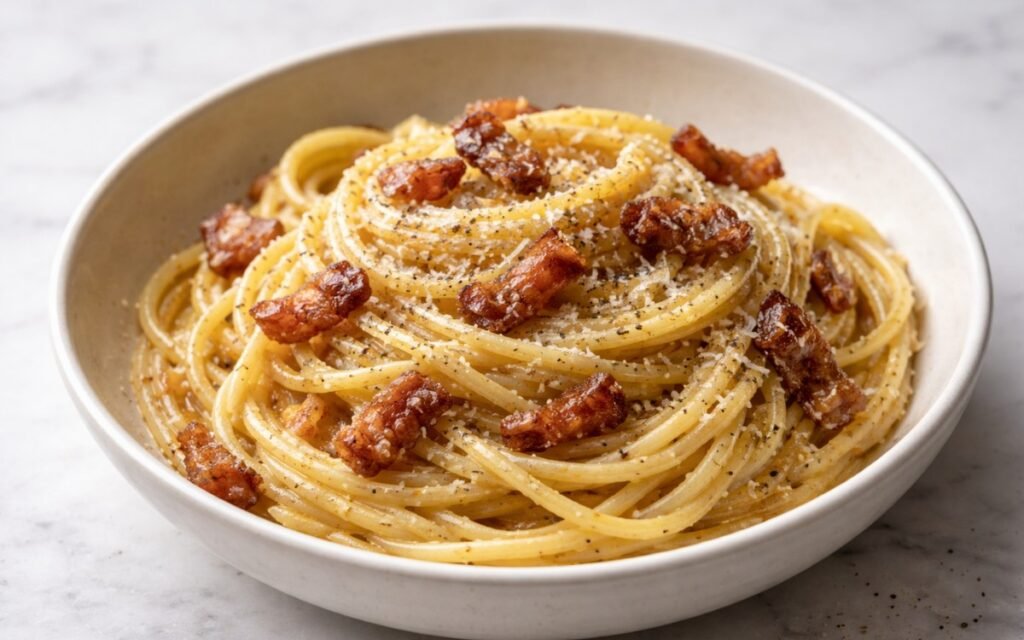
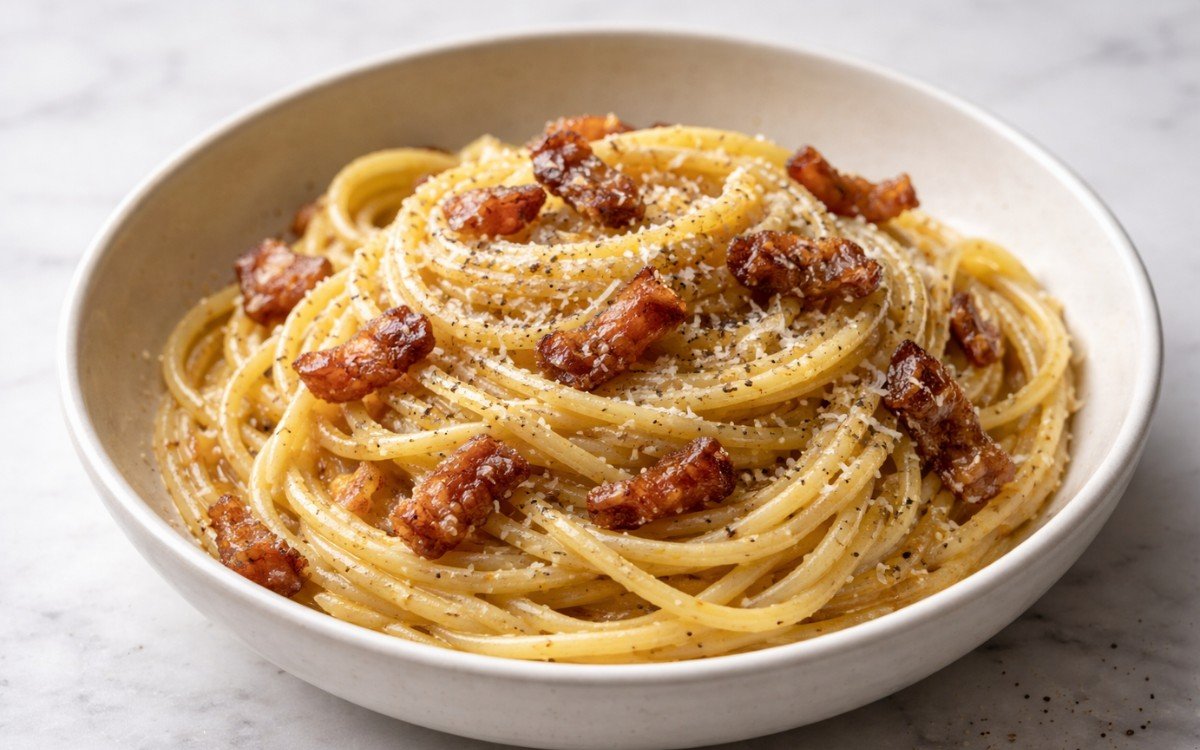
This authentic Roman carbonara pasta delivers restaurant-quality results with just six ingredients and 25 minutes. Crispy guanciale, silky egg-Pecorino sauce, and perfectly cooked pasta combine into the ultimate Italian comfort food. Master the simple technique once, and you’ll crave this luxurious pasta for life.
Prep Time : 10 min
Cook Time : 15 min
Servings : 4
10 min
15 min
4
Ingredients
For the Pasta
• 400g spaghetti or rigatoni — this one on Amazon
• 40g fine sea salt for pasta water
• 4 liters water
For the Guanciale
• 200g guanciale (or pancetta if unavailable), cut into 1cm lardons — this one on Amazon
For the Carbonara Sauce
• 4 large egg yolks (about 68g total)
• 2 large whole eggs (about 100g total)
• 120g Pecorino Romano, finely grated, plus extra for serving — this one on Amazon
• 2g freshly cracked black pepper, plus more to taste
This post may contain affiliate links. As an Amazon Associate I earn from qualifying purchases, at no additional cost to you.
Directions
- Boil the Pasta
Bring 4 liters of water to a rolling boil in a large pot. Add 40g salt—the water should taste like the sea. Add 400g pasta and cook until 1 minute shy of al dente according to package directions, stirring occasionally to prevent sticking. - Render the Guanciale
While pasta cooks, place 200g guanciale in a large, cold skillet (preferably stainless steel or carbon steel). Turn heat to medium and cook for 8-10 minutes, stirring occasionally, until fat renders completely and guanciale is crispy and golden at the edges but still tender. The rendered fat should measure about 3-4 tablespoons. Turn off heat but keep skillet warm. - Prepare the Egg Mixture
In a medium bowl, whisk together 4 egg yolks, 2 whole eggs, 120g grated Pecorino Romano, and 2g black pepper until completely smooth and no streaks of egg white remain. The mixture should be thick and creamy, almost like a loose custard. - Combine Pasta and Guanciale
When pasta is ready, reserve 300ml pasta cooking water in a heatproof measuring cup. Drain pasta but do not rinse. Immediately transfer hot pasta to the skillet with guanciale (off heat). Toss vigorously for 30 seconds to coat every strand with the rendered fat. Let the skillet cool for exactly 45 seconds—this prevents scrambling. - Create the Carbonara Sauce
Add 100ml pasta water to the skillet, then immediately pour in the egg-cheese mixture. Begin tossing constantly with tongs or two wooden spoons, lifting and turning the pasta in a circular motion. Continue tossing for 1-2 minutes, adding pasta water 30ml at a time if needed, until the sauce reaches a luxurious, creamy consistency that coats the pasta like liquid silk—not runny, not clumpy. - Serve Immediately
Taste and adjust seasoning with additional black pepper if desired (the guanciale and Pecorino provide ample salt). Divide immediately among four warm bowls, creating a small nest with each portion. Finish with extra grated Pecorino Romano and a generous crack of black pepper. Serve immediately while hot.
*Notes :
- Temperature control is everything—the skillet must be off heat before adding eggs, and the 45-second cooling period prevents scrambling while maintaining enough warmth to create the emulsion. If you’re nervous about scrambling, err on the side of cooler; you can always return to low heat while tossing.
- Guanciale is non-negotiable for authentic carbonara—its sweet, delicate pork flavor and silky fat are irreplaceable. Find it at Italian specialty stores or well-stocked delicatessens. Pancetta is an acceptable substitute, though the flavor will be slightly different.
- The sauce should flow when you tilt the pan but immediately cling back to the pasta. If it’s too thick, add more pasta water 15ml at a time. If too thin, continue tossing off heat to let residual warmth thicken the eggs slightly.
Nutrition Facts
( per serving )
Calories
~905 kcal
Protein
32 g
Fat
50 g
Carbs
76 g
Calories
~905 kcal
Protein
32 g
Fat
50 g
Carbs
76 g
Related Recipes
Related Recipes

Elderflower Lemonade
Citrus-led lemonade with gentle elderflower florals, subtly honeyed, aromatic, and elegantly balanced with a soft botanical finish.
Honey Roasted Sweet Potatoes
Honey-glazed roasted sweet potatoes with caramelized edges and tender centers—ready in 40 minutes.
Cold Brew White Tea
Ultra-smooth cold brew white tea lifted with rose water and lemon peel, softly honeyed, calm, and elegant.


You might also like
You might also like
Spicy Chili Garlic Oil Noodles
Fiery wheat noodles tossed in homemade chili garlic oil with Sichuan peppercorns and fried egg.
Creamy Zucchini Pasta with Burrata
Silky zucchini sauce coats rigatoni, topped with burrata and crispy lemon breadcrumbs perfectly.
Easy Chicken Chow Mein Noodles
Crispy restaurant-style chow mein with tender chicken and vegetables in umami-rich sauce.
Easy Authentic Carbonara Pasta
Ingredients
Method
- Bring 4 liters of water to a rolling boil in a large pot. Add 40g salt—the water should taste like the sea. Add 400g pasta and cook until 1 minute shy of al dente according to package directions, stirring occasionally to prevent sticking.
- While pasta cooks, place 200g guanciale in a large, cold skillet (preferably stainless steel or carbon steel). Turn heat to medium and cook for 8-10 minutes, stirring occasionally, until fat renders completely and guanciale is crispy and golden at the edges but still tender. The rendered fat should measure about 3-4 tablespoons. Turn off heat but keep skillet warm.
- In a medium bowl, whisk together 4 egg yolks, 2 whole eggs, 120g grated Pecorino Romano, and 2g black pepper until completely smooth and no streaks of egg white remain. The mixture should be thick and creamy, almost like a loose custard.
- When pasta is ready, reserve 300ml pasta cooking water in a heatproof measuring cup. Drain pasta but do not rinse. Immediately transfer hot pasta to the skillet with guanciale (off heat). Toss vigorously for 30 seconds to coat every strand with the rendered fat. Let the skillet cool for exactly 45 seconds—this prevents scrambling.
- Add 100ml pasta water to the skillet, then immediately pour in the egg-cheese mixture. Begin tossing constantly with tongs or two wooden spoons, lifting and turning the pasta in a circular motion. Continue tossing for 1-2 minutes, adding pasta water 30ml at a time if needed, until the sauce reaches a luxurious, creamy consistency that coats the pasta like liquid silk—not runny, not clumpy.
- Taste and adjust seasoning with additional black pepper if desired (the guanciale and Pecorino provide ample salt). Divide immediately among four warm bowls, creating a small nest with each portion. Finish with extra grated Pecorino Romano and a generous crack of black pepper. Serve immediately while hot.