Ingredients
Method
Chill the components
- Place the orange juice, non-alcoholic sparkling wine or ginger ale, and grenadine in the refrigerator for at least 1–2 hours before assembly. Cold temperature is essential for both carbonation stability and proper density separation. Warm liquids blend too easily and destroy the layered sunrise effect.
Mix the sunrise base
- In a large pitcher, gently combine the chilled orange juice and the sparkling component. Add a small pinch of fine sea salt and stir once or twice only — just enough to dissolve it. The mixture should taste bright, lightly sweet, and crisp with lively bubbles.
Prepare the glasses
- Fill tall serving glasses generously with fresh ice. Ice not only chills the drink further but also slows mixing between layers. Pour the orange base into each glass, stopping about 2–3 cm below the rim to allow space for the grenadine layer.
Create the layered sunrise
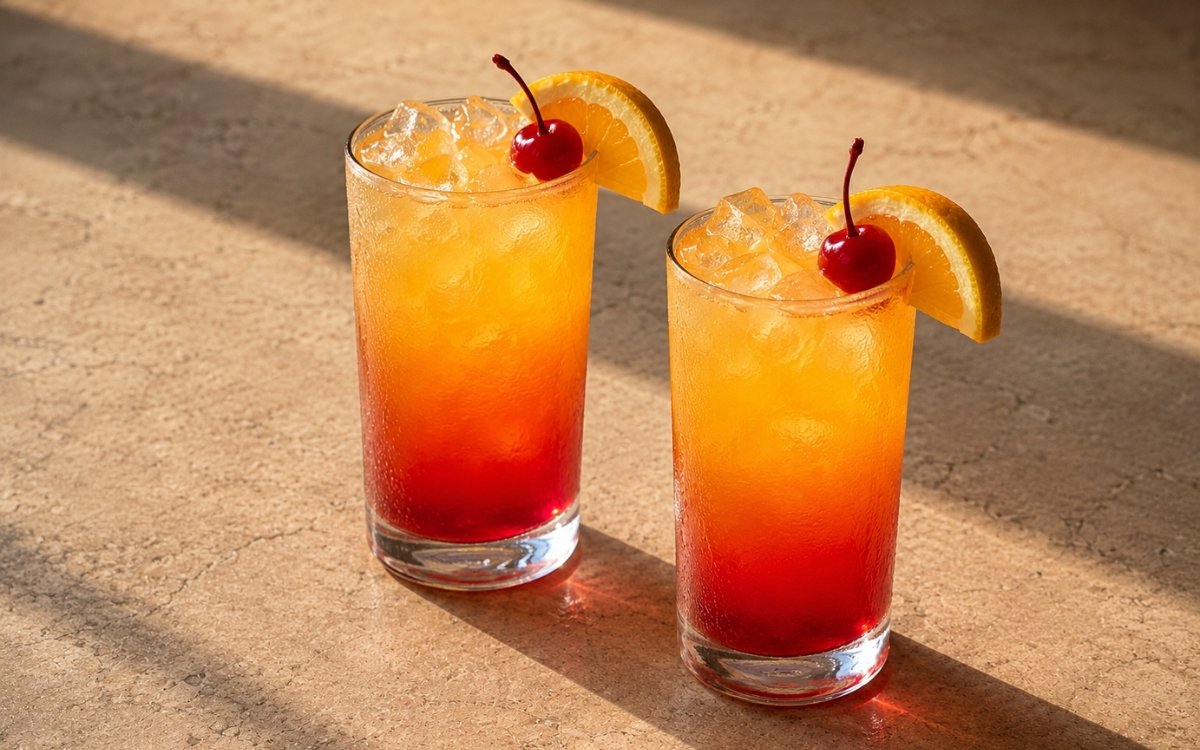
- Slowly pour about 20–25 ml of well-chilled grenadine into each glass. Let it flow down the inner wall of the glass or over the back of a spoon to reduce agitation. The syrup will sink naturally due to its higher density. Do not stir. Allow the drink to sit undisturbed for 20–30 seconds until the gradient becomes visually defined.
Garnish and serve immediately
- Finish with an orange slice and optional maraschino cherry. Serve at once while carbonation is lively and the layered effect remains sharp and visually striking.
Notes
Always use freshly squeezed orange juice with balanced sweetness and acidity. Bottled juice often lacks brightness and produces a flat-tasting drink.
Density control is everything. Fully chilled grenadine sinks cleanly, while room-temperature syrup blends into the base and ruins the visual structure.
Salt enhances citrus perception and keeps the drink from tasting sugary. It should remain completely undetectable.
Sparkling non-alcoholic wine produces a drier, more elegant profile, while ginger ale introduces gentle spice and sweetness.
This drink is designed for immediate service. Waiting causes layers to blur and carbonation to weaken.