Ingredients
Method
Make the Vanilla Syrup
- Add the sugar, water, and salt to a small saucepan. Warm over medium heat, stirring until the sugar fully dissolves. Remove from the heat and stir in the vanilla extract, or add the scraped vanilla bean seeds. Let cool completely. The syrup should be smooth and pourable, not reduced into a thick sugar glaze. Thick syrup does not mix cleanly into cold cream. Letting the syrup cool completely before it's ever combined with the cream matters directly for the next stage — warm syrup added to cold cream would begin warming and thinning that cream unevenly, working against the fluid, uniform consistency the sweet cream needs.
Make the Vanilla Sweet Cream
- In a jug, combine the heavy cream, whole milk, and 60ml vanilla syrup. Whisk until smooth, or shake gently in a sealed jar for a few seconds. Do not whip it. The sweet cream should be fluid and pourable, slightly thicker than milk but nowhere near whipped cream. If it becomes foamy or stiff, it will sit too heavily on top instead of drifting into the cold brew. Combining heavy cream with whole milk, rather than using heavy cream on its own, is what keeps this mixture light enough to actually pour and disperse — straight cream's density would cause it to sit as a thick, separate cap rather than gently marbling through the coffee beneath it.
Prepare the Glasses
- Fill 4 glasses generously with ice. Pour 180ml cold brew coffee into each glass. The coffee base should look deep brown and strong. If the cold brew is weak or watery before the cream goes in, the final drink will taste flat and overly milky. A properly strong, undiluted cold brew base is what gives the drink enough coffee character to stay clearly recognisable once the sweet cream is added and eventually stirred through it.
Add the Vanilla Sweet Cream
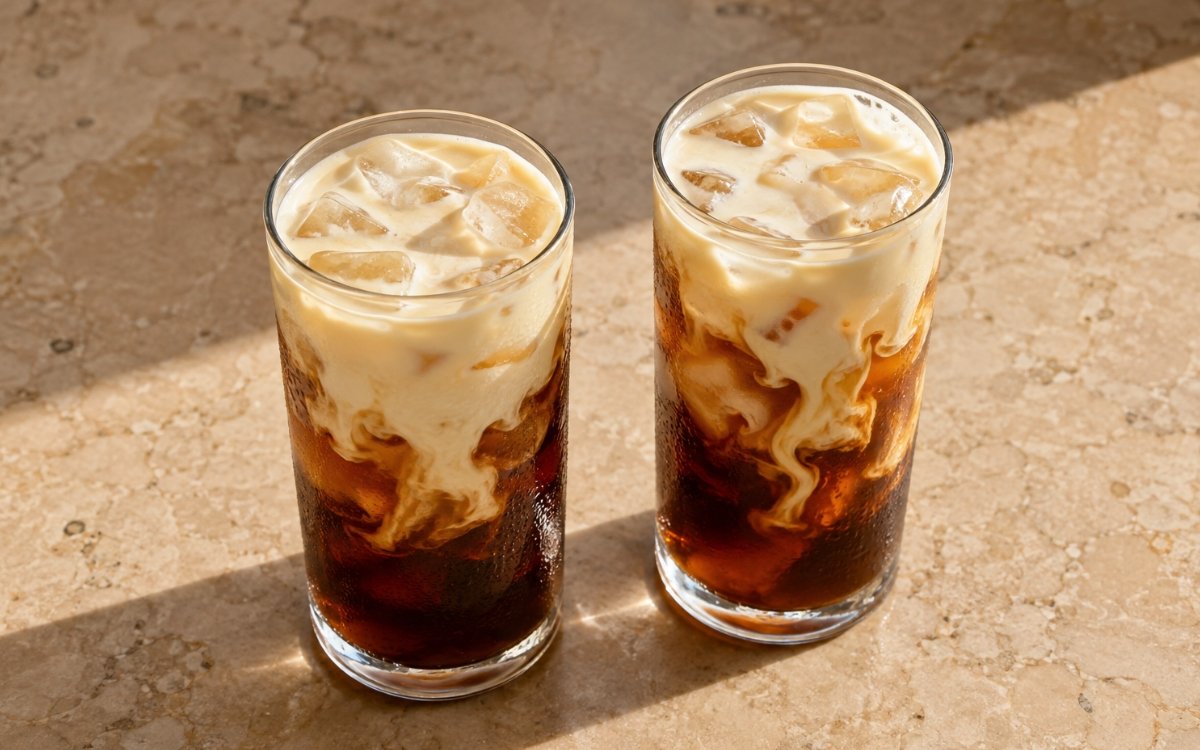
- Slowly pour 50–60ml vanilla sweet cream over each glass. Pour gently over the ice so the cream lands near the top and slowly flows downward into the coffee. You should see pale vanilla cream marbling into the dark cold brew. That soft cloudy movement is the classic visual before stirring. Both the cold brew and sweet cream must be cold. Warm cream thins out too fast, and warm coffee ruins the clean layered effect. Pouring gently over the ice, rather than directly into the coffee itself, lets the ice slow and redirect the cream's fall — that controlled, gradual descent is what produces the soft, cloud-like marbling effect rather than the cream simply mixing in immediately on contact.
Serve
- Serve immediately as layered, then stir before drinking if desired. Once stirred, the drink should taste smooth, lightly sweet, vanilla-forward, and still clearly cold brew-based. It should not taste like melted coffee ice cream. The marbling visual is genuinely brief once the cream is poured — serving right away preserves that moment along with the temperature and freshness of both the coffee and the cream.
Notes
Keeping the sweet cream genuinely fluid rather than whipped is worth understanding as the single most consequential decision in this entire recipe, and the recipe's own notes flag it as the most common mistake for good reason. Whipped cream, even lightly aerated, gains enough structure to resist sinking and drifting the way this drink's presentation depends on — it would sit as a distinct cap rather than slowly marbling downward into the coffee, losing the drink's whole visual identity in the process.
The combination of heavy cream and whole milk, rather than cream used alone, addresses the same underlying concern from a different angle. Straight heavy cream carries enough density and fat content that it would behave similarly to whipped cream even without any actual whipping — sitting heavily rather than dispersing. Diluting it with whole milk brings the mixture to a genuinely pourable consistency light enough to flow and marble properly through the cold brew.
Both components' temperature matters more here than it might seem given how briefly they're in contact before the drink is served. Warm cream loses viscosity and thins out considerably faster once it meets the cold coffee and ice, disrupting the slow, controlled marbling effect this drink is built around. Warm coffee, meanwhile, simply won't provide the crisp temperature contrast that makes the visual moment striking in the first place — both components genuinely need to start cold.
The distinction the recipe draws against tasting like "melted coffee ice cream" is worth taking as a real, useful target rather than a vague aspiration. This drink is meant to stay recognisably built on strong cold brew, with the sweet cream functioning as a genuine accent rather than the dominant flavour — getting the cream's sweetness and the coffee's strength properly balanced is what keeps the drink on the right side of that distinction.