Ingredients
Method
Boil the Potatoes
- Place the 500g potato chunks in a pot, cover with cold water and add a generous pinch of salt for the cooking water. Bring to a boil and simmer for 15–18 minutes, or pressure cook until soft, until a knife slides through the largest chunk with no resistance. Drain very well, then return the potatoes to the hot, empty pot for a minute so the surface steam drives off any clinging water. Mash while still warm, leaving a little texture rather than working them into a purée. The mash should look dry and fluffy, not wet or shiny. If it looks waterlogged, stir it over low heat for 1–2 minutes to dry it further. That thorough draining is what keeps the filling genuinely firm enough to shape, since waterlogged potato loosens the filling, cracks the vada and makes the batter slide off during frying.
Temper the Potato Filling
- Heat the 1½ tbsp oil in a pan over medium heat. Add the mustard seeds and let them pop fully, then add the curry leaves, the 2 chopped green chillies, the ginger-garlic paste and the asafoetida, if using. Cook for 20–30 seconds, stirring, until aromatic. Add the ¼ tsp turmeric and stir briefly, then add the mashed potatoes, the ¾ tsp salt, the 2 tbsp cilantro and the 1 tsp lemon juice. Mix very well and cook for 1–2 minutes, just to bring everything together. Taste and adjust the salt and lemon — the filling should taste bold and slightly bright, because the pav and batter are mild. Spread it on a plate and let it cool completely, about 15–20 minutes, while the chutneys are made. That complete cooling is what firms the filling, since warm mash stays sticky and fragile and can break apart in the oil.
Shape the Vada
- Once the filling is completely cool to the touch, divide it into 4 equal portions of about 130–140g each. Roll each portion firmly between your palms into a compact ball, then press it lightly into a slightly flattened round that will sit neatly inside a pav. The surface should be smooth, with no cracks around the edges. If the mixture feels soft or sticks to your hands, mix in 1–2 tbsp besan before shaping, then try again. Set the shaped vada on a plate while the batter is made. That firm, crack-free shaping is what genuinely lets the batter coat each vada evenly, since any split in the surface opens up in the hot oil and lets moisture escape through the crust.
Make the Green Chutney
- Place the 30g cilantro, the 10–12g mint leaves, the green chilli, the small garlic clove, the 1 tbsp roasted peanuts or roasted chana dal, the 1 tbsp lemon juice and a pinch of salt in a small blender jar. Add 2 tbsp of the water and blend, scraping down the sides, until smooth. Add the remaining 1 tbsp water only if the blades cannot move. The chutney should be spreadable and concentrated, thick enough to hold a ridge on a spoon, never thin or watery. Taste and adjust the salt or lemon. Transfer to a small bowl and keep it covered so it holds its bright green colour. That thick consistency is what keeps the pav soft rather than soggy, because a loose chutney soaks straight through the tender crumb.
Make the Red Chutney
- Combine the 2 tbsp tamarind pulp, the 2 tbsp jaggery or brown sugar, the ½ tsp roasted cumin powder, the ¼ tsp Kashmiri chilli powder, a pinch of salt and 3 tbsp of the water in a small saucepan. Bring to a gentle simmer over medium-low heat, stirring until the jaggery melts. Simmer for 2–3 minutes until lightly thickened and glossy. The chutney should be spoonable and slightly sticky, not runny; add the remaining 1 tbsp water if it tightens too much. Taste and adjust the salt so the sweet and sour sides balance. Let it cool before using, as it thickens further as it cools. That short simmer is what melts the jaggery fully into the tamarind, giving a smooth, glossy chutney that clings to the bread.
Make the Dry Garlic Chutney
- Place the 8 garlic cloves, the 2 tbsp desiccated or dry coconut, the 2 tbsp roasted peanuts, the 1 tbsp sesame seeds, the 1½ tsp Kashmiri chilli powder and the ½ tsp salt in a small grinder. Pulse in short bursts, shaking the jar between pulses, until the mixture is coarse and crumbly. Stop as soon as no large garlic pieces remain. It should look dry, sandy and deep red, and fall loosely from a spoon. If it begins to clump or look oily, stop at once and break it up with a fork. That restraint matters because over-grinding releases the oil from the peanuts, coconut and sesame, turning a dry, punchy chutney into a clumpy paste.
Mix and Rest the Batter
- Whisk together the 180g besan, the 2 tbsp rice flour, the ¼ tsp turmeric, the pinch of baking soda, the ¾ tsp salt and the Kashmiri chilli powder, if using. Add 210ml of the water gradually, whisking constantly, until the batter is smooth and lump-free. Add up to 30ml more water only if needed. The batter should coat a spoon heavily and fall slowly in a thick ribbon, like a thick pancake batter. If too thin, whisk in a spoonful of besan; if too thick, add water a teaspoon at a time. Let it rest for 10 minutes. That thick, rested batter is what forms a genuinely even, crisp shell, since thin batter leaves a weak coating that soaks up oil and over-thick batter fries heavy and doughy.
Fry the Batata Vada
- Heat the oil for deep frying in a deep pan or kadai to 170–175°C / 340–350°F. A drop of batter should rise steadily to the surface with lively bubbles, not sink or darken instantly. Dip each vada fully in the batter, let the excess drip off, then carefully lower it into the hot oil. Fry 2 at a time if needed, without crowding, for 4–5 minutes, turning as needed, until deeply golden, crisp and cooked through. The crust should be set and crisp, not pale or soft, and the inside hot and fluffy. Remove to a rack or paper towel. If the coating browns in under 3 minutes, lower the heat; if it stays pale, let the oil recover between batches. That steady temperature is what browns the shell without leaving a cool centre or a greasy, oil-soaked coating.
Blister the Chillies
- Slit the 4–8 mild green chillies lightly lengthwise so they do not burst. Heat the 1 tsp oil in a small pan over medium-high heat, or use a spoonful of the hot frying oil. Add the chillies and fry or blister them for 1–2 minutes, turning once or twice, until the skins are lightly blistered and the chillies have just softened. Sprinkle with a pinch of salt and keep them warm beside the stove. These are the traditional accompaniment served alongside vada pav, eaten between bites. That brief blistering is what softens their raw heat and adds a smoky, salty edge that cuts through the rich, fried vada.
Assemble and Serve
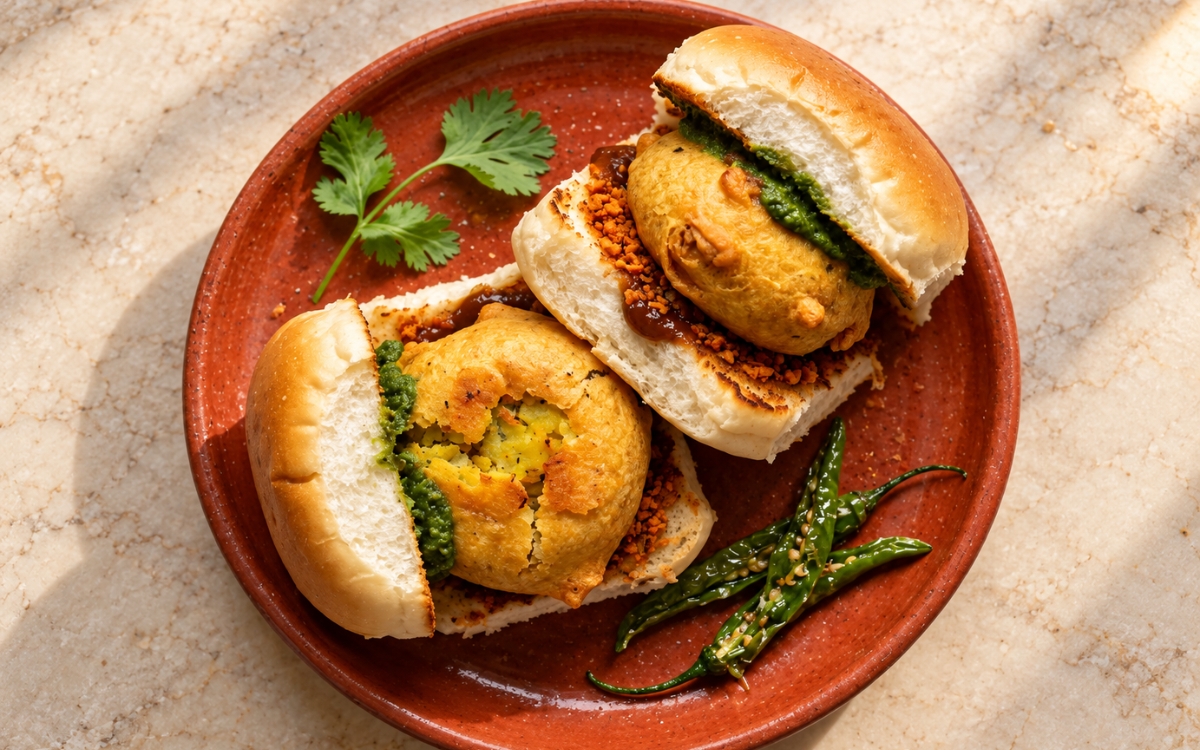
- Slice the 4 pav buns horizontally without separating them fully, or split them completely if preferred. If toasting, heat the 1–2 tbsp butter or oil on a griddle over medium heat and toast the cut sides for 30–60 seconds, until just warm and lightly golden but still soft. For each pav, spread green chutney on one cut side and red chutney on the other. Sprinkle a generous layer of dry garlic chutney inside, then place 1 hot vada in the centre. Close the pav and press gently to flatten the vada slightly so it fits the bun. Serve immediately, with the fried chillies alongside. That last-minute assembly is what keeps the hot, genuinely crisp vada pressed against soft bread and distinct chutneys, before steam and moisture soften the crust.
Notes
Draining the potatoes thoroughly and cooling the filling completely before shaping deserves genuine recognition as the technique most directly responsible for whether each vada survives the fryer intact. The recipe's own warning that wet potato means "the filling will loosen, the vada will crack, and the batter will slide off during frying" reflects simple physics — trapped water turns to steam inside the coating, while warm, sticky mash cannot hold a compact shape in the oil.
The thick besan batter deserves the same attention this technique receives throughout this collection's other deep-fried, batter-coated dishes, because its consistency decides the whole crust. Batter that coats a spoon heavily and falls slowly clings in an even layer and sets quickly in the oil, while thin batter leaves patchy, oil-soaked spots and over-thick batter fries into a heavy, doughy shell.
The green chutney's thickness deserves genuine respect as the detail most directly responsible for keeping the pav soft rather than soggy. The recipe's own note that it "should be thick so it does not soak the bun" matters because pav has an open, tender crumb — a loose, watery chutney seeps straight through it before the sandwich even reaches the table.
The dry garlic chutney's sandy, crumbly texture deserves attention as a genuine, checkable readiness cue rather than a loose approximation. Pulsing only until coarse keeps the peanuts, sesame and coconut from releasing their oil — over-grinding produces a clumpy paste and loses the dry, punchy contrast behind the recipe's own instruction to keep "all components distinct."