Ingredients
Method
Simmer the Beef Until Tender
- Place the flank steak in a large pot with the salt, black pepper, halved onion, smashed garlic, bay leaves, and water. Bring to a gentle boil over medium-high heat, then immediately lower to a very gentle simmer. Skim any foam from the surface in the first few minutes. Cover partially and simmer for 2 to 2½ hours, or until the beef is fully tender and can be pulled apart easily with a fork. The meat should no longer feel springy or resistant in the center. If it still feels tight, keep simmering and check again every 15 minutes. Remove the beef from the pot and let it cool just enough to handle. Reserve 120ml of the cooking liquid, then discard the remaining solids and liquid or save for another use. Keeping this simmer genuinely gentle rather than a hard boil protects the beef's own texture from toughening, giving it the fully tender, easily-shreddable result the rest of the recipe depends on.
Shred and Marinate the Beef
- Shred the warm beef finely with two forks or by hand, pulling it into thin strands rather than chunky pieces. For proper vaca frita texture, the shreds should be fairly fine so they can crisp well in the pan. In a large bowl, combine the shredded beef with the sliced onion, garlic, lime juice, 2 tablespoons neutral oil, cumin, oregano, black pepper, and salt. Toss very well so the beef is evenly coated and the onion is distributed throughout. Let the beef marinate for 30 minutes. During this time the beef will absorb the lime and garlic, and the onions will soften slightly. This stage is important for classic vaca frita flavor, so do not skip it. Shredding the beef while it's still warm, rather than letting it cool first, makes the fibres considerably easier to pull apart into the fine strands this dish needs — beef that's fully cooled tends to resist shredding more than freshly simmered meat.
Cook the White Rice
- Rinse the rice under cold water until the water runs mostly clear. Add the rice, water, oil or butter, and salt to a saucepan. Bring to a boil over medium-high heat. Stir once, cover tightly, lower the heat to very low, and cook for 15 minutes. Turn off the heat and let the rice rest, covered, for 10 minutes. Fluff gently with a fork. The grains should be tender and separate, not wet or sticky. That final covered rest lets residual steam finish the cooking gently, without risking the bottom scorching under continued direct heat.
Cook the Black Beans
- Heat the oil in a saucepan over medium heat. Add the diced onion and cook for 4–5 minutes until softened. Add the garlic, cumin, and oregano and cook for 30 seconds until fragrant. Add the black beans with their liquid, bay leaf, sugar, vinegar, salt, and black pepper. Bring to a gentle simmer and cook for 15–20 minutes, stirring occasionally. Mash a small portion of the beans against the side of the pan to thicken the mixture slightly while keeping most of the beans whole. If the beans tighten too much, add a splash of water. The final texture should be glossy and spoonable, able to sit neatly on the plate without running. Mashing only a portion of the beans, rather than the whole pot, thickens the surrounding liquid naturally while preserving most of the beans' own texture.
Fry the Plantains
- Peel the plantains and slice them diagonally into pieces about 1.5cm thick. Heat the oil in a skillet over medium heat. Fry in batches for 2–3 minutes per side until deep golden brown with caramelized edges. Transfer to a plate or rack. They should be soft and sweet inside, with browned, lightly crisp surfaces. Sprinkle lightly with salt if desired. Genuinely ripe plantains, heavily spotted with black, carry the natural sugar content this caramelisation depends on for proper browning and sweetness.
Pan-Fry the Vaca Frita
- Heat a large heavy skillet or cast-iron pan over medium-high heat. Add 1½ tablespoons of oil. Once the oil is hot, add half of the marinated beef mixture in a fairly even layer. Do not crowd the pan. Crowding traps steam and prevents crisping. Cook without stirring for 3–5 minutes so the bottom develops deep brown, crisp edges. Then begin turning and tossing the beef, allowing more surfaces to contact the pan. Continue cooking for another 4–6 minutes until the onions are caramelized and the beef has a mix of crisp dark edges and juicy interior strands. If the pan looks dry but the beef is not yet crisp, add a tiny splash of reserved cooking liquid only if necessary to loosen stuck bits, then continue frying until that moisture cooks off and the beef re-crisps. Repeat with the remaining oil and beef. The finished vaca frita should not be uniformly dry. It should have plenty of crispy charred edges, caramelized onions, and still retain some tenderness in the center of the shredded pile. This initial undisturbed period, before any tossing begins, is exactly what gives the beef's bottom layer the sustained, direct pan contact real crisping requires — moving it too soon interrupts that contact before a genuine crust has had time to form.
Plate and Serve
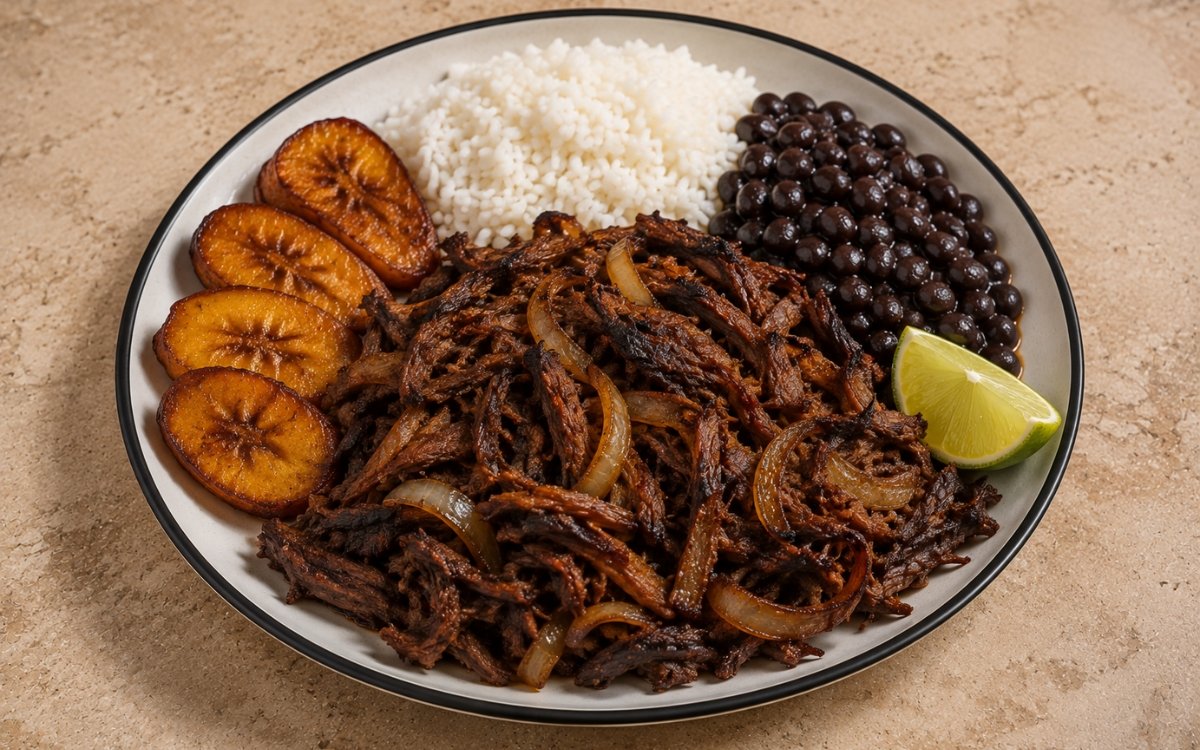
- Divide the white rice, black beans, fried plantains, and vaca frita among four plates. Serve the beef as the main component, with the rice and beans alongside and the plantains on the side. Add a lime wedge to each plate. Serve immediately while the beef is at its crispiest. A final squeeze of lime over the hot beef right before eating is traditional and brightens the entire plate. Serving without delay matters more here than in many braised dishes, since vaca frita's defining crisp edges begin softening the moment the beef leaves the hot pan.
Notes
Frying the marinated beef in properly spaced batches, never crowding the pan, deserves genuine respect as the single technique responsible for whether the finished dish is actually vaca frita or simply reheated shredded beef, as the recipe's own notes point out directly. A crowded pan traps the moisture the beef releases, and that trapped steam prevents the direct, sustained pan contact real crisping depends on — no amount of extended cooking time in an overcrowded pan produces the same result as working in properly spaced batches.
Letting the beef sit undisturbed for its first few minutes in the hot pan, resisting the urge to stir or toss early, addresses the same underlying requirement from a different angle. A dark, crisp crust only forms through sustained, direct contact between the meat and the hot pan surface — interrupting that contact too early, before the crust has had time to develop, produces a paler, less crisp result regardless of how long the beef continues cooking afterward.
Shredding the beef while it's still warm from simmering, rather than letting it cool first, is a small but genuinely useful technique detail worth noting. Warm beef's fibres separate considerably more easily than fully cooled meat, making the fine, thin shreds this dish specifically calls for easier to achieve without excessive effort or accidentally tearing the meat into uneven pieces.
Serving vaca frita immediately, without any delay after it comes off the heat, protects the dish's entire defining quality. The crisp, charred edges built through careful, patient frying begin softening the moment the beef leaves the pan — every earlier stage of careful technique exists specifically to deliver that crisp texture at the exact moment of serving, and any real delay works against all of it.