Ingredients
Method
Cook the Rice
- Rinse the 300g of jasmine rice in cold water, swirling and draining several times, until the water runs mostly clear. Combine it with the 450ml of water and the optional pinch of salt in a covered saucepan, bring to a boil, then reduce to the lowest heat and cook, covered, for 12–15 minutes, until the water is absorbed and the grains are tender. Rest the rice covered for 10 minutes off the heat, then fluff gently and keep it covered and warm until the cutlets come out of the oil. That covered rest is what lets the steam redistribute so the grains finish fluffy and separate instead of wet or mushy.
Prepare the Cabbage
- Remove the tough core from the 450–500g of green cabbage, then shred it as finely as possible with a sharp knife or a mandoline, aiming for light, thread-like strands rather than chunky pieces. If you like, soak the shreds in very cold water for 5–10 minutes to crisp them, then drain very well and dry thoroughly in a salad spinner or between clean tea towels. Pile the cabbage in a bowl and refrigerate it until plating. That fine shred and thorough drying is what keeps the cabbage fluffy and fresh and stops water pooling under the cutlet to soften the crust.
Prep the Pork
- If the 4 pork cutlets are thick or uneven, place them between sheets of plastic wrap or parchment and pound gently to an even thickness of about 1.5cm, taking care not to over-pound so the pork stays thick and juicy. Make 2–3 tiny cuts through the fat edge of each cutlet, then season both sides with salt and black pepper. Let the pork sit at room temperature for 10–15 minutes while you set up the breading. That even thickness and snipped fat edge are what let the pork cook through before the crust turns too dark, and keep each cutlet flat in the pan.
Bread the Cutlets
- Set up three shallow dishes: the 80g of flour, the 3 large eggs beaten with 1 tbsp of water, and the 180–220g of panko. Dredge each cutlet lightly in flour and shake off all the excess, dip it in the egg until completely coated, then press it into the panko until well covered on every side. Press gently but thoroughly, keeping the crumbs loose enough to stay coarse and craggy, and lay the breaded cutlets on a tray while the oil heats. That thin flour layer and full egg coating is what glues the panko on, so the crust stays attached in the oil instead of separating.
Fry the Tonkatsu
- Pour the 1–1.5L of oil into a deep, heavy pan, to a depth of about 4cm, and heat it to 170–175°C, checking with a thermometer. Fry 1–2 cutlets at a time without crowding, for about 3–4 minutes per side, turning once, until deeply golden brown and crisp and the pork is just cooked through, reaching at least 63°C at the centre. Lift the cutlets onto a wire rack and rest for 3–5 minutes before slicing, letting the oil return to temperature between batches. That steady oil temperature, followed by a rack rather than paper towels alone, is what keeps the crust crisp on both sides while the pork stays juicy.
Prepare the Sauce
- If using bottled tonkatsu sauce, measure out 120–160ml and keep it ready for serving. For the quick homemade version, stir together 4 tbsp Worcestershire sauce, 3 tbsp ketchup, 2 tbsp oyster sauce, 1 tbsp soy sauce, and 1–2 tsp sugar until smooth, starting with 1 tsp of sugar and tasting before adding more. The sauce should be glossy, dark brown, and balanced between sweet, savoury, and tangy, and it should stay thick enough to cling to the pork as a drizzle. That balance is what cuts through the rich fried crust without overpowering the pork.
Slice and Plate
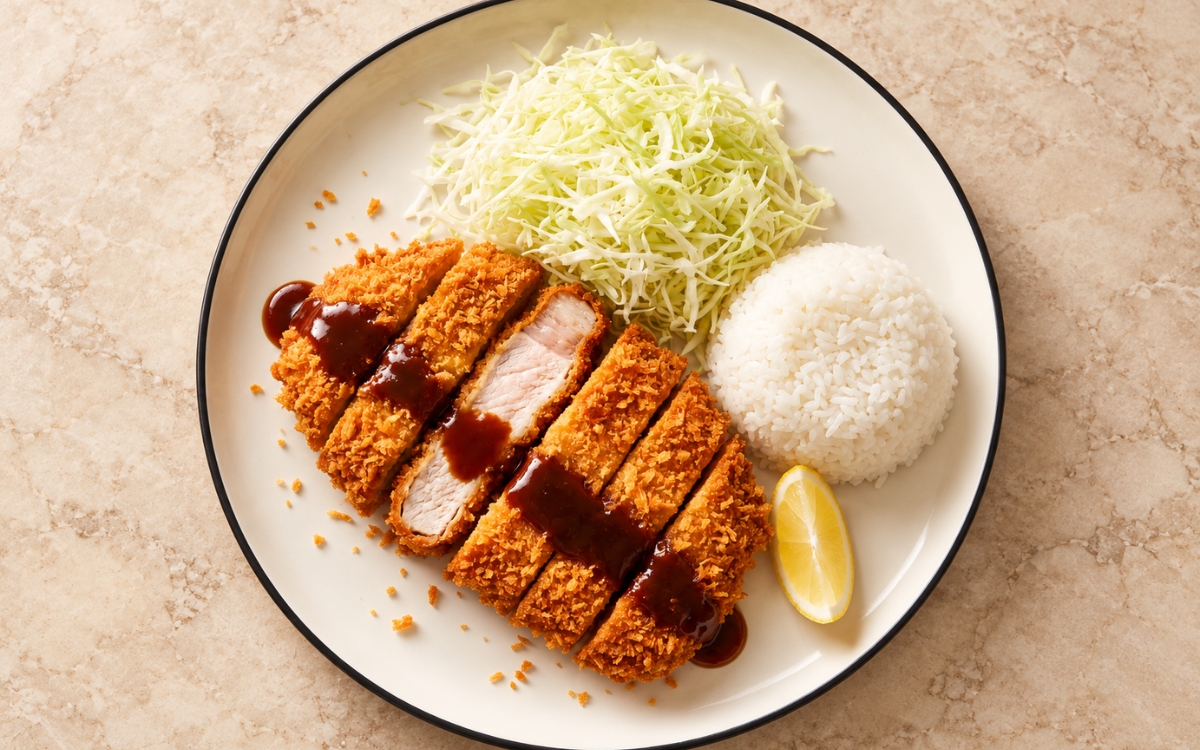
- Slice each rested cutlet crosswise into even strips about 2cm wide, using a sharp knife and a gentle sawing motion so the crust stays intact. Place a sliced cutlet on each of 4 plates beside a generous mound of shredded cabbage, one neat round portion of hot rice, and a lemon wedge from the 1 lemon. Spoon or drizzle the tonkatsu sauce over part of the pork, leaving some crust exposed, and serve any extra sauce on the side for dipping. That partial saucing is what keeps one side of every slice crisp while the rest soaks up the sweet-tangy flavour.
Notes
Holding the oil at 170–175°C deserves genuine recognition as the technique most directly responsible for a crisp, golden, non-greasy crust. Oil that is too cool lets the panko soak up fat and turn heavy and pale, whereas oil that is too hot darkens the crust well before the 1.5cm pork has cooked through, and neither mistake can be fixed once the cutlet is in the pan.
Frying only one or two cutlets at a time deserves the same attention this technique receives throughout this collection’s other deep-fried dishes. Every cold cutlet that enters the pan pulls the oil temperature down, so smaller batches keep the recovery quick and the crust crisp instead of greasy and pale, and each batch finishes evenly because the oil never has to claw its way back.
Resting the fried cutlets on a wire rack deserves genuine respect as the detail most directly responsible for an underside that stays crisp. Paper towels alone trap steam against the bottom crust, whereas a rack lets air circulate, and the 3–5 minute rest also lets the juices settle so the slices stay moist, rather than running out onto the plate and soaking the crust.
Shredding the cabbage very finely and drying it thoroughly deserves attention as a genuine, checkable standard rather than a loose approximation. The strands should look light and fluffy rather than chunky, because thick or wet cabbage feels heavy beside the cutlet and leaves water on the plate that slowly softens the crust and dilutes the sauce.