Ingredients
Method
Prep the Aromatics
- Trim the 3 lemongrass stalks, peel away the tough outer layers and cut each stalk into 5–6cm pieces. Bruise every piece firmly with the back of a heavy knife until it splits and smells sharply of citrus. Slice the 40–50g galangal into thin coins, lightly tear or bruise the 6–8 kaffir lime leaves, and lightly crush or slit the 4–8 bird's eye chillies, using the larger number only for a genuinely fiery bowl. Halve or thickly slice the 2 shallots. Keep everything in large pieces, since these aromatics flavour the broth rather than being eaten. That deliberate size is what lets them release their oils fully while staying easy to spot and set aside at the table.
Prep the Shrimp, Mushrooms and Noodles
- Peel and devein the 600g shrimp if needed, reserving the shells in a small bowl if you plan to use them for the optional richer broth. Clean the 250–300g mushrooms, leaving small straw mushrooms whole or halved and halving or slicing button mushrooms. Squeeze the lime juice, pick the cilantro and slice the red chillies. If the noodles still need cooking, cook them according to the packet instructions while the broth infuses, until just tender, then drain, rinse briefly and toss with the 1 tsp neutral oil only if they are likely to stick. That full setup matters because tom yum moves quickly at the end, and the shrimp can overcook in the seconds spent searching for an ingredient.
Infuse the Broth
- Pour the 1.5 litres stock or water into a large pot and add the lemongrass, galangal, lime leaves, crushed chillies and shallots. Bring to a gentle simmer over medium-high heat, about 5 minutes, then lower the heat and let the aromatics infuse for 10–12 minutes. If using the reserved shrimp shells, add them for the first 5 minutes of the infusion only, then lift them out with a slotted spoon. Small bubbles should break steadily at the edges, never a rolling boil. The broth is ready when it smells strongly of lemongrass and lime leaf and tastes clearly perfumed. That gentle simmer is what extracts the aromatics cleanly and keeps the broth clearer and more refined.
Season the Tom Yum Base
- Stir in 2 tbsp of the nam prik pao until it disperses and the broth turns red-orange, then add 4 tbsp fish sauce and 1 tsp sugar. Taste the broth: it should already feel aromatic, savoury and slightly spicy, but still need the sourness that comes from the lime later. Add the mushrooms and simmer gently for 3–4 minutes, until just tender and still springy. Keep the lime juice back for now. That deliberate order is what builds a deep, glossy chilli base first while saving the fresh sourness for the moment it will stay genuinely brightest.
Cook the Shrimp
- Add the shrimp to the gently simmering broth and cook for 1–3 minutes, depending on size, until just opaque, curled and springy, about 63°C at the thickest part. If using the optional evaporated milk, stir in 2–4 tbsp now and warm it through gently without boiling, keeping the broth red-orange rather than pale. As soon as the shrimp are cooked, lower the heat. They should feel firm but bouncy when pressed, never tight, shrunken or rubbery. That short, gentle cook is what keeps the shrimp sweet and juicy, since overcooked shrimp are the easiest way to ruin this soup.
Balance the Hot-Sour Finish
- Turn the heat to low or off and stir in 5 tbsp lime juice, then taste. Adjust in small steps, tasting after each addition: up to 1 tbsp more fish sauce for salt and savouriness, up to 2 tbsp more lime juice for sourness, up to 1 tsp more sugar only if harsh edges need rounding, and up to 1 tbsp more nam prik pao for deeper chilli colour and sweetness. The broth should taste bright, hot, sour and savoury first, with chilli depth and herbal notes behind, never flat, sugary or dull. Do not let the soup boil again. That off-heat balancing is what preserves the lime's fresh, sharp edge.
Assemble and Serve
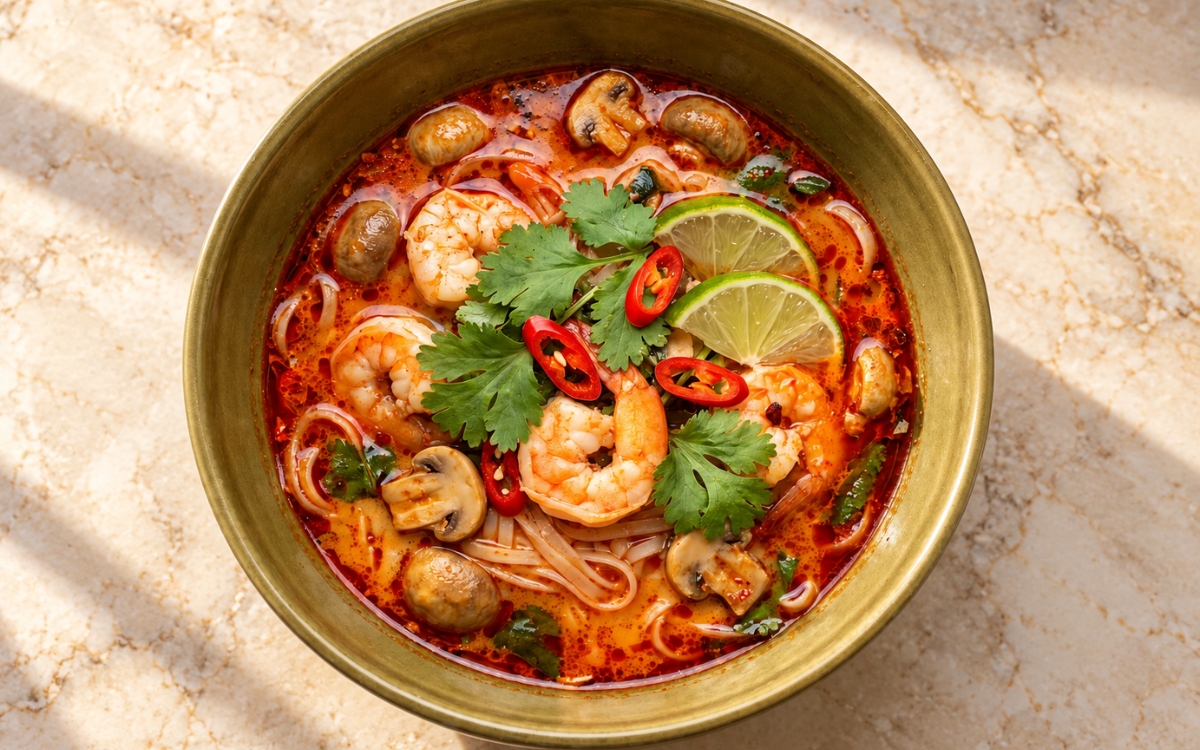
- Divide the 600g cooked noodles evenly among 4 bowls, about 150g each. Ladle the hot broth over the noodles, making sure every bowl gets a fair share of shrimp, about 150g, and mushrooms, and leave the larger lemongrass and galangal pieces behind in the pot or add just a few for presentation. Top each bowl with cilantro leaves and the sliced red chillies, and serve with lime wedges on the side. Serve immediately, while the noodles are still springy. That quick service is what stops the noodles softening and swelling in the hot broth before anyone eats.
Notes
The gentle infusion of the aromatics deserves genuine recognition as the technique most directly responsible for whether this broth tastes perfumed or muddy. The recipe's own instruction to "Do not boil aggressively" reflects how lemongrass, galangal and lime leaf release their oils steadily at a low simmer — a rolling boil clouds the stock and drives off the volatile citrus aromas that make tom yum smell like tom yum.
Nam prik pao deserves the same attention this ingredient receives throughout this collection's other Thai soups and curries, because it shapes both colour and depth. The recipe's own note that it "gives the red-orange tone and glossy chili sheen" explains why the paste goes in first, since its roasted chilli, shallot and garlic oil disperses into the hot broth and gives the soup a body fresh chillies alone cannot.
Adding the lime juice last deserves genuine respect as the detail most directly responsible for the soup's sharp, clean sourness. The recipe's own warning that "If it simmers too long, the soup loses its fresh sharp sourness" matters because lime's aromatic compounds fade quickly with heat, so juice boiled into the broth tastes dull and flat rather than genuinely bright.
The shrimp's texture deserves attention as a genuine, checkable readiness cue rather than a loose timing guess. The recipe's own reminder that "Overcooked shrimp are the easiest way to ruin this soup" means watching for the moment they turn opaque and springy, usually after 1–3 minutes, then lowering the heat at once before they tighten into rubbery curls.