Ingredients
Method
Prepare the Coffee Base
- Brew the espresso or strong coffee and let it cool completely. Stir in the sugar if using, then add the Marsala or other alcohol if using. Pour into a shallow dish wide enough for dipping the ladyfingers. The coffee must be fully cool before assembly. Warm coffee makes the ladyfingers collapse too fast and can loosen the mascarpone cream. That full cooling step protects both components downstream — warm coffee would soften the biscuits well past the light dip this recipe depends on, and any residual heat transferred into the finished layers could compromise the cream's own delicate structure.
Make the Yolk Base
- In a large bowl, whisk the egg yolks with 100g of the sugar until thick, pale, and creamy, 3–5 minutes with a hand mixer or stand mixer. The mixture should visibly increase in volume and fall in thick ribbons. Add the mascarpone in 3 additions, mixing on low speed or folding gently after each addition until smooth and fully combined. Add the vanilla if using. Do not overbeat the mascarpone. Once smooth, stop mixing. Overmixing can make the cream loose or slightly grainy. Adding the mascarpone in stages, rather than all at once, lets each portion incorporate fully before the next joins — a single large addition would be considerably harder to bring together smoothly without overworking the mixture.
Whip the Egg Whites
- In a separate clean bowl, add the egg whites with a pinch of salt. Beat until foamy, then gradually add the remaining 50g sugar. Continue beating until the whites reach medium-stiff to stiff peaks. The egg whites should hold their shape but still look glossy, not dry or clumpy. That specific target — stiff but still glossy — is a reliable readiness cue; whites beaten past this point turn dry and lose the elasticity needed to fold smoothly into the mascarpone base.
Finish the Mascarpone Cream
- Fold one-third of the whipped whites into the mascarpone mixture to lighten it. Then fold in the remaining whites in 2 additions, using broad gentle strokes until no large white streaks remain. Fold gently. The finished cream should be light and airy, not dense or runny. Folding in that first, smaller portion to lighten the denser mascarpone base makes the subsequent additions considerably easier to incorporate without deflating the whites' own trapped air.
Build the First Layer
- Spread a very thin smear of mascarpone cream on the bottom of the 9 × 13 in / 23 × 33cm dish to help anchor the base layer. Dip each ladyfinger quickly in the cooled coffee, about 1 second per side, and place them in a single tight layer in the dish. Do not soak them for long; they should be moistened but not soggy. Break a few if needed to fill gaps neatly. Spread half of the mascarpone cream evenly over the first layer. If the ladyfingers feel wet, floppy, or start breaking during dipping, the soak is too long. That thin base smear gives the first ladyfinger layer something to actually adhere to, preventing it from sliding around in the dish once the coffee and cream both go on top of it.
Build the Second Layer
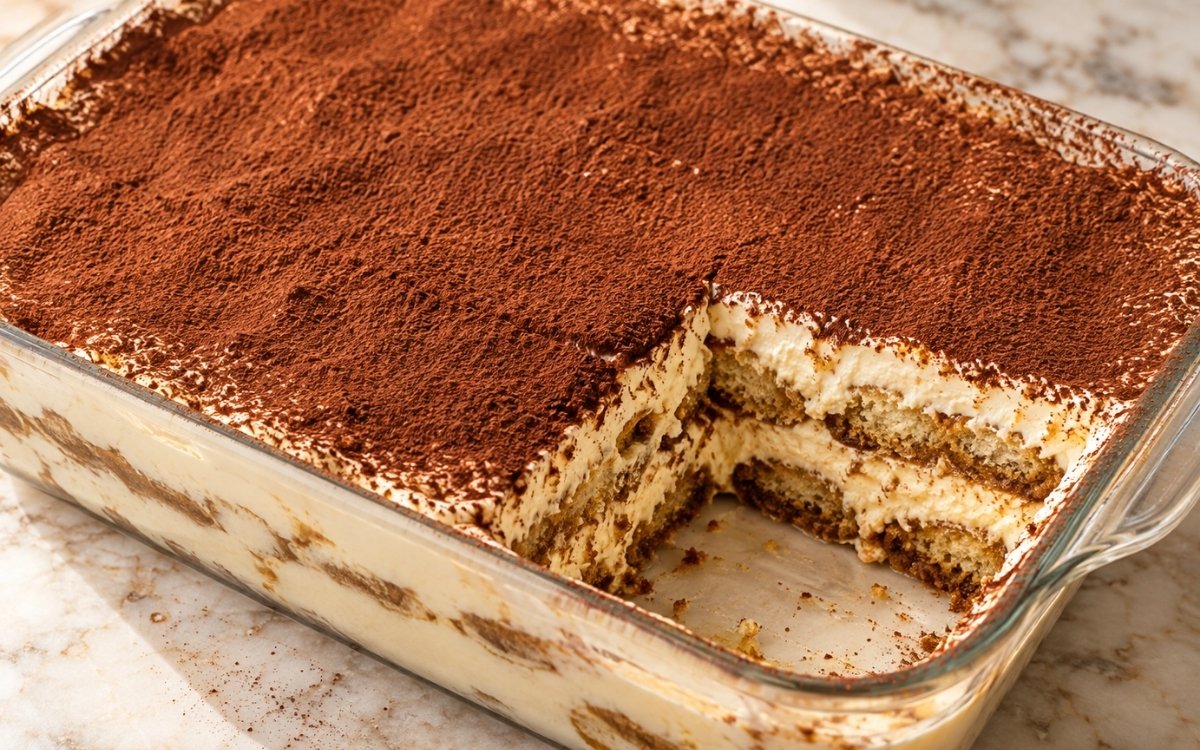
- Repeat with a second layer of quickly dipped ladyfingers. Spread the remaining mascarpone cream evenly over the top and smooth the surface. Cover and refrigerate for at least 8 hours, preferably overnight. Tiramisu needs a full chill to set properly. Cutting too early gives loose layers and messy portions. The long chill gives the mascarpone cream time to firm up and the ladyfingers time to absorb moisture evenly, so the finished dessert holds together in clean, defined slices.
Finish and Serve
- Just before serving, sift a generous even layer of cocoa powder over the top. Cut into 12 squares and serve cold. Dusting the cocoa only right before serving, rather than earlier, keeps the top layer looking dry and attractive — cocoa applied too far in advance would begin absorbing moisture from the cream beneath it and lose its own clean, powdery finish.
Notes
Dip each ladyfinger quickly, only about a second per side, so the finished tiramisu still holds together after its long chill. Tiramisu keeps softening in the refrigerator, and biscuits soaked longer turn wet and floppy.
Whip the egg yolks and sugar until thick, pale, and falling in ribbons. The cream's lightness starts with that added volume, before the mascarpone and whipped whites go in.
Fold the whipped egg whites in gently, using broad strokes rather than vigorous mixing. Aggressive mixing at this stage deflates the air built up during whipping and leaves a denser, heavier cream.
Give the assembled tiramisu its full 8-hour chill and don't cut it early. Cutting too soon gives loose layers and messy portions, because the mascarpone cream and soaked ladyfingers both need that time to set.