Ingredients
Method
Prep the Curry Ingredients
- Cut the 800g chicken thighs into even bite-size pieces, about 3cm, so they all cook at the same rate. Slice the red bell pepper into strips, rinse and drain the 100g bamboo shoots well if using, lightly tear the 4 kaffir lime leaves and bruise the lower third of the lemongrass with the back of a knife before cutting it into 2–3 large pieces. Pick the Thai basil and cilantro leaves and keep them aside for the end. Quarter the 150g Thai eggplant last, just before the curry starts, so the cut faces do not discolour too much while they wait. Have everything measured and within reach before any heat goes on. That full preparation matters because once the paste is frying, the recipe moves quickly and leaves genuinely no time to chop.
Cook the Jasmine Rice
- Rinse the 200g jasmine rice in cold water 2–3 times, swirling it with your fingers, until the water runs less cloudy, then drain well. Combine the rice, 300ml water and the ¼ tsp salt, if using, in a small saucepan and bring to a boil over medium-high heat. Stir once, cover tightly, reduce to the lowest heat and cook for 12 minutes, then turn off the heat and leave it to stand, still covered, for 10 minutes before fluffing gently with a fork. Start the curry as soon as the lid goes on, so both finish at the same time. Do not lift the lid at any point while the rice cooks or rests. That trapped steam is what finishes the grains evenly, and the 1:1.5 rice-to-water ratio keeps them soft and separate rather than wet.
Fry the Curry Paste
- Open the 800ml coconut milk without shaking it, so any thick cream that has separated stays on top. Heat a wok, sauté pan or medium pot over medium heat and add about 200ml of the coconut milk, taking the thick top part first. Cook for 2–3 minutes, stirring, until it loosens, bubbles and starts to look glossy, with a little oil beginning to separate. Add 4–6 tbsp green curry paste and fry for 2–4 minutes, stirring constantly, until it is very fragrant and the raw, sharp smell has gone. If the coconut milk does not split much and the paste starts to catch, add up to 2 tbsp neutral oil to keep it frying rather than stewing. That frying step, in a small amount of fat before the rest of the liquid goes in, is what cooks out the paste's raw edge and develops its full aroma.
Simmer the Chicken
- Add the 800g chicken pieces and stir to coat them thoroughly in the fried paste. Cook for 2–3 minutes, stirring, until the outside of every piece has turned opaque. Pour in the remaining 600ml coconut milk and the 250ml chicken stock or water, then add the torn kaffir lime leaves and the lemongrass pieces. Bring to a gentle simmer over medium heat — small, lazy bubbles breaking at the surface, never a rolling boil — and cook for 8–10 minutes, lowering the heat if it starts to bubble hard. The sauce should look smooth and creamy, with a few green-tinged droplets of oil on the surface. That gentle simmer is what keeps the thigh meat genuinely tender and stops the coconut milk turning rough or splitting unpleasantly.
Add the Vegetables
- Add the quartered Thai eggplant, the bamboo shoots if using, and the sliced red bell pepper. Simmer gently for 5–7 minutes, until the eggplant is tender enough to bite through easily but still holds its shape, the pepper has softened slightly and the chicken is fully cooked, reaching 74°C / 165°F in the thickest piece with no pink at the centre. The curry should stay fluid and spoonable, closer to a rich broth than a thick Indian-style gravy; if it has tightened, loosen it with a splash of water. That late addition is what keeps the eggplant soft but whole and the pepper bright, since both would collapse into mush if they simmered with the chicken from the start.
Balance the Curry
- Season with 1 tbsp fish sauce and 1 tsp palm sugar, stir until the sugar dissolves and taste. Adjust step by step: add up to ½ tbsp more fish sauce for salt and savouriness, up to 1 tsp more sugar if the curry tastes sharp or aggressive, and a splash of water if it seems too concentrated. Never stir raw paste in at this stage; if the base tasted too mild from the start and you used less than 6 tbsp, fry a little more paste in a small pan with a spoonful of the curry's coconut fat first, then stir it in. Remove the lemongrass pieces now if you prefer easier serving. That final tasting is what brings the curry to its proper balance — creamy, aromatic, slightly salty, lightly sweet and clearly herbal with chilli warmth.
Finish with the Herbs
- Turn off the heat or reduce it to very low. Stir in the small handful of Thai basil leaves and about half of the cilantro leaves, just until they wilt into the sauce, which takes no more than 30 seconds. Do not let the basil keep cooking. The leaves should look glossy and dark green while still holding their shape, and the curry should smell noticeably sweeter and more anise-scented the moment they go in. Keep the rest of the cilantro handful with the garnish. That last-minute addition is what keeps the basil's aroma genuinely vivid, since longer cooking turns the leaves dull, black-edged and flat in flavour.
Serve
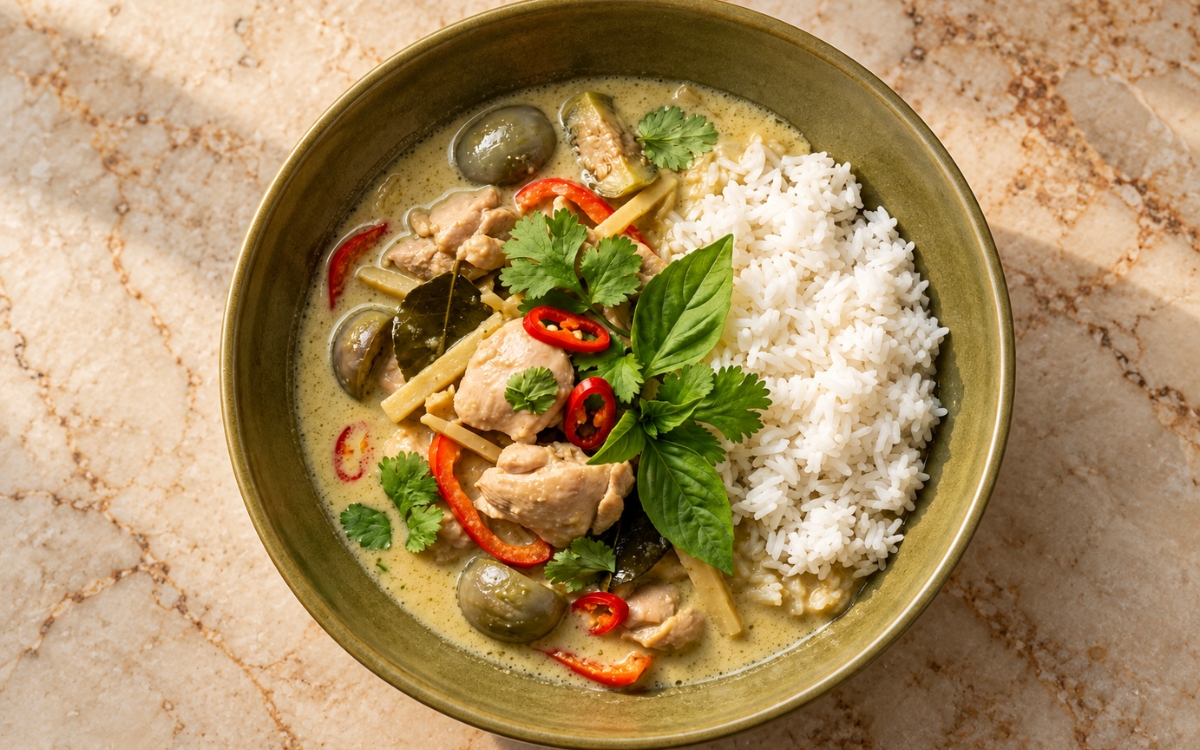
- Fluff the rested jasmine rice once more and divide it among 4 shallow bowls. Spoon the green curry chicken beside or partly over the rice, making sure each bowl gets an even share of chicken, eggplant, pepper and sauce. Garnish with the remaining cilantro, the extra Thai basil and cilantro leaves, and the 1–2 thinly sliced red chillies. The sauce should pool loosely around the rice rather than sit on top as a paste. Serve immediately, while the curry is hot and the herbs are fresh. That quick finish is what lets the rice soak up some of the coconut broth while the basil and chillies stay bright.
Notes
Frying the green curry paste in coconut cream first deserves genuine recognition as the technique most directly responsible for whether this curry tastes rounded or raw. The recipe's own instruction that "The paste must be cooked in the coconut milk before adding the rest of the liquid" reflects how a few minutes in hot fat cook out the paste's harsh edge — simmered straight into a full pot of liquid, its aromatics never properly fry.
Keeping the curry at a gentle simmer deserves the same attention this technique receives throughout this collection's other coconut-based curries, because it decides the texture of the chicken and the look of the sauce. The recipe's own warning that "Strong boiling can tighten the chicken and can make the coconut milk look rough or split unpleasantly" explains why the heat stays at small, lazy bubbles for the 8–10 minutes and the 5–7 minutes that follow.
Adding the Thai eggplant only after the chicken has mostly cooked deserves genuine respect as the detail most directly responsible for vegetables that stay distinct in the bowl. The recipe's own note that "Thai eggplant should be tender enough to bite through easily, but not mushy" sets the target, and a 5–7 minute simmer reaches it — any longer and the quarters soak up sauce, collapse and cloud the broth.
The finished consistency deserves attention as a genuine, checkable readiness cue rather than a loose approximation. The recipe's own target that "The finished curry should be creamy and smooth but still clearly a curry broth, not a thick paste" means checking that the sauce pours loosely from a spoon, then adding a splash of water if it has tightened, instead of reducing it toward a heavy gravy.