Ingredients
Method
Make the Dough
- In a large bowl, mix the flour, salt, and sugar. Add the softened butter and rub it into the flour with your fingers until the mixture looks slightly sandy. Add the egg and 120ml cold water. Mix until a rough dough forms. Add the remaining water only if the dough feels dry and cannot come together. Knead for 5 to 7 minutes, until smooth and elastic. The dough should be smooth and flexible, not sticky and not dry. A dry dough cracks when wrapped; a wet dough becomes hard to roll thinly. That specific balance matters directly for the wrapping stage still to come — either extreme would compromise the dough's ability to spiral cleanly and seal tightly around each cheese stick.
Rest the Dough
- Shape the dough into a ball, cover tightly, and rest at room temperature for 30 minutes. Resting matters here because the dough needs to relax. If you roll it immediately, it will shrink back and fight you while wrapping the cheese. That rest gives the gluten network genuine time to relax after kneading, which is directly what lets the dough roll out thin and stay put once wrapped, rather than springing back and fighting the shape at every stage.
Prepare the Cheese
- Cut the cheese into 20 even sticks, about 8 to 9cm long and 1.5cm thick. Pat the cheese dry with paper towels if it feels wet on the surface. Excess moisture on the cheese makes the dough harder to seal and increases the chance of leaks during frying. That surface moisture, if left unaddressed, would work directly against the dough's own ability to seal tightly around the cheese, giving any trapped liquid a real path to escape once the tequeños hit the hot oil.
Roll and Cut the Dough
- Lightly flour the counter. Roll the dough into a thin sheet, about 2mm thick. Cut it into long strips about 2 to 2.5cm wide. You need enough strips to wrap 20 cheese sticks. Rolling the dough to this specific, genuinely thin thickness protects the finished tequeños from turning heavy — a thicker dough would simply take longer to fry through to crisp, risking the cheese overcooking or leaking before the dough itself is properly done.
Wrap the Tequeños
- Take one cheese stick and wrap one strip of dough around it in a tight spiral, overlapping the edges slightly as you go. Pinch and seal both ends completely so no cheese is exposed. Repeat with the remaining cheese sticks. The cheese must be fully enclosed. If you see any exposed cheese or thin cracks, patch them with a small piece of dough before frying. Sealing those two ends with genuine, deliberate attention, rather than treating the spiral's own overlap as sufficient protection on its own, is what actually keeps the cheese contained — those ends are specifically where most leaks happen, not along the wrapped body itself.
Chill Briefly
- Place the wrapped tequeños on a tray and chill for 10 to 15 minutes while the oil heats. This helps the dough firm up and hold its shape. Chilled tequeños are less likely to open in the oil. Do not skip this if your kitchen is warm. That brief chill firms the dough's own butter back up after all the handling during wrapping, giving the tequeños real structural stability right before they meet the shock of hot oil.
Make the Guasacaca
- Blend the avocado, cilantro, parsley, garlic, green bell pepper, onion or scallion, vinegar, lime juice, oil, salt, black pepper, and 30ml cold water until smooth. Add more water only as needed to make it spoonable and creamy. Taste and adjust with more salt, lime, or vinegar. Guasacaca should be bright, tangy, herbal, and creamy. It should cut through the fried dough, not taste heavy or flat. That deliberate brightness is the sauce's whole functional purpose — without real acidity and herbal lift, the finished plate would read as considerably heavier against the rich, fried tequeños it's meant to accompany.
Fry the Tequeños
- Heat the oil to 175°C. Fry the tequeños in batches for 3 to 5 minutes, turning occasionally, until evenly golden and crisp. Do not overcrowd the pot. Transfer to a rack or paper towel-lined tray. If the oil is too cool, the dough absorbs oil and the cheese has more time to leak. If it is too hot, the outside browns before the cheese melts properly. Maintaining that specific oil temperature protects the tequeños from both directions at once — too cool extends their time in the oil unnecessarily, while too hot darkens the dough before the cheese inside has actually had time to properly melt.
Serve
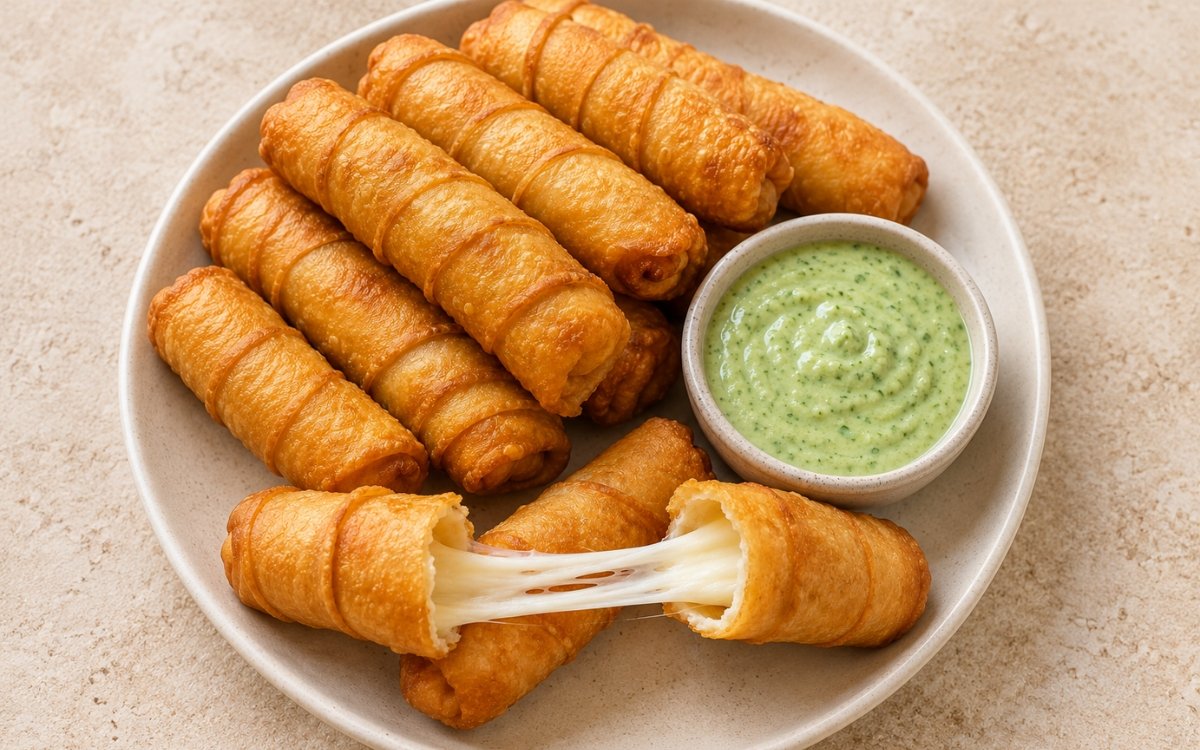
- Serve hot with guasacaca on the side. The tequeños should be crisp and golden outside, with melted stretchy cheese inside. Serving while genuinely hot is what delivers that stretchy, just-melted cheese — it firms back up steadily the moment the tequeños cool.
Notes
Sealing both ends of each wrapped tequeño with genuine, deliberate attention deserves recognition as the detail most directly responsible for whether the cheese actually stays contained through frying. It's a real, specific point worth internalising that most leaks happen from those weak ends rather than from the spiral itself — a cook focused entirely on a tight spiral wrap while treating the ends as an afterthought would be protecting against the wrong failure point.
Choosing a genuinely firm, low-moisture cheese, rather than a wetter fresh variety like traditional mozzarella, deserves the same attention this collection gives to any recipe where a filling's own moisture content directly threatens the surrounding structure. That firmer cheese simply doesn't release the same volume of liquid under heat, protecting the tequeños from leaking regardless of how carefully everything else is executed.
Chilling the wrapped tequeños briefly before frying deserves genuine respect as a real, functional step rather than an optional pause. That chill re-firms the dough's butter content after the handling involved in rolling and wrapping, giving the tequeños real structural stability right before they meet the aggressive shock of hot oil — skipping this step, especially in a warm kitchen, leaves the dough considerably more vulnerable to opening during frying.
Rolling the dough to a genuinely thin, specific thickness deserves attention as a deliberate technical choice rather than a loose guideline. Dough rolled thicker than intended would need considerably longer in the fryer to actually crisp through, and that extended time creates real risk of the cheese inside overcooking or leaking out before the dough itself ever reaches proper doneness.