Ingredients
Method
Prepare the Chicken
- Pat the chicken legs dry, then use a sharp knife to make 2–3 deep slashes through both the thigh and the drumstick portion of each leg, without cutting all the way through to the bone. The slashes open a path for the marinade to reach deeper into the meat and help the thicker thigh section cook through at closer to the same pace as the drumstick.
First Marinade
- Place the chicken legs in a large bowl, add the salt and lemon juice, and rub it thoroughly into the chicken, working it into the cuts as well. Set aside for 20–30 minutes. This short first pass seasons the meat directly at the surface and in the slashes, building the base layer of the classical tandoori flavor before the yogurt marinade goes on.
Second Marinade
- In another bowl, mix the yogurt, ginger, garlic, lemon juice, oil, Kashmiri chili, paprika, cumin, coriander, garam masala, turmeric, black pepper, salt, and kasuri methi if using. Add the chicken legs and coat every piece thoroughly, pressing the marinade into the slashes and into the joint where the thigh meets the drumstick. Cover and refrigerate for at least 4 hours, preferably 8–24 hours. The marinade should be thick enough to cling to the chicken; if the yogurt is loose or watery, drain it briefly first so the coating stays put instead of sliding off during cooking.
Cook the Rice
- Rinse the jasmine rice in several changes of cold water until the water runs mostly clear, then drain well. Combine the rice with 450 ml water if it was soaked for 15–20 minutes, or 480 ml if using unsoaked rice, along with the salt and optional butter or oil, in a saucepan with a tight-fitting lid. Bring to a boil, stir once, cover, reduce the heat to very low, and cook for 12 minutes. Turn off the heat and leave covered for 10 minutes, then fluff gently with a fork. Keep the lid on through both the cooking and the resting time, since lifting it lets out the steam the rice needs to finish cooking evenly.
Roast or Grill the Chicken
- Take the chicken legs out of the fridge 20–30 minutes before cooking. For the oven method, heat the oven to 220°C and place the legs on a rack over a lined tray, or directly on a lightly oiled tray with space between pieces. Roast for 40–45 minutes, turning once halfway through, until cooked through and starting to char; for stronger color, switch to the broiler for the last 3–6 minutes, watching closely so the edges char without burning. For the grill method, cook over medium-high heat for about 40–45 minutes, turning regularly, until cooked through and charred in spots. Because the thigh is the thickest part of a whole leg, check doneness there rather than in the drumstick: it's done when that thickest section near the bone reaches 74°C, the juices run clear, and the edges are visibly roasted and lightly blackened in places. Rest for 5 minutes before serving.
Make the Salad
- Mix the sliced red onion and cucumber with the lemon juice, salt, and optional pepper or chaat masala. Let it sit for 5–10 minutes before serving so the vegetables soften slightly and pick up the seasoning.
Serve
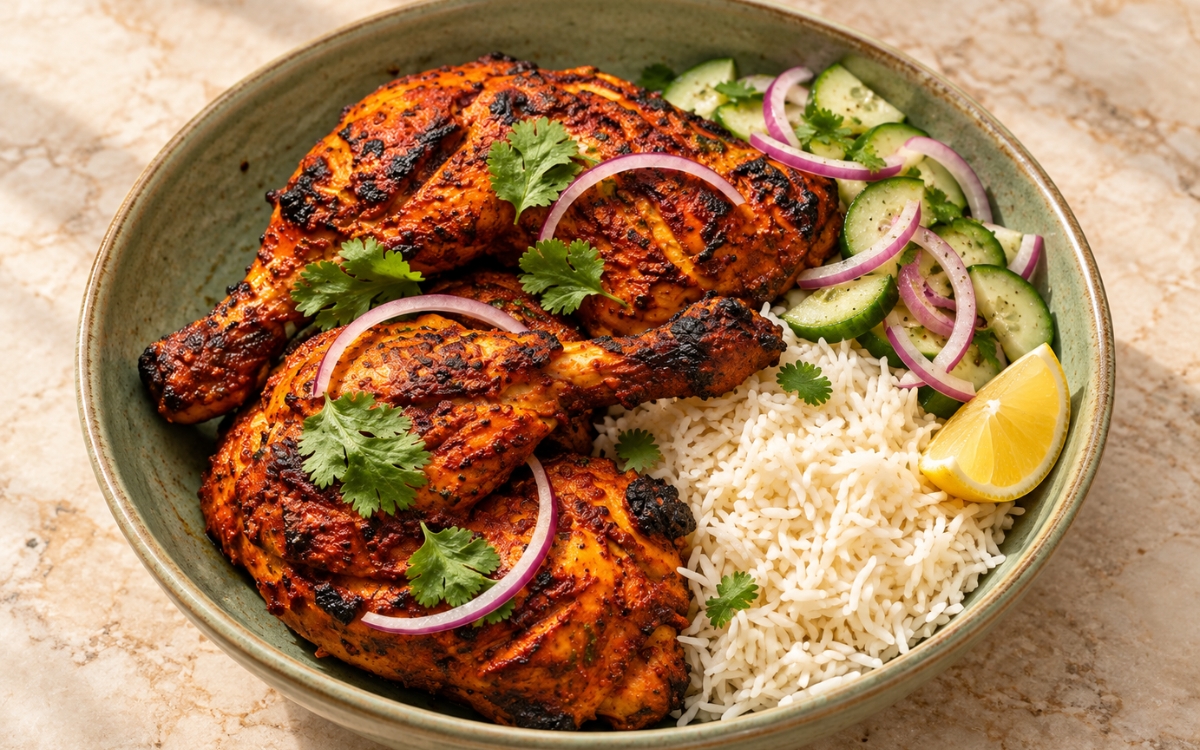
- Divide the rice among 4 bowls or plates, using 75 g of uncooked rice per serving. Top each serving with 2 chicken legs, add a small portion of the onion-cucumber salad on the side, along with a lemon wedge and a little cilantro. The chicken stays the main focus of the plate, with the rice and salad as smaller supporting sides.
Notes
The two-stage marinade is what builds the layered tandoori flavor: the first pass of salt and lemon seasons the meat directly at the surface and in the slashes, while the second yogurt-based marinade coats the chicken with spice and helps form the roasted crust during cooking. Skipping straight to the yogurt stage still works, but the flavor reads flatter without that first salt-and-lemon pass underneath it.
Thick yogurt is worth seeking out specifically for this marinade, since a thinner, more watery yogurt tends to slide off the chicken during roasting or grilling instead of forming the coating that chars into a proper crust.
Keeping space between the legs on the tray or grill allows direct heat and airflow to reach the surface of each piece, which is what produces the roasted, charred tandoori exterior; pieces packed too closely trap steam instead and finish with a paler, softer surface.
Because a whole leg combines two differently sized muscles, the thigh needs the most attention when checking doneness — it's the thicker, slower-cooking portion, so a temperature reading taken there is the one that actually confirms the whole piece is ready.