Ingredients
Method
Cook the Strawberry Rhubarb Filling
- Combine the rhubarb, strawberries, sugar, lemon juice, cornstarch, vanilla, and salt in a small saucepan, then cook over medium heat, stirring often, until the fruit releases liquid, the rhubarb softens, and the mixture thickens into a jammy compote, 8 to 12 minutes. The filling is ready when the rhubarb is tender but still has some small visible pieces, the strawberries have mostly broken down, and a spatula dragged across the pan leaves a line for 1 to 2 seconds before slowly closing back in. Don't leave the filling loose or watery, or it will flood the cookies once baked. Transfer to a shallow bowl or plate, cool completely, then refrigerate until cold and thick, about 30 to 40 minutes.
Make the Oat Crisp Topping
- Mix the flour, oats, brown sugar, cinnamon, and salt in a medium bowl, then pour in the melted butter and mix with a fork until small clumps form. You want irregular crumbs, not a paste. Refrigerate until needed so the topping stays crumbly rather than softening.
Make the Cookie Dough
- Beat the softened butter, light brown sugar, and granulated sugar together until creamy and smooth, 2 to 3 minutes, then add the egg, egg yolk, and vanilla, mixing until fully incorporated. Whisk together the flour, oats, cornstarch, baking soda, baking powder, and salt in a separate bowl, then add the dry ingredients to the butter mixture and mix just until no dry flour remains. The dough should be soft, thick, and slightly tacky. Don't overmix once the flour is in, or the cookies can become tougher and spread less evenly.
Chill the Dough
- Cover and refrigerate the dough for 30 minutes, until firm enough to scoop cleanly. This chilling step matters for thick cookies and helps control spread once the fruit filling is added.
Portion and Fill the Cookies
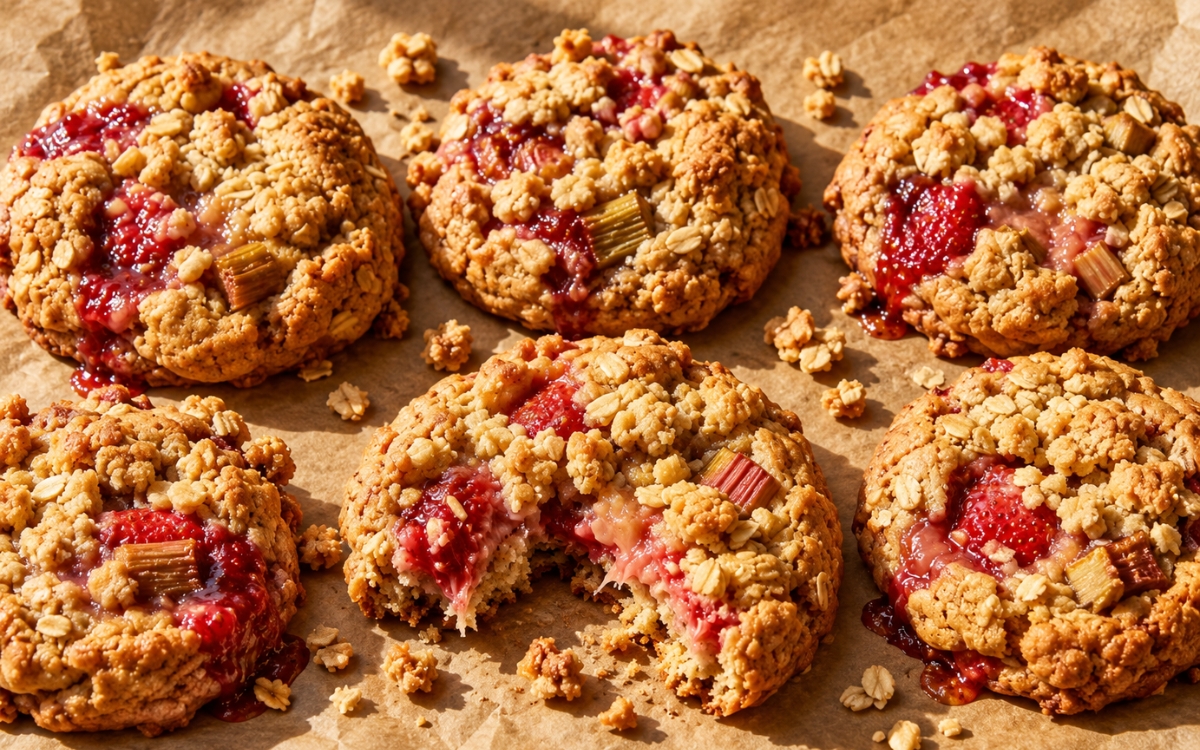
- Line baking sheets with parchment, then scoop the dough into 24 portions, about 40–45 g each, flattening each slightly in your hand or on the tray. Add about 2 teaspoons of the cold strawberry-rhubarb filling to the center of each, then fold or mound the dough loosely around the filling so it's mostly enclosed but with a little filling still peeking through for the rustic oat crisp look. Top each cookie with a generous spoonful of the chilled oat crisp topping, pressing very lightly so it adheres without flattening the cookie too much. Refrigerate or freeze the tray for 15 to 20 minutes before baking if the dough softens while shaping, which helps especially in a warm kitchen.
Bake
- Heat the oven to 180°C conventional / 170°C fan. Bake 6 cookies at a time per tray, leaving enough space between them, for 14 to 16 minutes, until the edges are deep golden brown, the oat topping is set and lightly toasted, the centers are puffed and mostly set, and the fruit filling is bubbling in spots. Don't overbake — the centers should still look a little soft when you pull them, since they finish setting on the hot tray.
Cool and Set
- Let the cookies cool on the baking sheet for 15 minutes before moving them, since the fruit filling is very soft when hot and needs this rest to thicken and set inside the cookies. Transfer carefully to a rack and cool completely, or serve slightly warm.
Notes
Cooking the fruit filling to a genuinely thick, jammy consistency isn't a step worth rushing, even when the compote looks mostly done earlier than expected. A filling that's still loose when it goes into the cookies will flood the dough during baking, undoing the clean fruit pockets the recipe is built around.
Cooling the filling completely before it ever touches the cookie dough protects the whole shaping process. Warm filling melts the surrounding dough on contact, which causes excess spreading in the oven and loses the thick, defined shape these cookies depend on.
Old-fashioned rolled oats, rather than quick oats, matter both in the dough and the topping for the same reason — they keep their shape and texture rather than breaking down into something smoother and less distinctly crisp-like. Quick oats would blur the craggy topping texture this recipe is specifically aiming for.
Some filling peeking through or even leaking slightly during baking is normal and part of the intended rustic look, giving the cookies their jammy fruit-pocket appearance. Large leaks, though, usually point to filling that wasn't cooked down thick enough or dough that had warmed too much before baking.