Ingredients
Method
Prepare the Pan and Oven
- Heat the oven to 180°C / 350°F conventional or 160°C / 320°F fan. Butter a 20 cm / 8-inch square baking tin and line the bottom with parchment, or for individual puddings, butter 8 x 150–180 ml ramekins or pudding moulds. The sponge is extremely moist and delicate while hot, so properly greasing and lining the pan is what prevents tearing once it's time to portion.
Soften the Dates
- Place the chopped dates in a heatproof bowl, pour over the boiling water, then stir in the bicarbonate of soda and leave for 15 minutes. The dates should turn extremely soft and the liquid should darken. Mash thoroughly with a fork or pulse briefly with an immersion blender, keeping some fine date texture rather than turning it completely smooth, until the mixture resembles a thick, loose puree with no large tough pieces. Let it cool until warm rather than piping hot before it goes into the batter, since adding it too hot can partially cook the eggs.
Cream the Butter and Sugar
- Beat the softened butter and dark muscovado sugar for 2 to 3 minutes until well combined and slightly lighter, then add the black treacle and beat until evenly distributed. Muscovado naturally stays heavier and less fluffy than white sugar, so there's no need to keep beating in an attempt to make the mixture pale.
Add the Eggs
- Add the eggs one at a time, beating well after each addition, then mix in the vanilla. If the mixture starts to look slightly split, add 1 tablespoon of the flour and continue mixing. Room-temperature eggs incorporate far more cleanly into the butter mixture than cold ones, which is worth planning for ahead of time.
Finish the Batter
- Fold in the self-raising flour and salt until only a few streaks remain, then add the entire date mixture, including all of the soaking liquid, and fold gently until evenly combined. The batter should be soft, loose, and distinctly darker than a standard cake batter. Once the flour goes in, mix only until combined — overmixing develops gluten and produces a tougher sponge instead of the soft, sticky crumb this pudding depends on.
Bake
- Transfer the batter to the prepared tin and smooth the top, then bake the square pudding for 30 to 35 minutes, or individual puddings for approximately 20 to 25 minutes. The pudding is ready when the surface is risen and dark brown, the centre springs back gently, and a skewer inserted into the centre comes out with moist crumbs but no raw batter. Don't bake until the skewer comes out completely dry — this pudding is meant to retain significant moisture.
Make the Toffee Sauce
- While the sponge bakes, place the butter, muscovado sugar, cream, golden syrup, black treacle, and salt in a saucepan, then heat gently until the butter melts and the sugar dissolves. Bring to a gentle simmer and cook for 4 to 6 minutes, stirring occasionally, then remove from the heat and stir in the vanilla. The sauce should coat the back of a spoon but stay easily pourable — don't let it boil aggressively, since excessive reduction makes it overly thick and potentially grainy as it cools.
Soak the Hot Pudding
- When the pudding comes out of the oven, leave it in the pan for 5 minutes, then use a skewer to make small holes across the surface. Pour about 200 ml of the hot toffee sauce gradually over the pudding, letting each addition absorb before adding more, then leave for 5 to 10 minutes. For an especially sticky surface, return the soaked pudding to the oven for 5 minutes. This gradual soaking is what produces the glossy, syrup-rich interior rather than sauce that simply runs around the edges — pouring it all on at once skips that absorption entirely.
Portion and Serve
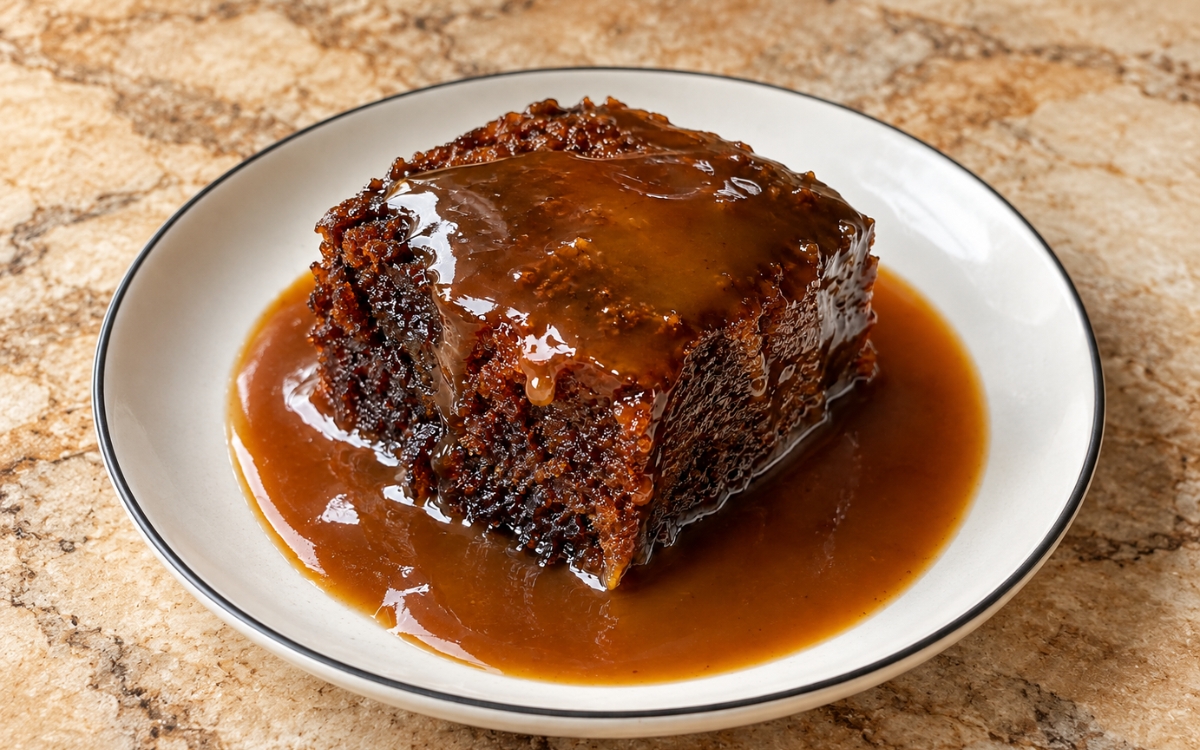
- Cut the pudding into 8 generous squares and place each one onto a warm plate, then spoon additional warm toffee sauce generously over the top, letting plenty run down the sides and pool around the pudding. Serve immediately.
Notes
Dates are doing more structural work in this sponge than they might appear to at first glance. Soft, sticky dates — Medjool especially — break down into a near-puree that folds seamlessly into the batter, while standard dried dates need a thorough soak to reach the same point; skipping that soak leaves tough fragments scattered through the finished crumb.
Dark muscovado sugar and black treacle together are what give this pudding its signature dark color and deep caramel flavor. Light brown sugar in place of muscovado produces a noticeably paler, flatter-tasting result, and while the amount of treacle is small, it's enough to carry real bitterness and depth without pushing the dessert toward tasting like straight molasses.
The gradual soaking step after baking deserves real attention rather than being treated as a garnish step. Pouring all the toffee sauce on at once overwhelms the surface and lets most of it run off around the edges, while adding it in stages, letting each pour absorb before the next, is what actually gets the sauce into the crumb rather than just around it.
Overmixing the batter once the flour is added works against everything the earlier steps built. The soft, sticky crumb this pudding is known for depends on minimal gluten development, so folding just until the streaks disappear protects the texture the rest of the recipe is aiming for.