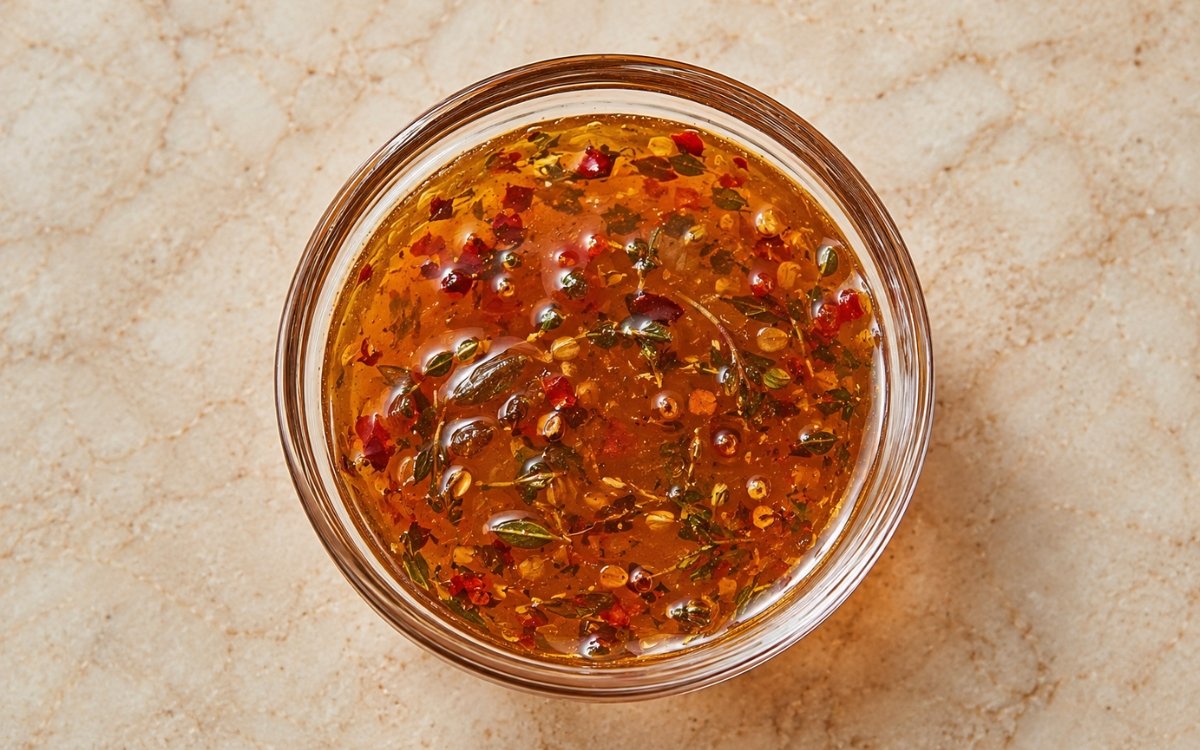
Ingredients
Method
Gently Warm the Honey
- Place the honey in a small saucepan over the lowest heat setting. The objective is simple: loosen the viscosity so it can carry flavor evenly — not cook it. Within 2–3 minutes the honey should become fluid and glossy. Avoid simmering or bubbling at all costs, since excessive heat dulls floral aromatics and can introduce bitterness from sugar degradation. If using a thermometer, aim for about 60°C — warm to the touch but never hot.
Add Chili and Aromatics
- Stir in the chili flakes, optional cayenne, salt, and any optional aromatics like finely minced garlic or thyme. Distribute everything evenly through the warm honey so no clumps of spice remain. At this stage the mixture will still look pale and relatively thick.
Infuse Slowly Over Low Heat
- Allow the mixture to sit over very low heat for 2–3 minutes, stirring occasionally. The chili flakes will hydrate slightly and release capsaicin and color into the honey, deepening its golden tone and building gentle heat. This is the key control point for intensity — longer infusion or more chili dramatically increases spiciness.
Brighten with Vinegar Off Heat
- Remove the pan from heat before adding the apple cider vinegar. Stir immediately and thoroughly as the mixture loosens and becomes more pourable. The vinegar introduces necessary acidity that sharpens both sweetness and heat, preventing the drizzle from tasting heavy or one-dimensional.
Cool and Thicken Naturally
- Allow the spicy honey to cool completely in the pan before transferring to storage. As it rests, the texture thickens and the chili heat becomes more defined and integrated. Once fully cool, pour into a jar or squeeze bottle for easy use.
Notes
The hot honey trend emerged prominently from American Southern cooking, where chili-spiked honey appeared on fried chicken and biscuits before spreading rapidly through restaurant culture worldwide. Mike's Hot Honey in New York is often credited with popularizing it as a packaged product, but the concept of pairing honey with heat has deep roots in many culinary traditions including Italian, Middle Eastern, and North African cooking.
Raw honey is preferred for this recipe because its more complex aromatic profile survives gentle warming better than processed honey. Processing removes aromatic compounds and strips honey of its individual floral character — the very qualities that make raw honey interesting are what provide the base for an excellent spicy honey. Buckwheat honey, wildflower honey, and other strong-flavored raw varieties produce particularly interesting spicy honey with distinctive depth.
The garlic and thyme are genuinely optional additions that push the spicy honey toward savory rather than sweet. Without them, the drizzle is a pure sweet-heat condiment most naturally suited to sweet applications. With them, it becomes a more complex, savory-leaning condiment better suited to cheese, cured meats, and vegetables.