Ingredients
Method
Prepare the Zucchini
- Slice the zucchini into thin rounds, about 2–3mm thick. Keep them as even as possible so they fry at the same rate. This thickness matters. If the slices are too thick, they stay watery and do not collapse into the silky texture the dish needs. If too thin, they can burn before they properly soften. That specific, consistent thickness is calibrated precisely to give every slice the same real chance at collapsing into the dish's whole characteristic silky texture — either extreme forces a genuine compromise between properly softened and properly browned.
Fry the Zucchini
- Pour enough olive oil into a wide skillet or sauté pan to shallow-fry. Heat over medium to medium-high heat until the oil is hot but not smoking. Fry the zucchini in batches. Do not overcrowd the pan. Cook each batch until the rounds are golden with light brown edges, then turn and fry the second side until lightly caramelized and tender. Transfer to a tray or plate lined lightly with paper towel only if they seem very oily, then immediately season lightly with salt and some black pepper. As each batch comes out, pile the zucchini together and scatter with torn basil. The zucchini should not remain pale. Proper browning gives the dish its flavor. They will continue softening after frying, so you do not need them dark and crisp all the way through — just well-colored and tender. Reserve 2–3 tablespoons of the frying oil for finishing. Frying in properly small, uncrowded batches protects the oil's own temperature from dropping too far when multiple slices are added at once — a real drop would let the zucchini absorb excess oil while staying pale, rather than actually browning.
Rest the Zucchini
- Let the fried zucchini rest for 20 minutes with the basil. This is one of the most important steps. Freshly fried zucchini is still distinct and structured. During the rest, it softens, relaxes, and begins to meld into the sauce later. That softened, almost silky texture is key to a good Nerano. That genuinely necessary rest gives the zucchini real time off direct heat to relax structurally, transforming from distinct fried rounds into something closer to the dish's own soft, integrated sauce base.
Cook the Spaghetti
- Bring a large pot of water to a full boil and salt it well. Cook the spaghetti until 1–2 minutes shy of al dente. Before draining, reserve at least 350ml pasta water. Drain the pasta. Do not rinse. The starch on the pasta is necessary for emulsifying the cheese and oil into a glossy sauce. Pulling the spaghetti genuinely short of al dente leaves real room for it to finish cooking directly in the pan, absorbing flavour from the zucchini and cheese emulsion it wouldn't get if it arrived already fully done.
Start the Sauce Base
- Place a large skillet or sauté pan over low heat. Add the rested zucchini along with 2–3 tablespoons reserved zucchini oil. Add a splash of pasta water and stir gently to loosen everything. Add the drained spaghetti and toss so the pasta picks up the zucchini and its flavor. At this stage the pan should be on low heat only. Too much heat will make the cheese seize later. That deliberately low heat, established before the cheese is ever introduced, sets the stage for the genuinely delicate emulsion still to come — a pan already running too hot would work directly against that cheese's ability to melt smoothly rather than seizing.
Build the Pecorino Emulsion
- In a bowl, place the finely grated Pecorino Romano. Add a small amount of hot reserved pasta water, a little at a time, stirring constantly to create a loose, creamy paste. Do not dump all the water in at once. You want a smooth paste first, then a fluid cheese mixture. Add the cheese mixture to the pasta off the heat or over the lowest possible heat. Toss continuously, adding more pasta water a little at a time until the spaghetti becomes glossy, creamy, and fluid, not dry and not tight. Add the black pepper and keep tossing. This is the critical technique of the dish: the sauce is an emulsion, not a cream sauce. The Pecorino must melt into the starch and water, not scramble or clump from direct heat. If the pan is too hot, the cheese will turn grainy or stringy instead of silky. The final consistency should lightly coat every strand and pool very slightly at the bottom of the pan, because the sauce tightens as it sits. Adding that hot pasta water into the cheese gradually, rather than all at once, is what lets the Pecorino's own proteins hydrate smoothly into a real emulsion — a sudden flood of liquid would instead shock the cheese into clumping rather than dissolving evenly.
Finish and Adjust
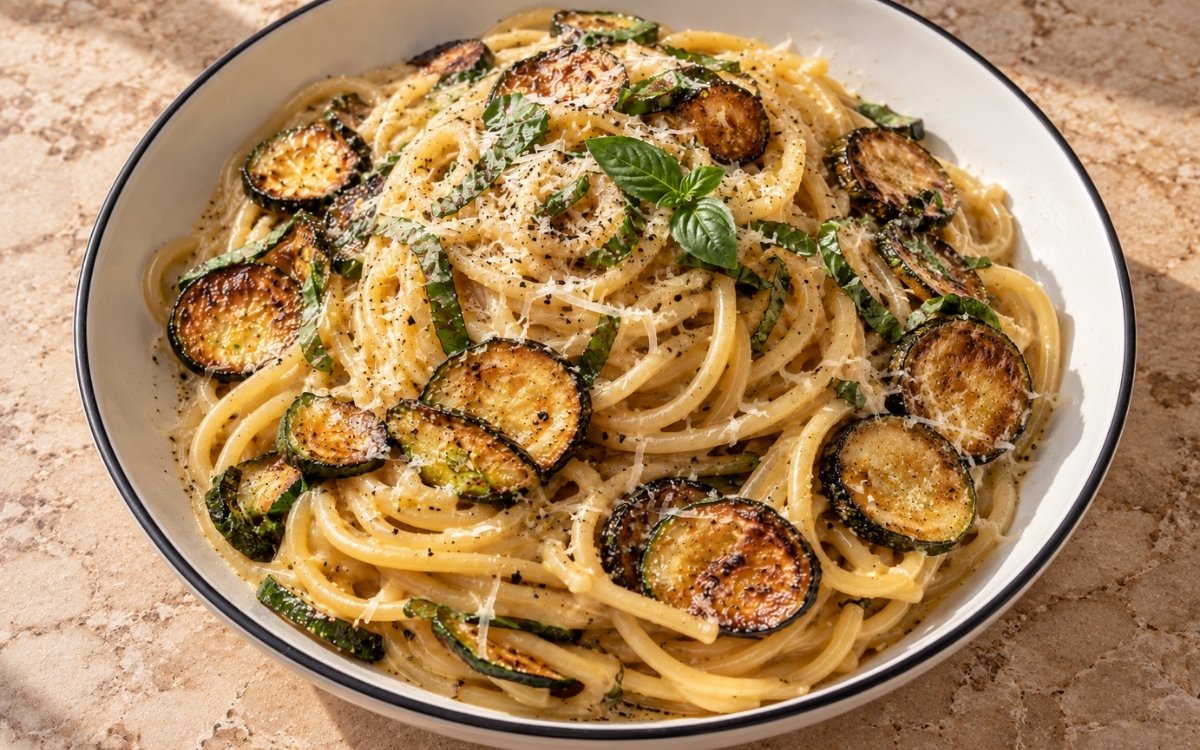
- Fold in most of the zucchini gently, leaving some visible on top if desired. Taste and adjust with more Pecorino, black pepper, or a splash of pasta water as needed. If it looks too tight, add more pasta water. If it looks too loose, toss another 20–30 seconds over very low heat. If it looks oily instead of creamy, it needs more tossing with a little more pasta water to pull the emulsion together. Finish with more Pecorino Romano and basil. Serve immediately. That real-time troubleshooting guidance reflects genuine understanding of how unpredictable this emulsion can be from batch to batch — the specific corrective action for each visible symptom is what lets the sauce actually be rescued rather than served broken.
Notes
Resting the fried zucchini for a full 20 minutes before it ever meets the pasta deserves genuine recognition as one of the recipe's own explicitly named key turning points. Freshly fried zucchini remains distinct and structured right off the heat, and that rest is specifically what softens and relaxes it into something considerably closer to the dish's own integrated sauce base — skipping or shortening it would leave the zucchini reading as a separate, distinct component rather than genuinely melding into the finished pasta.
Building the cheese sauce as a real emulsion of hot pasta water, starch, and finely grated Pecorino, rather than treating it anything like a cream sauce, deserves the same attention this technique receives throughout this collection's other emulsified pasta dishes. The recipe's own explicit framing of this as "the critical technique of the dish" reflects exactly how central that distinction is — the Pecorino needs to genuinely melt into the surrounding starch and water, not scramble or clump from direct heat.
Keeping the pan's heat low or entirely off specifically during the cheese-adding stage deserves genuine respect as the single most important safeguard the recipe names directly against a broken or grainy sauce. Pecorino Romano is notably saltier and firmer than the aged provolone-style cheeses more traditionally used in this dish, and the recipe's own acknowledgment that "careful emulsification is even more important" here reflects real, specific attention to that substitution's practical consequences.
Adding the hot pasta water into the grated cheese gradually, building a smooth paste before it ever becomes a fluid mixture, deserves attention as a genuinely deliberate technique rather than an arbitrary sequence. That incremental approach lets the cheese's own proteins hydrate evenly into a real emulsion — a sudden, large addition of hot liquid would instead shock the cheese into seizing rather than dissolving smoothly.