Ingredients
Method
Prep the Salmon and Herbs
- Tear or slice the smoked salmon into bite-sized ribbons. Chop the dill and slice the chives. Set the salmon aside in the refrigerator while you cook the eggs. Keeping the salmon cold until the end helps it hold its texture better when folded into the warm eggs. That cold starting temperature protects the salmon's own delicate structure from the moment it's cut right up until it finally meets the eggs, giving it a genuine head start against any softening the eggs' own residual warmth might later cause.
Toast the Sourdough
- Toast the sourdough slices until golden and crisp at the edges but still a little tender in the center. Butter them lightly if you like. Keep warm while you finish the eggs. Stopping the toast at crisp edges but a still-tender centre, rather than toasting all the way through, keeps the bread from turning brittle enough to shatter under a fork while eating this soft, delicate egg dish.
Whisk the Eggs
- In a large bowl, whisk together the eggs, milk or cream, salt, and black pepper until fully combined and evenly yellow. Do not over-whisk to the point of lots of foam. You want a smooth egg mixture, not a bubbly one. Stopping the whisking once the mixture looks smooth and evenly coloured, rather than continuing longer, avoids introducing excess air that could work against the dense, creamy curd texture this dish depends on.
Start the Scrambled Eggs Gently
- Place a large nonstick skillet or sauté pan over low to medium-low heat. Add 45g butter and let it melt gently. Pour in the eggs and cook slowly, stirring continuously with a spatula and sweeping across the bottom and sides of the pan. Soft scrambled eggs need low heat and constant movement. High heat makes them seize, toughen, and go dry very fast. That genuinely low heat, combined with continuous, sweeping movement, is what lets the eggs set gradually into fine, creamy curds rather than seizing quickly into the tougher, drier texture higher heat would produce.
Cook to Soft Curds
- Continue stirring gently until the eggs form soft, creamy curds. Add the remaining 15g butter partway through if the eggs need a little more richness and gloss. Stop cooking when the eggs are mostly set but still visibly soft, glossy, and slightly looser than you want on the plate. The eggs should look custardy and softly mounded, not wet and runny but definitely not dry. Residual heat will continue to carry them further. Adding that reserved portion of butter partway through, rather than all of it at the start, gives you a real, deliberate opportunity to adjust the eggs' own richness and gloss right as they're finishing, based on how they're actually looking at that stage.
Cool Slightly Before Adding the Salmon
- Remove the pan from the heat completely. Let the eggs rest for 1 to 2 minutes so the temperature drops slightly. Then fold in the smoked salmon, dill, and chives gently until just combined. Do not add the salmon while the eggs are still actively cooking over heat. The goal is to warm the salmon with the eggs' own residual heat, not to cook it. That genuine, timed cooling window is the single most important safeguard in this whole recipe — it's specifically what separates a plate of eggs with silky, gently warmed salmon from one where the fish has been inadvertently cooked, turning dry and chalky in the process.
Plate and Serve
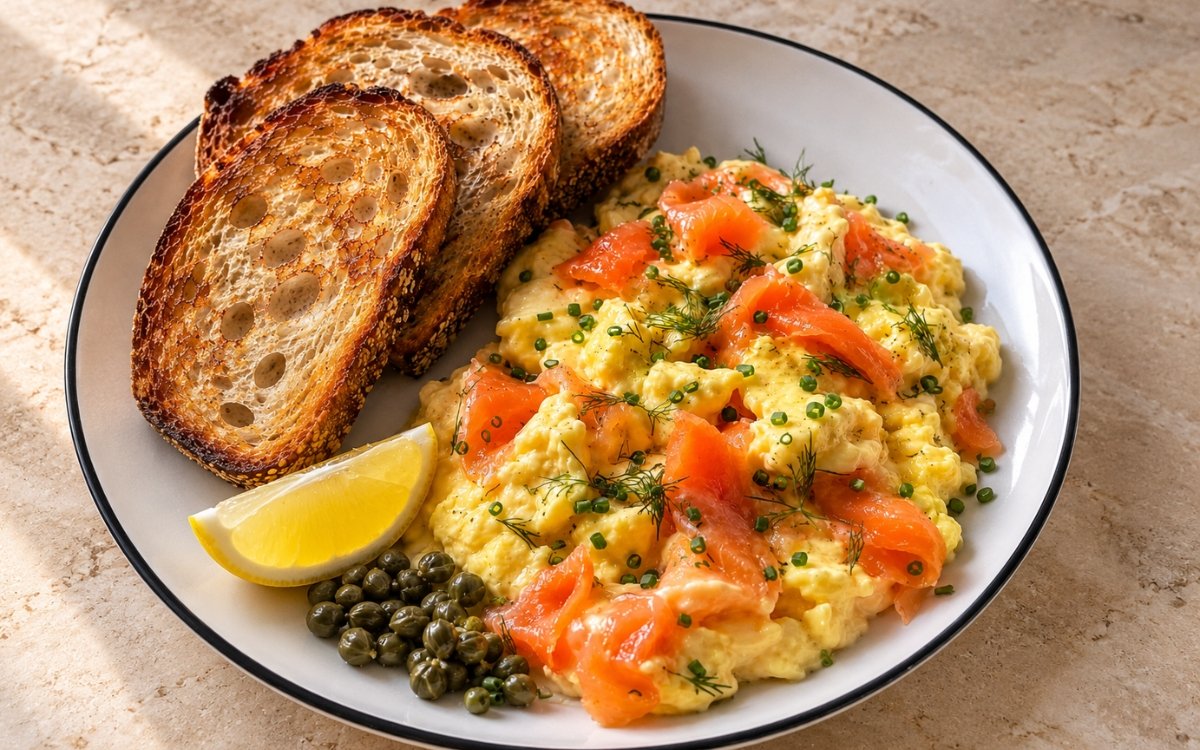
- Divide the scrambled eggs among plates. Serve with the toasted sourdough, capers, and lemon wedges. Finish with a little extra dill, chives, and black pepper on top. Serving immediately captures this dish at its intended best — the eggs' own soft, glossy texture and the salmon's silky, just-warmed quality both begin to change as the plate sits.
Notes
Removing the eggs from the heat entirely and letting them rest for a genuine 1 to 2 minutes before the salmon ever joins them deserves recognition as the single technique most responsible for this dish's whole identity. That cooling window is what allows the eggs' own residual warmth to gently warm the salmon through, rather than exposing it to any active, direct heat — skipping or rushing this step risks actually cooking the salmon, which would turn its texture noticeably drier and chalkier than the silky result this recipe is built around.
Cooking the eggs over genuinely low heat with continuous, sweeping movement deserves the same careful attention this technique receives throughout this collection's other soft scrambled egg dishes. That patient combination is what produces fine, creamy curds that set gradually rather than seizing quickly — higher heat would toughen and dry the eggs well before they ever reached the soft, custardy consistency this dish depends on.
Keeping the smoked salmon cold right up until the very last moment, rather than letting it sit at room temperature while the eggs cook, deserves genuine respect as a real, deliberate protective measure. That cold starting point gives the salmon's own delicate structure real protection against the warmth it's about to encounter, helping it hold its silky texture through the brief folding-in stage that follows.
The recipe's own explicit emphasis on capers and lemon as genuinely important components, rather than optional garnishes, deserves to be taken seriously. Both ingredients specifically cut through the combined richness of the eggs and the smoked salmon — without that acidic, briny contrast, the plate would read as considerably heavier and less balanced than intended.