Ingredients
Method
Prepare the Sauce Base
- In a bowl, whisk together the tomato paste, ketchup, water, Worcestershire sauce, yellow mustard, apple cider vinegar, brown sugar, smoked paprika, and chili powder if using until smooth. Set aside. The sauce should taste balanced before it hits the pan: tangy, lightly sweet, and tomato-forward. It will concentrate further during reduction. Mixing every sauce component together in advance means it can go into the hot pan as a single, complete addition, rather than adding ingredients one at a time while the beef is already cooking and demanding attention.
Sear the Beef
- Heat a large heavy skillet or sauté pan over medium-high heat until properly hot. Add the ground beef and break it into large chunks rather than constantly stirring it into tiny crumbles immediately. Season with about half of the salt, the black pepper, garlic powder, and onion powder. Let the meat sear hard before turning. Cook 6–8 minutes total, breaking it up gradually, until the beef is well browned with visible darker caramelized edges and most of the moisture has cooked off. This stage matters. The beef should smell roasted and savoury, not steamed. If too much liquid collects, keep cooking until it evaporates and the beef starts frying in its own fat. Drain only if there is excessive rendered fat, but keep some in the pan for flavour. Leaving the beef in larger chunks initially, rather than immediately crumbling it small, gives each piece more surface area in direct contact with the hot pan — beef broken up too early and too fine releases moisture quickly and steams rather than developing the caramelised edges this filling depends on for real depth.
Cook the Aromatics
- Push the beef to one side of the pan. Add the butter or oil to the empty side, then add the onion and green bell pepper. Cook 4–5 minutes, stirring, until softened and lightly translucent. Add the garlic and cook 30–45 seconds more, just until fragrant. The vegetables should soften and sweeten but not brown deeply. Their moisture helps loosen the browned beef bits from the bottom of the pan. Cooking the aromatics in the same pan, right alongside the beef rather than in a separate pot, lets their released moisture work directly on the fond left behind by the seared meat — that fond dissolves back into the mixture rather than staying stuck to the pan.
Build the Filling
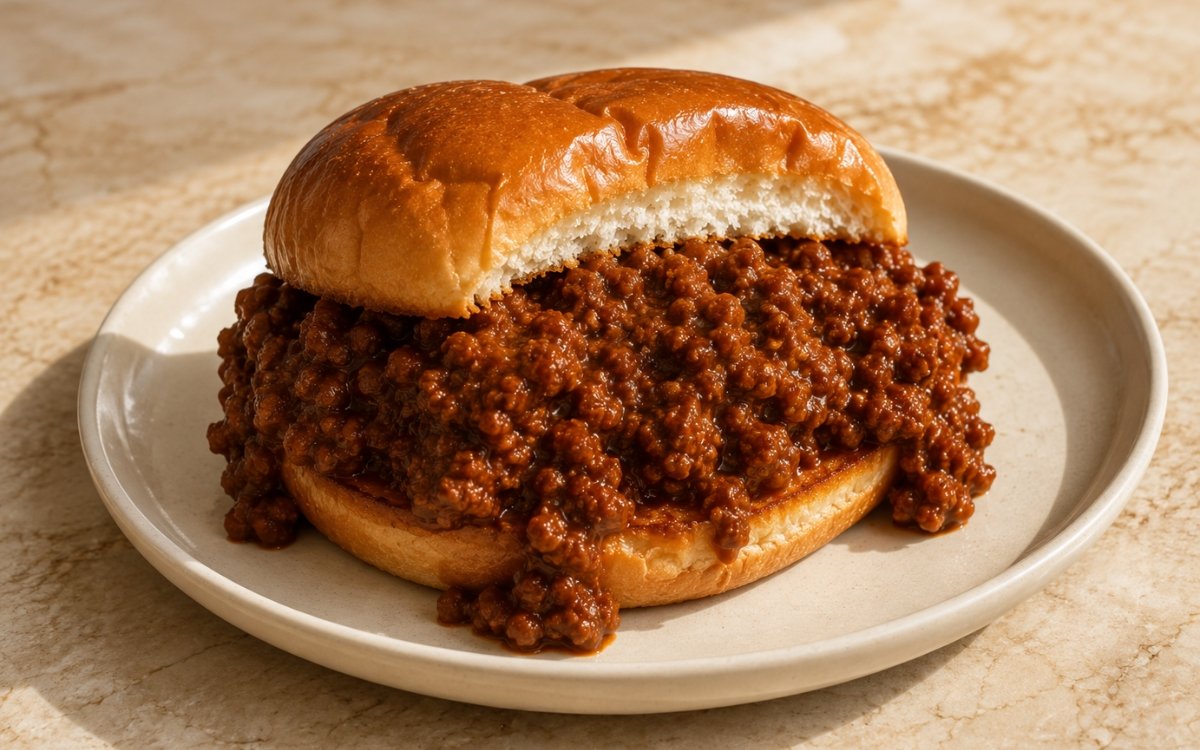
- Pour in the prepared sauce and mix thoroughly with the beef and aromatics. Reduce the heat to medium-low and simmer uncovered for 8–12 minutes, stirring often, until the mixture thickens and turns glossy. The correct texture is thick enough to mound onto a bun without running off immediately, but still loose and juicy enough to look "sloppy." The sauce should cling to every piece of beef and leave a clean track for a moment when dragged with a spatula. If too thick, loosen with a small splash of water. If too thin, continue reducing. Taste and adjust with the remaining salt, more black pepper, or an extra small splash of vinegar if it needs brightness. The "clean track" test — dragging a spatula through the mixture and watching how quickly it fills back in — is a useful visual cue for doneness here, more reliable than a fixed cooking time given how much moisture content can vary between batches of beef and vegetables.
Toast the Buns
- While the filling finishes, split the buns. Butter the cut sides lightly and toast in a skillet or on a griddle over medium heat until golden. The buns should be toasted enough to resist the saucy filling without going hard. A light crisp surface on the cut side helps prevent sogginess. This light toast gives the bun real, if modest, resistance against the hot, glossy filling — an untoasted bun would have considerably less tolerance for that moisture over the course of eating the sandwich.
Assemble
- Pile a generous portion of the hot Sloppy Joe filling onto each bottom bun, letting it mound high and spill naturally toward the edges. Close with the top buns and serve immediately. Letting the filling mound and spill slightly, rather than portioning it neatly and contained, is part of the dish's classic, deliberately messy character — a Sloppy Joe that looks too tidy has lost some of its identity.
Notes
Searing the beef in large chunks before breaking it apart is a real technique decision, not a minor detail of how the meat happens to go into the pan. Ground beef crumbled small and stirred continuously from the moment it hits the pan releases its moisture quickly, and that released liquid simmers the meat rather than allowing it to brown. Leaving the beef in larger pieces initially gives more of its surface real, sustained contact with the hot pan, which is what produces the darker, caramelised edges that give this filling its savoury depth — breaking it down gradually afterward, once that browning has developed, preserves that flavour rather than sacrificing it for speed.
Mixing the sauce fully before it ever meets the pan is a small organisational step that pays off in the finished flavour. Adding tomato paste, ketchup, Worcestershire, mustard, vinegar, sugar, and spices one at a time directly into a pan already juggling browned beef and softened aromatics risks uneven distribution and rushed seasoning. A pre-mixed, tasted sauce base goes in as a single, balanced addition, letting the reduction stage that follows do its job of concentrating an already-correct flavour rather than trying to balance the mixture on the fly.
The reduction stage's target texture — thick enough to mound without running off immediately, loose enough to still look properly "sloppy" — is the balance point to check by feel rather than the clock alone. Moisture content varies meaningfully depending on the beef's fat content and how much liquid the vegetables released, so the visual and textural cues described (glossiness, clinging to the beef, a track that holds briefly when dragged with a spatula) are more reliable indicators of doneness than a fixed simmer time.
Toasting the buns, though a small final step, protects the sandwich's structure more than its brief mention might suggest. A Sloppy Joe's filling is deliberately loose and saucy by design, which is exactly why the bun needs whatever extra resistance a light toast can provide — an untoasted, fully soft bun has very little tolerance for that intentional sauciness before it starts falling apart in hand.