Ingredients
Method
Prep the Noodles and Vegetables
- Drain the 600g boiled thin rice noodles very well; if they were freshly boiled, rinse them briefly under cold water only if needed to stop the cooking, then drain again thoroughly. If cooking your own, boil about 200–250g dried rice vermicelli just until tender, usually 2–4 minutes, then drain and cool. Spread the noodles out on a tray, or toss them lightly with the 1 tsp neutral oil, gently loosening any clumps by hand without overhandling the delicate strands. Slice the peppers into thin strips, cut the red onion into feathers, slice the scallions with the whites and greens kept separate, chop the garlic and slice the chillies. Rinse the 200g bean sprouts and drain them well. That thorough draining is what lets the noodles genuinely fry and take on the curry in the wok, rather than steaming into a soggy, swollen tangle.
Season the Shrimp
- Pat the 600g shrimp genuinely dry with paper towels. Toss them with the ½ tsp kosher salt, ¼ tsp white pepper and 1 tsp soy sauce, plus the Shaoxing wine and cornstarch if using, until every piece is evenly coated. Leave them in the fridge for 10 minutes while you mix the curry sauce, beat the eggs and set everything out beside the stove. Do not leave them much longer, because the shrimp only need a short seasoning time and extended salting starts to draw out moisture. If they look wet after resting, blot them once more. That dry, lightly seasoned surface is what lets the shrimp sear in the wok instead of releasing liquid that waters down the pan.
Mix the Curry Sauce
- In a small bowl, combine the 2 tbsp curry powder, the ½ tsp turmeric if using, 2 tbsp light soy sauce, 1 tbsp oyster sauce, 1 tsp dark soy sauce, 1 tsp fish sauce, 1 tsp sugar, ¼ tsp white pepper and 60ml of the chicken stock or water. Stir until completely smooth, with no dry pockets of curry powder, adding up to 20ml more stock only if the mixture is too thick to pour; it should be a loose, pourable paste. Crack the 4 eggs into a separate bowl with the pinch of salt and beat until evenly combined. Keep the dark soy to the measured teaspoon, because more turns the noodles brown rather than yellow. That fully mixed sauce is what makes the fast stir-fry manageable, since there is no time to measure once the wok is hot.
Cook the Egg
- Heat a wok or large skillet over medium-high heat until hot, then add the 1 tsp neutral oil from the egg ingredients and swirl to coat. Pour in the beaten eggs and let them sit for 5–10 seconds, then push them gently with a spatula into large, soft curds, cooking for about 1 minute in total, just until softly set but still slightly glossy. Remove them to a plate straight away. If the egg starts to brown or turn dry and crumbly, lower the heat and pull it sooner next time. That early, deliberately underdone scramble is what leaves the curds tender and visible in the finished noodles, since they warm through again in the final toss.
Sear the Shrimp
- Return the wok to high heat and add 1 tbsp of the neutral oil for stir-frying. Add the shrimp in a single layer — in 2 batches, with an extra ½ tbsp oil for the second, if they would otherwise overlap — and sear for about 1–2 minutes per side, depending on size, until they curl, pick up a few golden spots and turn mostly opaque, about 80–90% cooked. Remove them immediately to a plate. If liquid pools and the shrimp turn grey rather than golden, the wok is overcrowded, so lift some out and let the heat recover. That brief, genuinely hot sear is what browns the shrimp without overcooking them, since they finish cooking through when they return to the noodles.
Stir-Fry the Aromatics and Vegetables
- Keep the wok over high heat and add another 1 tbsp of the neutral oil. Add the scallion whites, garlic and sliced chillies and stir-fry for 20–30 seconds, until fragrant but not browned. Add the red onion and pepper strips and stir-fry for 2–3 minutes, tossing constantly, until the peppers soften slightly but still hold their shape and the onion feathers just begin to caramelise at the edges. If the garlic darkens before the vegetables go in, add them at once to cool the pan. The peppers should stay bright red and green, never limp or dull. That short, high-heat cook is what keeps the vegetables vibrant and crisp-tender against the soft noodles.
Bloom the Curry and Fry the Noodles
- Give the curry sauce a final stir. Push the vegetables to one side of the wok, add up to ½ tbsp of the remaining oil if the pan looks dry, and pour the sauce into the cleared space. Let it bubble for 10–15 seconds, until it smells toasted and aromatic. Add the noodles and toss quickly but gently with tongs or chopsticks, lifting rather than stirring, for 1–2 minutes, until every strand is evenly yellow and glossy and the vegetables are mixed through. If the noodles seem tight, dry or stuck together, sprinkle in 1–2 tbsp water and keep tossing. Patches of pale noodle mean the sauce has not reached them yet, so keep lifting and turning. That brief bloom in the hot pan is what drives off the raw spice taste and deepens the curry before it coats the noodles.
Finish the Stir-Fry
- Return the shrimp and scrambled egg to the wok, along with the bean sprouts and scallion greens. Toss for 30–60 seconds, just until the shrimp are opaque all the way through, the egg is hot and the bean sprouts are lightly wilted but still crisp and juicy. Taste a strand: it should be savoury, gently salty and fragrant with curry, and the noodles should look coated and lightly glossy, with no liquid pooling in the base of the wok. If they look wet, toss for a few seconds longer over the highest heat. Stop cooking as soon as everything is hot and evenly mixed. That short final toss is what finishes the shrimp without toughening them and keeps the sprouts genuinely crunchy.
Plate and Garnish
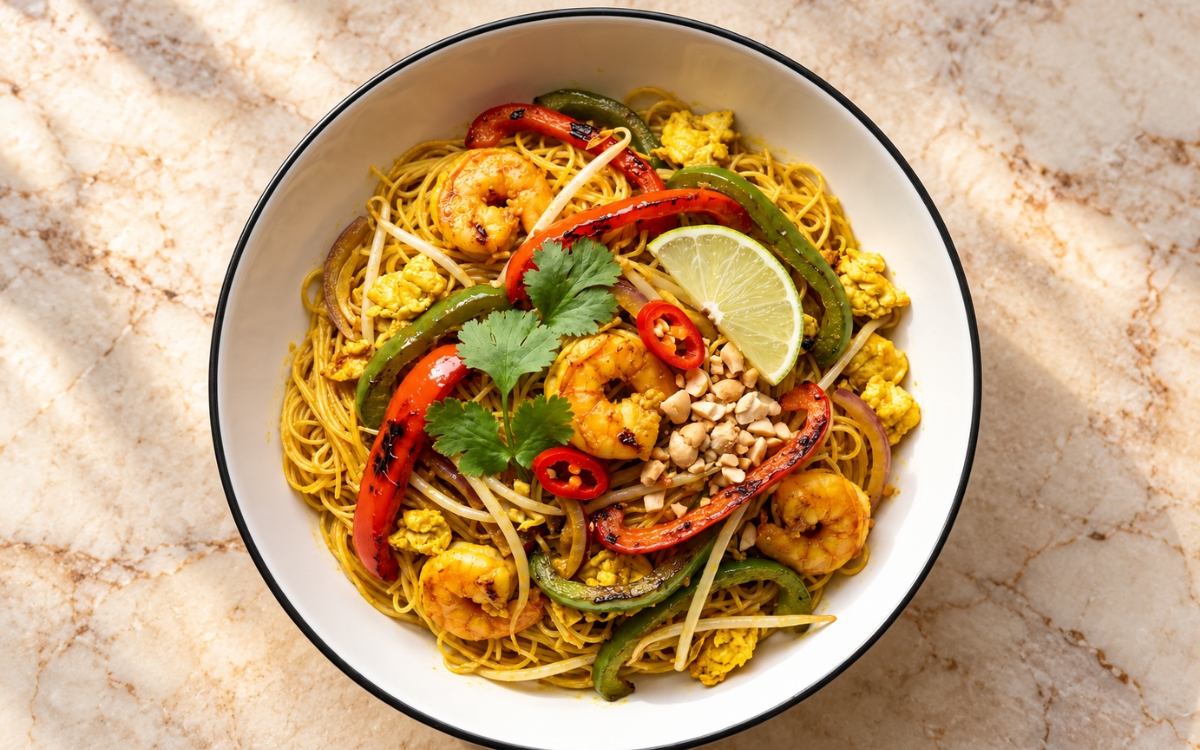
- Divide the noodles among 4 warm bowls or plates, lifting them with tongs so each portion gets a fair share of shrimp, egg curds, peppers, onion and bean sprouts. Scatter the cilantro leaves, extra sliced red chilli and the 30–40g chopped peanuts over the top, about 8–10g per portion, and tuck a lime wedge beside each one. Serve immediately, while the noodles are hot and still separate, and squeeze the lime over at the table rather than in advance. The finished dish should show tangled bright yellow noodles with visible shrimp, egg, vegetables and sprouts. That last-minute lime and garnish is what keeps the peanuts crunchy and the noodles dry and stir-fried rather than soaked.
Notes
Draining the boiled noodles thoroughly deserves genuine recognition as the technique most directly responsible for whether this dish turns out light and separate or heavy and soggy. The recipe's own warning that "The noodles must be fully drained; wet noodles will steam and turn the stir-fry soggy" reflects what happens in the wok — surface water turns to steam instead of letting the noodles fry, and the swollen strands break apart as they are tossed.
Blooming the curry sauce in the hot pan deserves the same attention this technique receives throughout this collection's other curry dishes, because ground spices taste dusty and raw until they meet direct heat. The recipe's own note that "Blooming the curry briefly in the hot pan deepens flavor and removes any raw spice taste" explains the 10–15 second pause — the sauce sizzles against bare metal before the cool noodles can bring the temperature down.
Restraint with the dark soy sauce deserves genuine respect as the detail most directly responsible for the dish's signature bright yellow colour. The recipe's own instruction that "Dark soy is only for color and depth; do not use too much or the yellow curry look will disappear" matters because a single teaspoon adds rounded savouriness, while any more stains the curry-yellow noodles a muddy, uneven brown.
The look of the finished noodles deserves attention as a genuine, checkable readiness cue rather than a loose approximation. The recipe's own note that "The correct finish is dry-ish and stir-fried, with coated noodles and no pooling liquid in the bowl" sets the target — glossy, evenly yellow strands with nothing pooling at the base of the wok mean the sauce has been absorbed and the stir-fry is ready.