Ingredients
Method
Prep the Shrimp
- Pat the shrimp very dry with paper towels. Toss with the salt and black pepper. Dry shrimp sear better and stay juicier. Wet shrimp steam and turn rubbery faster. Any residual surface moisture left on the shrimp converts instantly to steam the moment it meets the hot pan, and that steam is exactly what prevents the direct contact real searing depends on — thorough drying is a small step with outsized consequences here.
Boil the Pasta
- Bring a large pot of water to a boil. Salt it well, then cook the linguine until 1 minute shy of al dente. Before draining, reserve at least 1 cup hot pasta water. Pulling the pasta short of fully al dente is deliberate — it still needs to finish cooking directly in the sauce, and that reserved starchy water becomes the tool that both loosens and binds the finished sauce together.
Sear the Shrimp Separately
- While the pasta cooks, heat a large skillet over medium-high heat. Add the olive oil and 15g butter. Add the shrimp in a single layer and cook for about 60 to 90 seconds per side, just until pink, lightly golden in spots, and almost cooked through. Transfer immediately to a plate. Do not fully finish the shrimp in the pan here. They should be just underdone because they will warm again later with the pasta. Deliberately pulling the shrimp before they're fully cooked leaves genuine headroom for their brief return to the pan later — treating this initial sear as their only cooking stage would leave nothing left except overcooking by the time they're reheated.
Build the Garlic Base
- Lower the heat to medium. Add the remaining 45g butter to the same skillet. Once melted, add the minced garlic and chili flakes. Cook for 30 to 45 seconds, stirring constantly, until fragrant but not browned. Garlic minced this finely has genuinely little margin between fragrant and burnt — constant stirring keeps every piece moving through the hot fat evenly rather than letting any portion sit still long enough to scorch.
Deglaze and Make the Sauce
- Add the white wine or seafood stock and simmer for 1 to 2 minutes to reduce slightly. Add the lemon juice and lemon zest. Stir to combine. Deglazing at this stage lifts the browned bits already built up in the pan from searing the shrimp, working real, concentrated flavour directly into the sauce that would otherwise be left behind and wasted.
Finish the Pasta in the Sauce
- Add the drained pasta straight into the skillet. Toss well so the noodles get coated in the garlic butter lemon sauce. Add a splash of reserved pasta water, starting with 60ml, and toss until the sauce turns glossy and lightly clings to the pasta. Add the parsley, most of the Parmesan, and extra black pepper. Toss again. The sauce should look silky and lightly emulsified, not watery and not greasy. Add a little more pasta water only if needed. The starch suspended in that reserved pasta water is what actually binds the butter and liquid together into a cohesive, clinging sauce — that starchy water functions as a genuine emulsifying tool, not simply a way to thin the sauce.
Return the Shrimp
- Add the shrimp and any juices from the plate back to the skillet. Toss for 30 to 45 seconds only, just until the shrimp are heated through and coated. Once the shrimp are opaque, plump, and curled into a loose "C" shape, stop. If they curl tightly into an "O," they are overcooked. Because the shrimp were deliberately underdone from the first sear, this brief final toss is genuinely enough to finish them — any longer pushes past that tender point into the tightly curled, rubbery texture overcooked shrimp are known for.
Serve
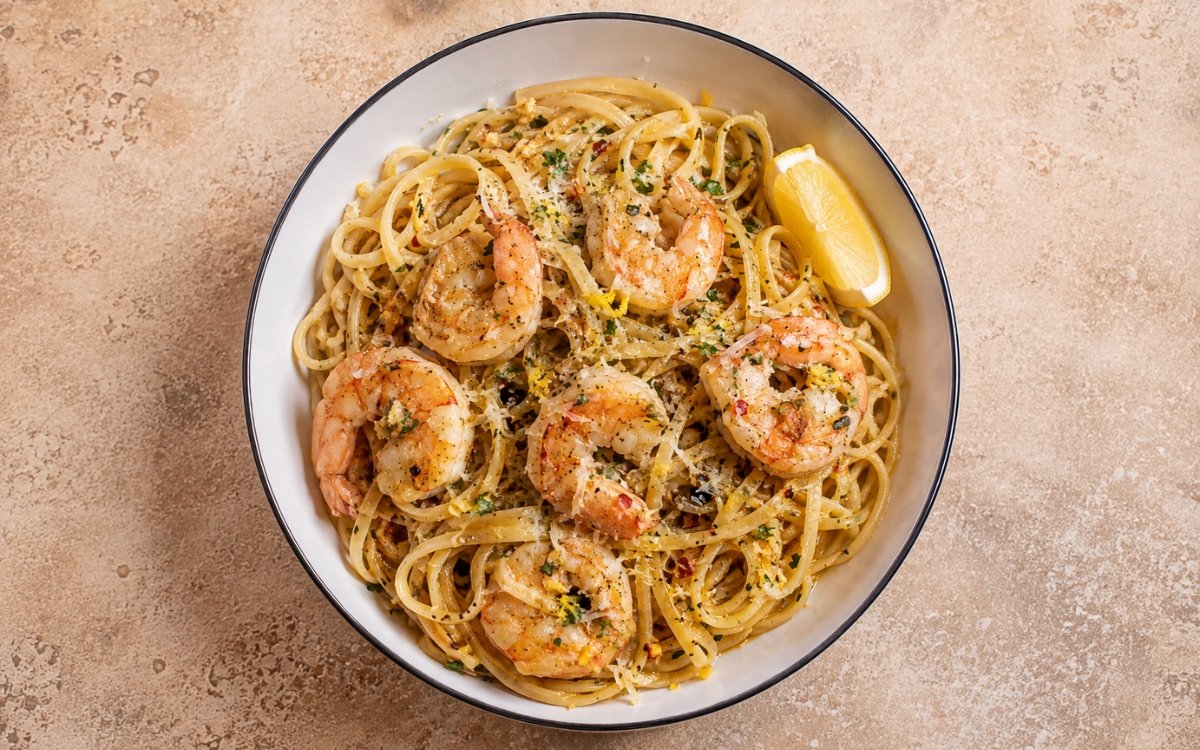
- Divide into bowls. Top with the shrimp, a little extra Parmesan, a little lemon zest if you like, and serve with lemon wedges. Serving immediately matters directly here — both the pasta's glossy sauce and the shrimp's tender texture are at their best the moment everything comes together, and any real delay works against both.
Notes
Drying the shrimp thoroughly before their initial sear deserves the same attention this technique receives throughout this collection's other shrimp dishes. Any residual moisture converts to steam on contact with hot oil, and that steam directly prevents the browning this dish depends on for real flavour — a genuinely dry shrimp is what allows an actual sear rather than a pale, steamed surface.
Pulling the pasta a full minute shy of al dente, rather than cooking it fully in the boiling water, deserves recognition as a deliberate technique choice central to how this dish comes together. That undercooked pasta finishes its final minute directly in the garlic butter sauce, absorbing flavour and starch exchange it simply wouldn't get if it arrived at the skillet already fully cooked.
The reserved pasta water's role here is worth understanding as genuine functional technique rather than a simple thinning agent. Its suspended starch is what actually binds the butter, wine, and lemon juice into a cohesive, glossy sauce that clings to the noodles — water alone, without that starch, would simply dilute the sauce rather than help it emulsify.
The shrimp's two-stage cooking — an initial hard sear deliberately stopped short, followed by a brief final toss once returned to the pan — reflects the same underlying principle used throughout this collection whenever shrimp need to stay tender through multiple stages of heat. Treating either stage as the shrimp's complete cooking time would leave no margin for the other, risking the tight, rubbery overcooking this method is specifically built to avoid.