Ingredients
Method
Prepare the Rice Noodles
- Start with the noodles, since the soak runs while everything else is prepared. Cover the dried flat rice noodles with room-temperature water and soak for approximately 20–30 minutes, or according to the package, until flexible and pliable but still slightly firm in the centre when bitten. If your brand requires boiling instead, blanch briefly until just short of fully cooked, then drain immediately. Drain thoroughly and weigh out 800g hydrated noodles, keeping the strands loosely separated rather than leaving them sitting in water. If a strand already tastes fully tender, drain the rest at once. That genuinely slight underdoneness is what leaves the noodles room to finish cooking as they absorb the sauce in the wok, instead of turning sticky or breaking apart during the final toss.
Make the Pad Thai Sauce
- Combine the 90ml tamarind, 75ml fish sauce, 70g palm sugar and 30ml of the water in a small saucepan. Warm over low heat for 2–3 minutes, stirring until the sugar has dissolved completely, without letting it boil hard. Taste it: the sauce should show pronounced tamarind acidity, deep palm-sugar sweetness and savoury saltiness from the fish sauce, all genuinely clear at once. If it tastes thick or harsh, loosen it with up to 15ml more water. If you are using concentrated tamarind paste rather than prepared purée, dilute it to the strength of a pourable purée before measuring. Divide the sauce into 4 equal portions. That assertive, slightly over-strong balance is what keeps the finished noodles bright, because 800g of noodles dilute the sauce's intensity.
Prep the Shrimp and Aromatics
- Pat the 600g shrimp completely dry with paper towels, then season lightly with the ¼ tsp fine salt and ¼ tsp white pepper. Chop the garlic, slice the shallots and finely chop the dried shrimp and preserved radish, if using. Cut the garlic chives and set aside about one-third of the bean sprouts, roughly 65g, for garnish. Crack the 4 eggs into a bowl and beat them lightly. Arrange everything beside the stove, mentally divided into 4 portions, along with the 4 sauce portions, a small cup of water and 4 warm serving bowls. That complete setup is what makes the stir-fry possible, because pad thai cooks so quickly that there is no time to chop or measure once the wok is hot.
Sear the Shrimp
- Heat a wok or large heavy skillet over medium-high heat until very hot, then add the 1 tbsp neutral oil and swirl to coat. Lay the shrimp in a single layer — in 2 batches if they would otherwise overlap — and sear for approximately 1–2 minutes per side, depending on size, until lightly golden with a few browned spots. The flesh should turn opaque and firm but still feel juicy, reaching 63°C if you check with a thermometer. Remove them immediately to a plate. If liquid pools in the pan and the shrimp turn pale and grey, the pan is crowded, so lift some out and let the heat recover. That brief, genuinely hot sear is what browns the shrimp without tightening them, since they reheat again in the noodles at the end.
Stir-Fry the Noodles
- Cook one portion at a time, or 2 together in a large wok with every quantity doubled. Heat 1 tbsp of the neutral oil in the wok over medium-high to high heat. Add one-quarter of the shallots, garlic, dried shrimp and preserved radish and stir-fry for 20–30 seconds, until fragrant but not browned. Add 200g of the prepared noodles and toss briefly, then pour in one portion of the sauce. Toss continuously for approximately 1–2 minutes, until the noodles absorb the sauce and soften completely. If they stay firm or start sticking, add 1–2 tbsp water and keep tossing. The noodles should turn glossy, tender and slightly chewy, with no liquid pooling in the wok. That full absorption is what gives pad thai its glossy, lightly caramelised finish rather than noodles sitting in a separate, wet sauce.
Add the Eggs
- Push the noodles to one side of the wok and pour one beaten egg into the empty space. Leave it undisturbed for approximately 10–15 seconds, until the edges begin to set, then scramble it gently into soft, distinct pieces. Once the egg is mostly set but still slightly glossy, fold it through the noodles with a few lifting turns. Resist stirring the egg from the moment it hits the pan, because constant movement smears it into a thin coating over the noodles instead of creating recognisable golden curds. That brief, undisturbed set is what gives each bowl tender pieces of egg that catch the sauce.
Finish with Shrimp, Sprouts and Chives
- Add one-quarter of the seared shrimp, about 34g of the bean sprouts reserved for cooking and one-quarter of the garlic chives. Toss over high heat for 30–45 seconds, just until everything is hot and evenly distributed. The bean sprouts should still crunch and the garlic chives should stay bright green, only barely wilted at the edges. Transfer the portion immediately to a warm serving bowl, then wipe out any scorched bits and repeat the noodle, egg and finishing stages for the remaining 3 portions. If the sprouts slump or the noodles start to look soft and mushy, the portion has stayed in the pan too long. That short final toss is what keeps the noodles springy, the sprouts crisp and the shrimp juicy rather than dry.
Garnish and Serve
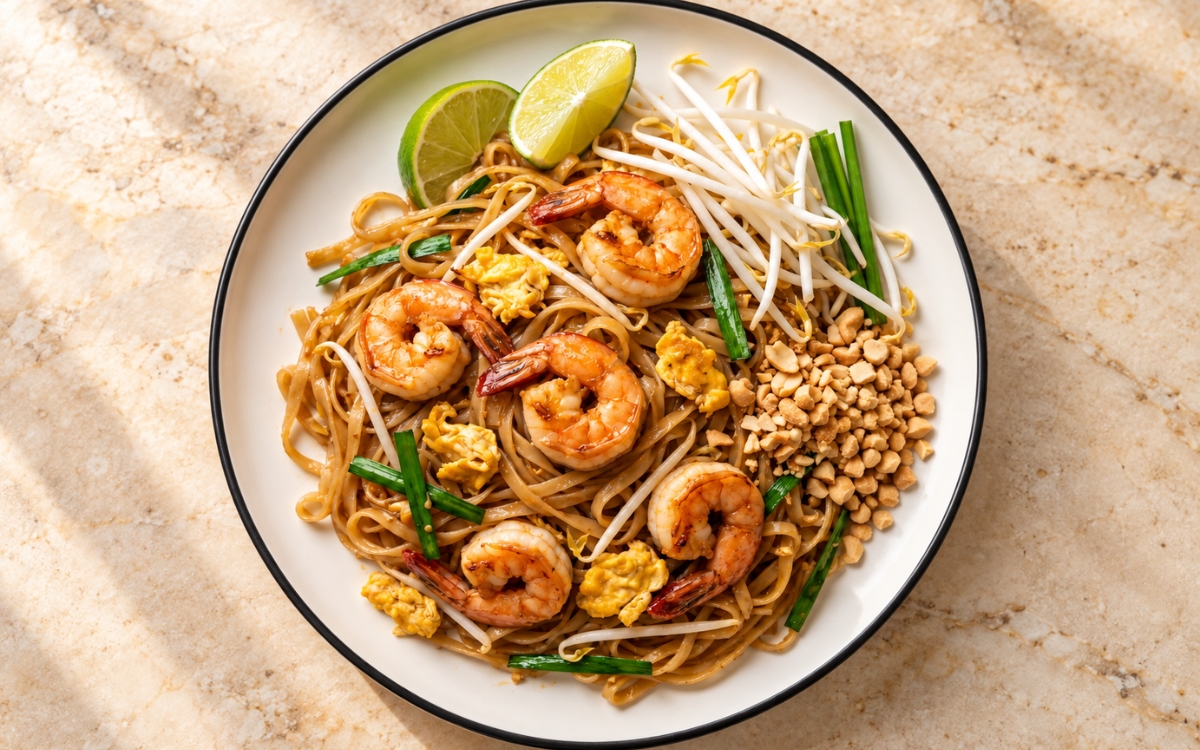
- Finish each bowl with 15g of the chopped roasted peanuts, a share of the 65g fresh bean sprouts set aside for garnish, 2 lime wedges, a few cilantro leaves if using, and a small pinch of dried chilli flakes, if desired. Each bowl should hold about 150g shrimp and 200g noodles, glossy and tender but distinct, with no pool of sauce at the bottom. Serve immediately while the noodles are hot, and squeeze the lime over just before eating rather than adding it to the sauce during cooking. If a bowl tastes too sweet, a genuinely generous extra squeeze of lime brings it back into balance. That last-minute garnish is what preserves the peanuts' crunch and lets the fresh lime cut cleanly against the deeper sourness of the tamarind.
Notes
Stopping the noodles while they are still slightly firm deserves genuine recognition as the technique most directly responsible for whether this pad thai turns out springy or sticky. Rice noodles keep absorbing liquid as they toss in the hot wok — the recipe's own warning that "Fully cooked noodles are likely to become sticky or break apart during the final toss" is simply what happens when they arrive with no resistance left.
Cooking in individual portions deserves the same attention this technique receives throughout this collection's other wok-fried noodle dishes, because a home burner cannot hold high heat under a full load. The recipe's own note that "Four complete portions cooked together in a domestic pan will usually steam rather than fry" explains the split — a single portion lets moisture flash off, so the sauce caramelises onto the noodles instead of pooling.
Choosing unsweetened tamarind deserves genuine respect as the detail most directly responsible for a sauce that tastes balanced rather than cloying. The recipe's own instruction that "Sweetened tamarind chutney is not an appropriate direct substitute" matters because chutney arrives pre-sweetened and spiced, so adding the full 70g palm sugar on top pushes the dressing towards dessert and buries the fish sauce.
The colour and texture of the shrimp deserve attention as a genuine, checkable readiness cue rather than a loose approximation. They should leave the first sear opaque, firm and lightly golden but still juicy, at about 63°C — taking them further means they tighten into rubbery curls once they return to the hot noodles for the final 30–45 second toss.