Ingredients
Method
Make the Curtido
- Combine the 400g of cabbage, the carrot, ½ small onion, 1 tsp of oregano, 1 tsp of salt, 1 tsp of sugar, and ¼ tsp of black pepper in a large bowl. Pour over the 180ml of hot water, toss well, and leave for 5 minutes so the cabbage softens slightly, then drain off most of the liquid. Add the 120ml of vinegar and the optional sliced chile and toss thoroughly. Press the mixture down lightly, cover, and rest for at least 30 minutes, ideally 2–24 hours in the refrigerator. The cabbage should be tender at the edges but still crisp, glossy, and tangy. That short hot soak is what takes away the raw bite without cooking the cabbage limp, which a long soak would do.
Make the Salsa Roja
- While the curtido rests, put the 500g of tomatoes, ½ small onion, garlic clove, jalapeño, 120ml of the water, and ½ tsp of salt in a saucepan. Bring to a simmer over medium heat and cook for 10–12 minutes, until the tomatoes have collapsed and the onion is soft. Blend until completely smooth, return the sauce to the pan with the 1 tbsp of oil, and simmer for 5–8 minutes more, adding up to 60ml more water if it thickens too far. Taste and adjust the salt. The salsa should be smooth, loose, and naturally red-orange, spooning easily rather than sitting thick like a dip. That final simmer in oil is what rounds off the raw tomato edge and gives the sauce a glossy body.
Prepare the Cheese Filling
- Put the 450g of shredded cheese in a bowl and toss it with your fingers to break up any clumps. If the cheese feels stiff or dry, mix in 1–2 tbsp of crema or water, just until it clumps lightly when squeezed in your palm. Divide it into 12 portions of about 35–38g each and set them on a plate. The filling should hold together loosely and look moist but not wet, with no pooling liquid in the bowl. That small amount of moisture is what lets the cheese melt evenly into a stretchy pocket, whereas a wet filling seeps through the masa and leaks onto the griddle.
Make the Masa Dough
- Combine the 500g of masa harina, 8g of salt, and the optional bouillon powder in a large bowl. Add 720ml of warm water, about 38–40°C, and the 1 tbsp of oil, then mix with your hand until a soft dough forms and knead for 2–3 minutes until smooth. If the dough cracks badly when pressed flat, work in up to 40ml more warm water, 1 tablespoon at a time. Cover and rest for 10 minutes. The dough should feel soft, moist, and pliable like smooth play dough, without sticking heavily to your hands. That rest is what lets the masa harina absorb the water fully, so it presses out without cracking or bursting.
Portion and Shape the Pupusas
- Divide the dough into 12 equal balls of about 100–105g each and keep them covered with a damp cloth. Lightly oil or wet your hands, then flatten one ball into a thick disc about 9–10cm wide, leaving the centre slightly thicker than the edges. Place one cheese portion in the centre, bring the edges up around it, and pinch closed completely. Gently pat and rotate the filled ball between your palms until it is a round pupusa 10–12cm wide and about 1cm thick. If a crack forms, patch it at once with a small pinch of dough and smooth it over. That sealed, evenly thick shape is what stops the cheese breaking through a thin centre.
Cook the Pupusas
- Heat a cast-iron skillet, comal, or griddle over medium to medium-low heat, adding only a very light film of oil if needed. Cook the pupusas in batches of 3–4 for 4–5 minutes on the first side, until lightly browned with dark griddle spots. Flip and cook another 4–5 minutes, then flip once more if needed and cook for 1–2 minutes until heated through and lightly puffed. The exterior should be golden with charred brown spots, while the inside stays tender and steamy with fully melted cheese. That moderate heat is what lets the centre cook through, because high heat browns the outside long before the dough sets and the cheese melts.
Serve
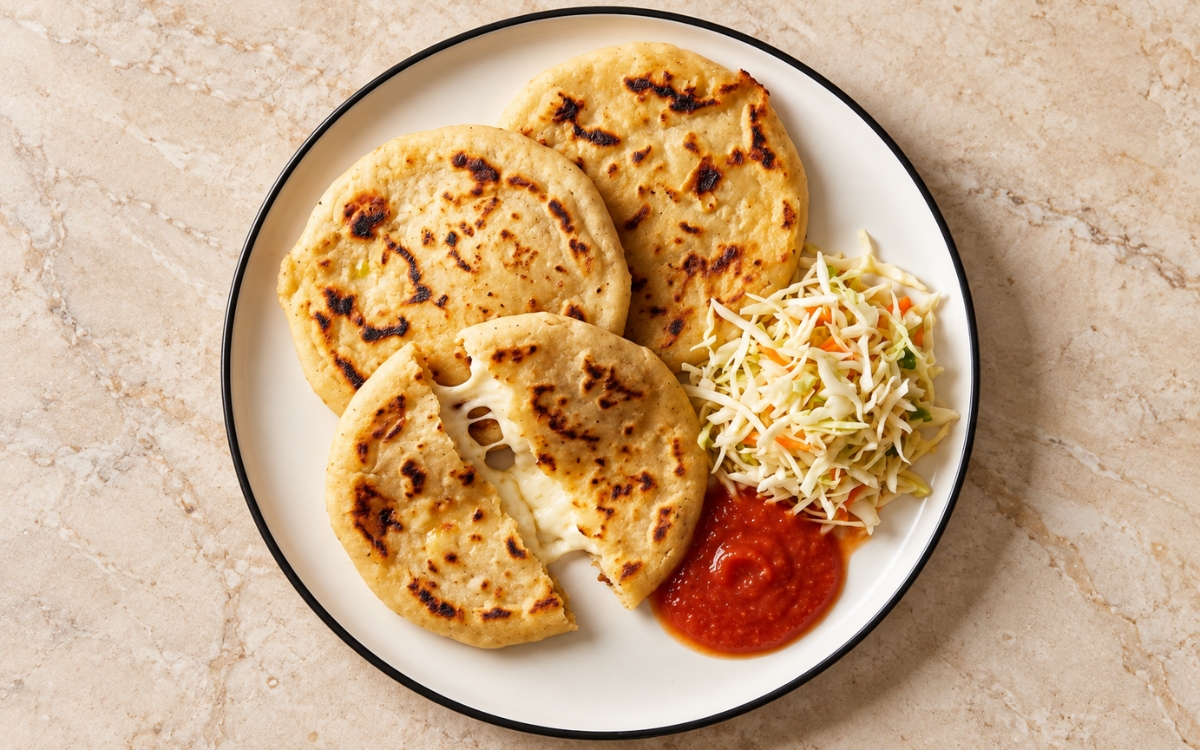
- Serve 3 pupusas per person on warm plates, with a small mound of curtido and a spoonful of salsa roja alongside, and bring them to the table immediately while the cheese is hot and soft. Each pupusa should look thick, handmade, and softly puffed, with visible toasted spots, and when torn open the cheese should be fully melted and gently stretchy, never runny or greasy. Eat them warm, topping each bite with a little crisp curtido and a spoonful of salsa. That immediate serve is what keeps the cheese stretchy and the warm masa in sharp contrast with the cool, crunchy curtido.
Notes
Hydrating and resting the masa deserves genuine recognition as the technique most directly responsible for whether the pupusas press out smoothly or crack apart. Masa harina brands absorb water at different rates, so the 10-minute rest followed by tablespoon-sized water additions lets you judge a truly pliable dough, whereas dry dough splits and wet dough clings to your hands and tears.
Choosing a low-moisture melting cheese deserves the same attention this technique receives throughout this collection’s other stuffed and griddled dishes. Salvadoran quesillo, queso Oaxaca, and low-moisture mozzarella melt into a stretchy pocket with little liquid, whereas fresh mozzarella releases too much water, seeps through the masa, softens the walls, and makes the pupusa difficult to seal.
Restraint with the filling deserves genuine respect as the detail most directly responsible for pupusas that survive the griddle intact. About 35–38g of cheese inside 100–105g of dough leaves enough masa to pinch shut around it, while overloading the centre stretches the walls thin and lets the cheese break through, leak onto the hot surface, and burn.
The moderate griddle heat deserves attention as a genuine, checkable cooking cue rather than a loose approximation. If the outside browns quickly in the first minutes, the centre stays doughy and the cheese stays solid, so lowering the heat and watching for evenly toasted spots, with a puffed surface, matters more than the clock.