Ingredients
Method
Cook the Eggs
- Bring a saucepan of water to a boil. Lower in the eggs and cook for 9 minutes for fully set but still tender yolks. Transfer immediately to ice water and cool completely. Peel and slice in halves or thick rounds. Cooling the eggs quickly stops carryover cooking and helps the shells release more cleanly. That immediate ice bath halts the yolks from continuing to firm past their intended texture, while also chilling the egg fast enough that the shell separates cleanly from the white during peeling.
Cook the Bacon
- Lay the bacon in a cold skillet and cook over medium heat until the fat renders and the bacon becomes deeply crisp, turning as needed. Transfer to paper towel or a wire rack and let cool slightly, then chop or break into bite-size pieces. The bacon should be truly crisp, not chewy. It needs to stay distinct against the softer salmon, avocado, and eggs. Starting the bacon in a cold pan lets the fat render out gradually as the pan heats alongside it, producing consistently crisp bacon rather than the unevenly seized result bacon dropped into an already-hot pan tends to give.
Sear the Salmon
- Pat the salmon dry very well. Season with the salt, black pepper, garlic powder, and paprika if using. Heat a skillet over medium-high heat and add the olive oil. Sear the salmon for about 3–4 minutes on the first side and 2–3 minutes on the second, depending on thickness, until just cooked and still moist in the center. Rest for 5 minutes, then flake into large chunks. Do not overcook. The salmon should flake cleanly but still look moist and slightly glossy inside. Dry salmon makes the whole salad feel heavy. That specific, checkable doneness — moist and slightly glossy rather than fully opaque throughout — is exactly what allows the salmon to flake into clean, distinct chunks rather than crumbling into something dry and mealy.
Make the Dressing
- In a small bowl or jar, combine the olive oil, red wine vinegar, lemon juice, Dijon, garlic, salt, and black pepper. Whisk or shake until emulsified. Taste and adjust if needed. This dressing should be sharp and clean, not sweet. A Cobb-style salad benefits from a vinaigrette that cuts through the richness of bacon, egg, avocado, blue cheese, and salmon. That deliberate sharpness is a genuine, functional requirement given how many rich components this particular Cobb carries — a milder or sweeter dressing would be overwhelmed rather than providing real, cutting balance.
Prepare the Salad Base
- Wash and dry the romaine and lettuce thoroughly, then chop into bite-size pieces. Add the greens to a large wide bowl or platter. If desired, toss the greens lightly with a small amount of dressing first, or leave the dressing for serving. The greens must be very dry. Wet lettuce waters down the dressing and makes the composed rows slide around. Any residual surface water on the leaves would dilute the dressing on contact and also make the neatly arranged toppings genuinely harder to keep in place across a slick, wet surface.
Assemble the Cobb
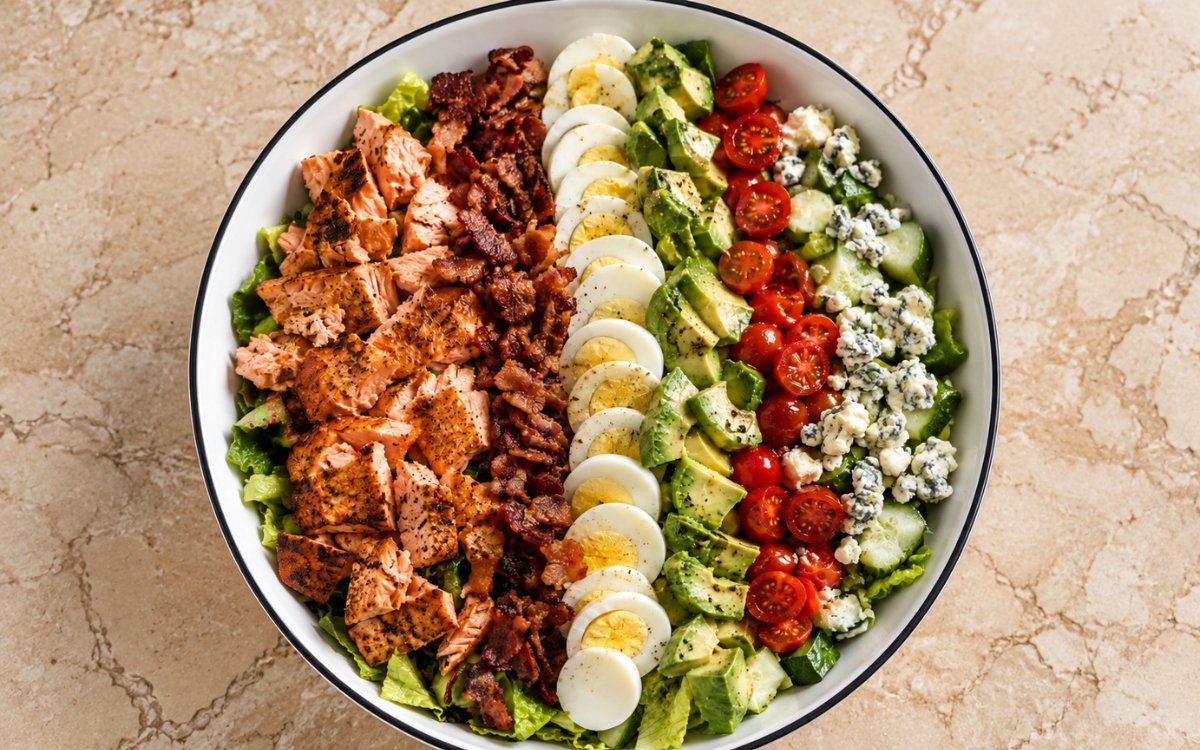
- Arrange the flaked salmon, bacon, sliced eggs, avocado, cherry tomatoes, cucumber, and blue cheese in neat rows over the chopped lettuce. Season lightly with black pepper and drizzle with some of the dressing, or serve the dressing alongside. Arranging every topping in distinct, visible rows rather than tossing everything together is what gives this Cobb salad its whole classical identity — each component stays recognisable on its own rather than blending into an undifferentiated mix.
Serve
- Serve immediately so the lettuce stays crisp, the avocado stays fresh, and the salmon remains tender. Every one of those qualities — crisp lettuce, fresh avocado, tender salmon — begins to change the moment the salad sits, which is exactly why serving without delay matters here as much as the careful cooking that came before it.
Notes
Searing the salmon only to medium, stopping while its centre is still moist and slightly glossy, deserves genuine recognition as the technique responsible for whether this salad's centrepiece flakes cleanly or turns dry and heavy. Salmon pushed past that point loses considerable moisture, and once overcooked, it tends to crumble into smaller, mealier pieces rather than the large, clean flakes a proper Cobb-style presentation depends on.
Cooling the hard-boiled eggs immediately in ice water deserves the same attention this technique receives throughout this collection's other egg preparations. That immediate temperature shock halts carryover cooking at precisely the fully set but still tender point the recipe specifies, while also making the shells release more cleanly during peeling — a genuine double benefit from one simple step.
Starting the bacon in a cold pan deserves recognition as the technique responsible for how evenly it renders and crisps in this particular salad. That gradual approach lets the fat melt out as the pan slowly comes up to temperature, producing the genuinely crisp, distinct texture needed to stand apart from the softer salmon, avocado, and egg surrounding it.
Drying the lettuce thoroughly before assembly deserves the same respect this technique receives throughout this collection's other composed salads. Beyond simply letting the dressing cling properly, dry, sturdy leaves also give the neatly arranged rows of toppings a stable surface to actually sit on, rather than sliding around on a wet, slick base.