Ingredients
Method
Prepare the Lamb
- Pat the lamb dry well with paper towels, then season with the 1½ teaspoons salt and black pepper. Keep the pieces fairly large — small pieces shrink too much during the long braise and can dry out before the sauce has fully developed around them.
Brown the Lamb
- Heat 2 tablespoons of the oil in a heavy pot or Dutch oven over medium-high heat. Brown the lamb in 2 batches so the pot isn't crowded, searing for 2–3 minutes per side until the meat has good color on several surfaces, then transfer it to a plate. There's no need to cook the lamb through at this stage; the goal here is surface color and the browned bits left behind in the pot.
Build the Spice Base
- Lower the heat to medium, adding the remaining tablespoon of oil if needed. Add the bay leaves, black cardamom, green cardamom, cloves, and cinnamon stick, stirring for 20–30 seconds until fragrant. Add the sliced onion and cook for 8–10 minutes, stirring often, until soft and medium golden, without letting it burn or go very dark. Add the ginger and garlic and cook 1 minute more, stirring constantly. Add the Kashmiri chili powder, optional hot chili, fennel, dry ginger, coriander, cumin, and turmeric, stirring for 15–20 seconds to bloom the spices. If the pan looks dry at this point, add a small splash of hot water so the spices don't scorch.
Add Yogurt and Form the Sauce
- Reduce the heat to low. Add the whisked yogurt gradually, 2–3 spoonfuls at a time, stirring continuously after each addition, then cook gently for 3–4 minutes once it's all incorporated. Keeping the flame low and stirring constantly through this stage is what keeps the yogurt smooth and emulsified instead of splitting. The mixture should turn thick, glossy, and deep red-orange by the time it's done.
Braise the Curry
- Return the browned lamb and any collected juices to the pot, stirring to coat the meat in the spice-yogurt base. Add 500 ml hot water, bring to a gentle simmer, cover partially, and cook on low for 1 hour 15 minutes to 1 hour 30 minutes, stirring every 15–20 minutes and adding more hot water a little at a time if the curry thickens too much before the lamb is tender. The final sauce should be thick enough to coat a spoon while still loose enough to sit around the rice. The lamb is ready when a fork slides in with little resistance and a light sheen of red spice oil has begun collecting around the edges of the sauce. Simmer uncovered for the last 10–15 minutes if the sauce needs further reducing, then taste and adjust the salt before serving.
Cook the Jasmine Rice
- Rinse the jasmine rice under cold water until it runs mostly clear, then drain well. Combine the rice with the 450 ml water, salt, and optional butter or oil in a saucepan, bring to a boil over medium-high heat, stir once, cover tightly, and reduce the heat to very low. Cook for 12 minutes, remove from the heat, and let rest covered for 10 minutes before fluffing gently with a fork. This gives roughly 75 g of uncooked rice per serving.
Serve
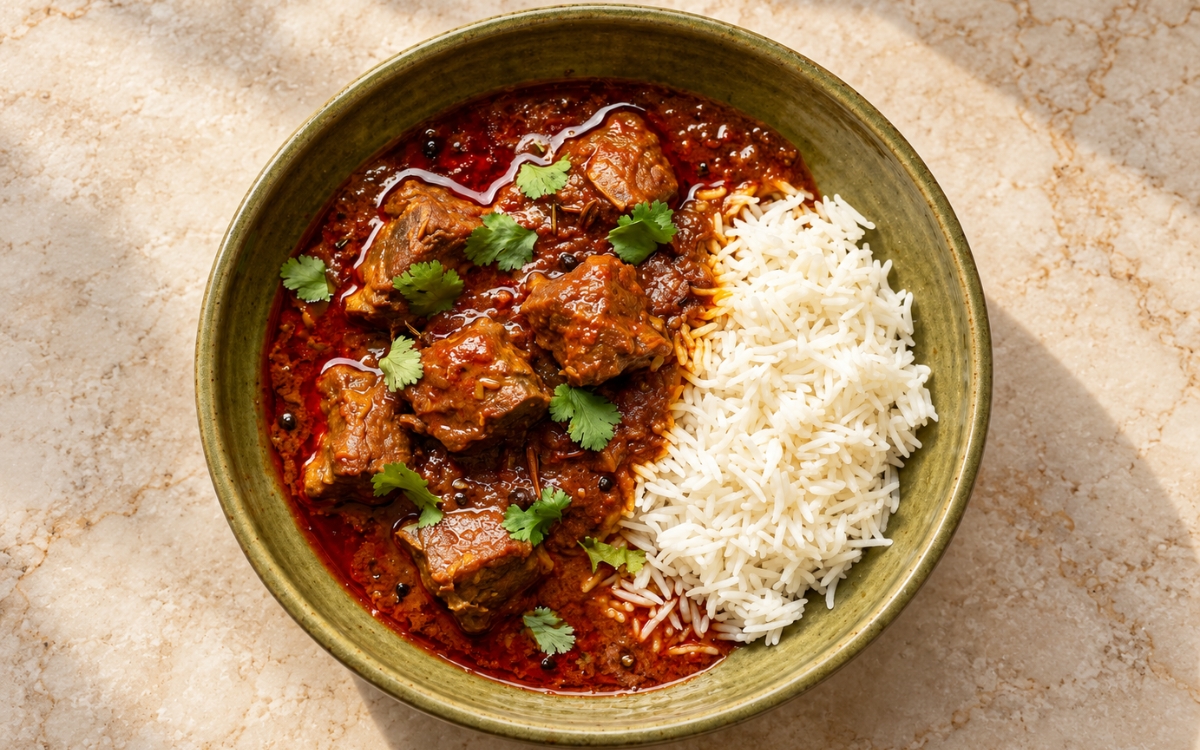
- Divide the rice among 4 bowls, about a quarter of the total per bowl. Spoon the lamb curry next to or partly over the rice, making sure each serving gets about 200 g of lamb along with plenty of sauce. Finish with a light scatter of chopped cilantro.
Notes
Lamb shoulder is the more forgiving cut for this recipe, becoming tender and rich over the long braise even with some variation in cooking time; leg works as a leaner alternative but rewards closer attention near the end of cooking.
Kashmiri chili powder is what gives rogan josh its classical red color without pushing the heat level very high. If it isn't available, a combination of 2 tablespoons sweet paprika plus ½ tablespoon mild chili powder gets close to the same color and heat balance.
The thin red sheen of spice oil that collects around the edges of the sauce toward the end of braising is a reliable sign that the curry base has finished developing properly, separate from whether the lamb itself has become tender.
Lamb that's still tough after 90 minutes of simmering simply needs more time rather than a change in method — the connective tissue in shoulder and leg cuts takes a while to break down, and continuing to simmer gently is the only fix.