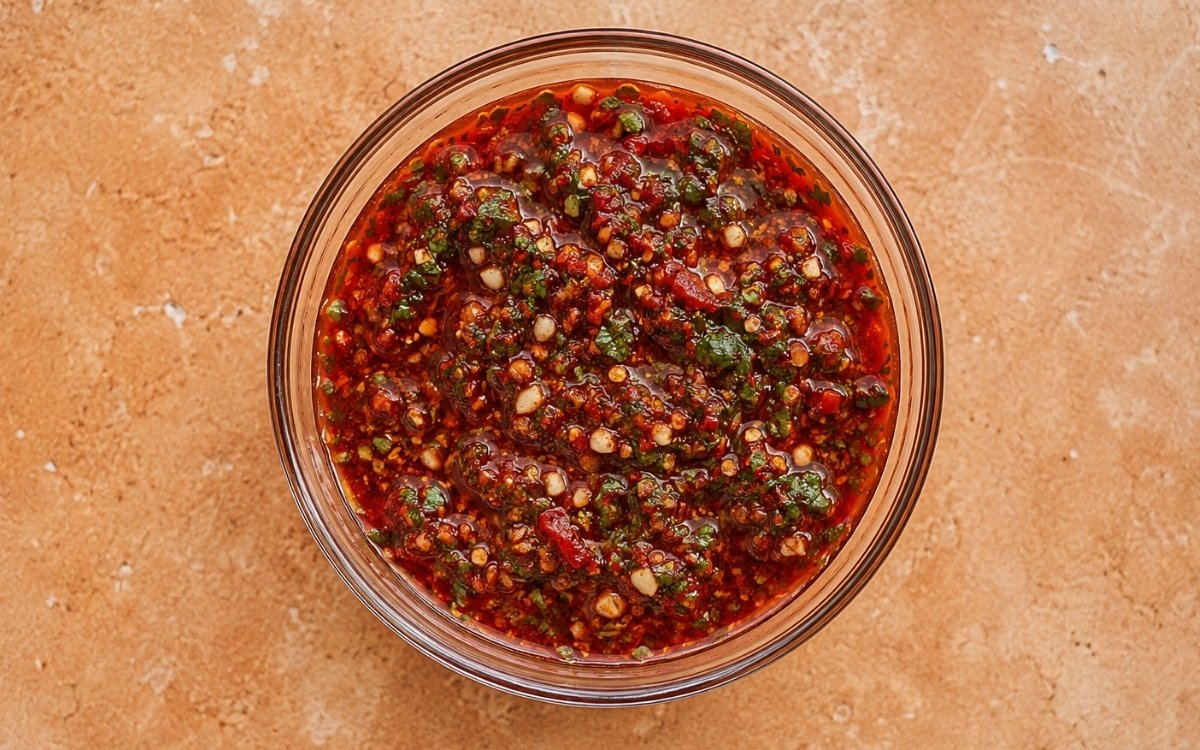
Ingredients
Method
Macerate the Shallot and Garlic
- Dice the shallots into the smallest possible pieces — aim for 2–3mm cubes. The smaller the dice, the more evenly the shallot distributes through the finished sauce, contributing its sweet-savory character in every spoonful without any single piece dominating with a raw bite. Finely mince or grate the garlic cloves. Place both the diced shallot and minced garlic into a medium bowl and pour the red wine vinegar over them. Stir briefly to coat everything in the vinegar and allow to macerate for 5–10 minutes. This maceration step is small in effort and significant in impact. Red wine vinegar's acidity draws out the harsh sulfurous compounds from both raw shallot and raw garlic — the same compounds that create the aggressive, sharp bite of finely cut alliums. After even 5 minutes in the vinegar, the shallot and garlic taste noticeably sweeter, milder, and more pleasant, contributing their flavour depth without the harsh edge that would otherwise dominate the finished sauce. The vinegar itself also begins to take on the aromatic character of both ingredients during this time.
Roast the Red Bell Pepper
- Cut the top and bottom from the red bell pepper and stand it upright. Slice down through the flesh to separate the curved walls — cut through the natural sections to produce 4 flat pieces of pepper wall, leaving the core, seeds, and membrane behind. These flat, wall pieces are what you roast — their flat shape allows maximum direct contact with the heat source, which is what produces the charred, caramelised surface and softened flesh that defines properly roasted pepper. There are three methods that all produce excellent results. On a grill: place the pepper pieces flat on the hottest part of the grate and leave undisturbed until the skin is deeply charred and blistered on the bottom, then flip. Over an open gas burner: hold each piece with tongs directly over the flame, turning until the skin is charred on all sides. Under a broiler: place on a baking sheet as close to the broiler element as possible and roast until the skin is blackened. In all cases, the target is deep, visible char on the skin side with flesh that has softened and taken on a slight caramelised sweetness from the heat. Allow the charred pieces to cool for a few minutes, then chop into small cubes approximately 5mm per side. There is no need to peel the charred skin for chimichurri rojo — the charred bits that remain on the pepper contribute to the sauce's smoky character and visual identity. If you prefer a cleaner flavour without any bitterness from the char, wrap the hot roasted pieces in foil for 10 minutes to steam and then peel before dicing.
Prepare the Chipotle Peppers
- Drain the canned chipotle peppers in adobo through a small strainer, reserving all the adobo sauce liquid in a separate bowl — do not discard it. The adobo sauce is the most flavour-dense component of the can: the chipotles have been rehydrating and cooking in a spiced tomato-vinegar sauce for extended periods, and the liquid is thick with dissolved chipotle oils, tomato, garlic, and spices. It is an intensely concentrated flavouring agent that will serve as the sauce's primary adjustment tool for sweetness, heat, and smokiness. Chop the drained chipotle peppers into small pieces — roughly the same size as the diced roasted pepper. Chipotle peppers in adobo are smoke-dried jalapeños that have been reconstituted and preserved in sauce. Their flavour is simultaneously fruity from the dried chili, deeply smoky from the smoking process, moderately hot, and slightly sweet from the adobo sauce. In this chimichurri they contribute the layer of warm, complex, fruit-forward heat that separates chimichurri rojo from any version made simply with dried chili flakes.
Prepare the Herbs
- Wash the fresh parsley thoroughly in cold water and dry completely — either in a salad spinner or pressed between clean kitchen towels. Wet herbs in an oil-based sauce dilute the oil and accelerate oxidation, causing the sauce to darken more rapidly and the herbs to lose their vibrant character sooner. Strip the leaves from the thicker stems and gather on a cutting board. Chop finely with a sharp knife using a consistent rocking motion — the goal is finely minced herb rather than a paste. If using a cilantro-parsley mix, combine both and chop together, adjusting the proportion to personal preference. Cilantro pushes the sauce toward a more Mexican and South American character with a brighter, more citrus-floral note; parsley alone produces a cleaner, more classically Argentine flavour closer to the Classic Chimichurri. Both are correct — this is a matter of preference and intended pairing.
Combine Everything
- To the bowl containing the macerated shallot and garlic in red wine vinegar, add the diced roasted bell pepper, chopped chipotle peppers, finely chopped herbs, ground cumin, and a generous pinch of salt. Stir briefly to distribute everything evenly, then pour the olive oil over the mixture in a steady stream while stirring continuously. Unlike an emulsified sauce, chimichurri rojo is a broken, oil-based condiment — the oil does not incorporate with the vinegar into a homogeneous mixture but rather suspends and coats all the solid ingredients. Stir until the oil, vinegar, and all solid components are evenly distributed throughout the bowl with no separation of the liquid elements sitting in pools.
Taste and Calibrate
- This step is the most important in the recipe and cannot be skipped or rushed. The flavour balance of chimichurri rojo depends on the specific characteristics of your ingredients — the sweetness of your roasted pepper, the heat level of your specific chipotle brand, the sharpness of your red wine vinegar — and these vary enough between batches that tasting and adjusting is always required. Evaluate four dimensions in sequence. Saltiness: if the sauce tastes flat or one-dimensional, it needs salt — add in small pinches, stirring and tasting after each addition. Acidity: if the sauce tastes heavy, oily, or lacking brightness, it needs more red wine vinegar — add 5ml at a time. Smokiness and sweetness: if the sauce tastes sharp and needs rounding, add a small amount of the reserved adobo sauce — its concentrated tomato sweetness, chili depth, and smokiness are the most direct way to add all three qualities simultaneously. Heat: if the sauce needs more warmth without more smokiness, add finely chopped additional chipotle or a small amount of red pepper flakes.
Rest Before Serving
- Cover the bowl and allow the sauce to rest at room temperature for a minimum of 15–30 minutes before serving. This rest period is where chimichurri rojo becomes more than the sum of its parts. The vinegar continues to soften the shallot and garlic further, eliminating any remaining sharpness. The olive oil absorbs aromatic compounds from the herbs, chipotle, and roasted pepper and carries them evenly throughout the sauce. The cumin blooms fully in the oil. The flavours that were individually distinct immediately after mixing begin to integrate into a cohesive, unified condiment. A chimichurri rojo served immediately after making tastes like separate components. Rested for 30 minutes, it tastes like a sauce.
Notes
Chipotle peppers in adobo are a canned product available in most supermarkets in the Mexican or Latin foods section — small tins or cans containing dark red, wrinkled, reconstituted smoked jalapeños in a thick, spiced tomato-vinegar sauce. The heat level of chipotles varies between brands and even between individual peppers within the same can. Always taste a small piece of the pepper before adding the full quantity — some chipotles are considerably hotter than others and the 90g quantity in this recipe is calibrated for a moderately-spiced sauce. Adjust down to 60g for a milder result or up to 120g for a genuinely hot sauce.
The reserved adobo sauce is not a secondary ingredient — it is the most powerful adjustment tool in the recipe. A small amount adds sweetness, depth, tomato richness, and smokiness simultaneously in a way that no single other ingredient can replicate. Taste the sauce at the calibration step and use the adobo liquid to fine-tune rather than reaching automatically for more chopped chipotle, which adds heat and texture without the liquid's more nuanced character.
Fresh parsley versus cilantro is a genuine fork in the recipe's identity and worth thinking about in terms of intended use. Parsley-dominant versions have a more Argentine chimichurri character — clean, slightly herbaceous, with the roasted pepper and chipotle as the distinguishing element. Cilantro-blended versions have a more Mexican and Central American character — citrusy, floral, and specifically well-suited to tacos, grilled fish, and fresh preparations. Neither is incorrect; choose based on what you are serving it with.