Ingredients
Method
Make the Raspberry Base
- Add 2 cups (250 g) of fresh raspberries, ½ cup (170 g) of honey, and 3 cups (720 ml) of cold water to a large mixing bowl. Using a muddler or the back of a sturdy wooden spoon, mash the raspberries thoroughly until they have completely broken down and the liquid has turned a deep, vivid red. Work the mixture for a full minute to ensure every berry is crushed and the honey has begun dispersing through the liquid — undissolved honey at this stage will create inconsistent sweetness in the finished drink. The mixture will look rough and seedy at this point, which is exactly correct.
Strain the Raspberry Syrup
- Pour the raspberry mixture through a fine-mesh strainer into a large pitcher, using the back of a spoon to press firmly against the pulp and extract as much juice as possible. Take your time with this step — pressing thoroughly rather than rushing increases the yield of flavored liquid significantly and ensures the finished lemonade has full raspberry depth and color. Discard the seeds and dry pulp once all usable liquid has been extracted. The strained raspberry base should look deeply colored, clean, and glossy.
Add Lime Juice and Herbs
- Pour ¾ cup (180 ml) of freshly squeezed lime juice into the pitcher with the raspberry base and stir briefly to combine. Add the fresh basil leaves and mint leaves directly to the pitcher. Using a muddler, press the herbs gently against the side of the pitcher 4–5 times — enough to bruise the leaves lightly and release their aromatic oils into the liquid, but not so aggressively that the herbs shred and release bitter chlorophyll. You should be able to smell both basil and mint clearly in the pitcher immediately after muddling. For a stronger herbal presence, allow the herbs to sit in the liquid for 5–10 minutes before proceeding. For a more delicate, background herbal note, move to the next step immediately.
Build the Lemonade
- Add 4 cups (950 ml) of ice directly to the pitcher. Pour in 3–4 cups (700–950 ml) of chilled club soda slowly and gently, pouring down the side of the pitcher rather than directly onto the ice to preserve as much carbonation as possible. Stir once or twice with a long spoon — minimally and carefully. The goal is to combine the raspberry base and club soda without collapsing the carbonation that makes the finished drink light and effervescent. Taste at this point and assess the balance: if it tastes too tart, stir in an additional tablespoon of honey; if it tastes flat, squeeze a small amount of additional lime juice directly into the pitcher.
Serve
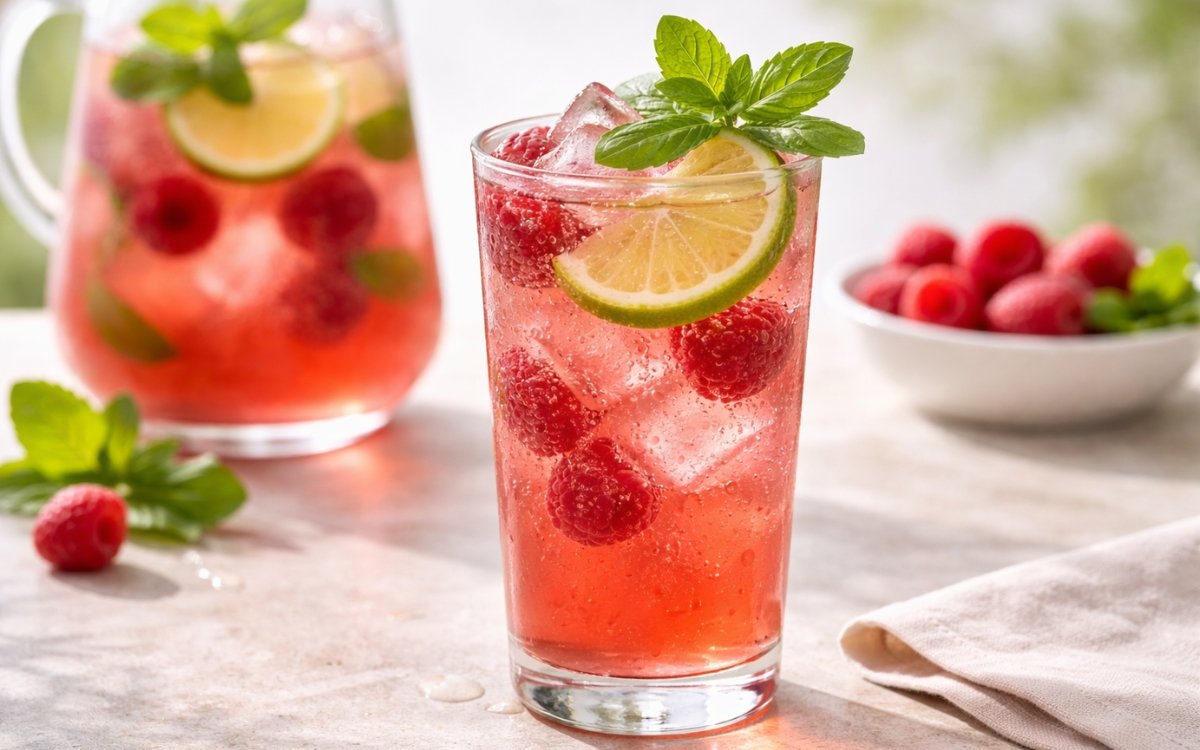
- Pour immediately into ice-filled glasses, distributing the herbs and ice evenly between servings. Garnish each glass with a slice of lime and a few fresh raspberries if available. Serve at once — carbonation begins dissipating from the moment the soda is added, and this drink is at its best in the first 10–15 minutes after assembly.
Notes
Raspberry quality determines the depth of color and the intensity of fruit flavor more than any other variable in this recipe. Ripe, deeply colored raspberries in peak season produce a vivid, deeply flavored base with natural sweetness that reduces the honey needed for balance. Pale or underripe raspberries produce a thinner, more acidic base that can push the finished lemonade into sharp territory even with generous honey. Fully thawed frozen raspberries are an excellent year-round substitute — they are typically picked at peak ripeness and produce consistent color and flavor regardless of season.
Basil and mint are used together deliberately and serve genuinely different functions in the flavor profile. Basil contributes a sweet, slightly anise-like herbal complexity that lifts the raspberry and adds an element of sophistication — it is the ingredient that makes this lemonade taste like something more than fruit juice. Mint adds a cooling freshness and aromatic brightness that keeps every sip feeling clean and alive on the palate. Neither herb alone produces the same result as both together. Standard sweet Italian basil is the correct choice — Thai basil or purple basil will introduce a noticeably more assertive, spiced character that competes with the raspberry rather than complementing it.
Club soda is functional rather than decorative in this recipe. The carbonation amplifies the raspberry and lime aromas, sharpens the perception of acidity, and introduces a lightness and lift that makes the drink feel genuinely refreshing rather than heavy or juice-like. The quantity is given as a range — 3 to 4 cups — because personal preference for carbonation intensity varies widely and the raspberry base concentration can differ slightly between batches depending on fruit ripeness and straining thoroughness. Start with 3 cups, taste, and add more if a lighter, more sparkling result is preferred. Always keep the club soda refrigerated until the last possible moment before adding it to the pitcher.