Ingredients
Method
Warm the Aromatics
- Heat the olive oil in a wide, heavy skillet over medium heat — the large surface helps moisture evaporate properly for a concentrated sauce. Add the sliced garlic and diced shallot together. Cook for 2–3 minutes, stirring occasionally, until the shallot becomes soft and translucent and the garlic turns pale golden at the edges. The goal is gentle softening with light color, not crisp frying or raw warming.
Sear the Tomatoes First
- Add the halved cherry tomatoes cut side down in a single layer. Season with salt, black pepper, and red pepper flakes. Let them sit undisturbed for 1–2 minutes so the cut surfaces caramelize slightly, deepening sweetness and flavor.
Cook Until Partially Broken Down
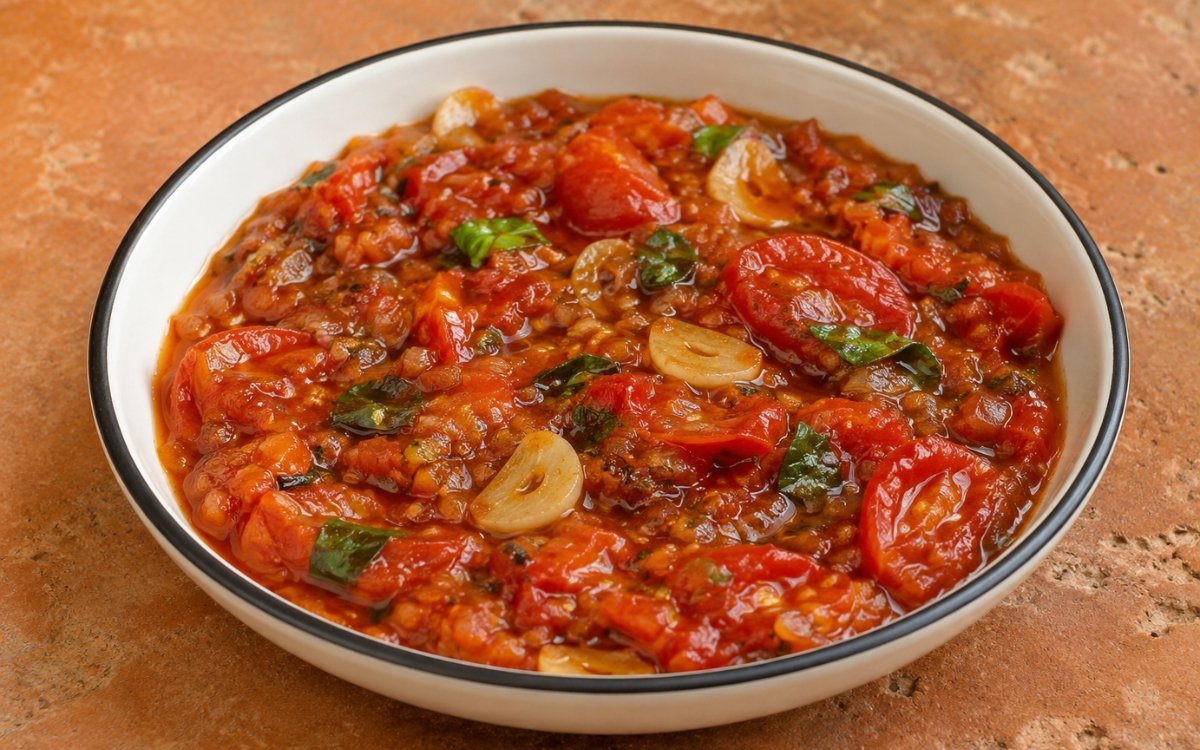
- Stir and continue cooking for 8–10 minutes, pressing some tomatoes with a spoon or masher as they soften. Aim for a mix of jammy collapsed tomatoes and intact pieces for texture and balance.
Balance the Sauce
- When the sauce looks thick and glossy, remove from heat. If the tomatoes taste sharp, stir in a small pinch of sugar. Adjust salt as needed.
Finish with Fresh Basil
- Tear basil leaves directly into the hot sauce off heat to preserve aroma and color. Stir gently and serve immediately.
Notes
Cherry tomatoes are specified because their ratio of skin to flesh, combined with their higher natural sugar content and more concentrated flavor compared to large slicing tomatoes, produces a superior quick sauce. Larger tomatoes contain more water relative to their solids and require much longer cooking to concentrate to the same flavor intensity. Cherry tomatoes produce a deeply flavored, glossy sauce in 10–12 minutes that a large tomato could not match in 45 minutes.
The emulsification of olive oil with tomato juice is a key step that distinguishes a great tomato sauce from an acceptable one. When the tomatoes release their water-based juice into the olive oil, persistent stirring encourages the oil and water to form an emulsion — a temporarily stable mixture where the oil is distributed in tiny droplets throughout the tomato liquid. This emulsification creates the glossy, cohesive sauce texture rather than oily liquid sitting separately on watery tomato juice.
For a smoother sauce, use an immersion blender directly in the pan after cooking for 30–60 seconds. For an extremely smooth sauce, pass through a fine mesh strainer after blending. The chunky, rustic version is traditionally served with grilled meats and fish; the smoother version works better with pasta.