Ingredients
Method
Make the Pumpkin Spice Syrup
- Add the pumpkin purée, brown sugar, water, cinnamon, ginger, nutmeg, cloves, and salt to a small saucepan. Cook over medium heat, whisking constantly, until the sugar dissolves fully and the mixture becomes smooth and lightly thickened, about 3–4 minutes. Remove from the heat and stir in the vanilla. If needed, strain through a fine sieve for a smoother café-style syrup. The syrup should be smooth, glossy, pourable, and clearly pumpkin-spiced. It should not be thick like pumpkin jam. If it is too heavy, it will sink in clumps instead of creating a clean base layer. Whisking constantly while the mixture heats is what keeps the pumpkin purée's natural texture from settling and scorching against the bottom of the pan before it's fully incorporated into the sugar and spices.
Brew the Espresso
- Brew 120ml espresso total, equal to 4 standard 30ml shots. Let it stand for 30–60 seconds only if it is extremely hot, but do not let it go stale. The espresso should be fresh, dark, and aromatic. Pumpkin and spice are softening flavours, so weak espresso disappears quickly. Warm spice and pumpkin's own mellow character have real potential to overshadow a flawed or weak shot — genuinely fresh, strong espresso is what keeps the coffee clearly present beneath the syrup rather than fading into the background.
Build the Pumpkin Base
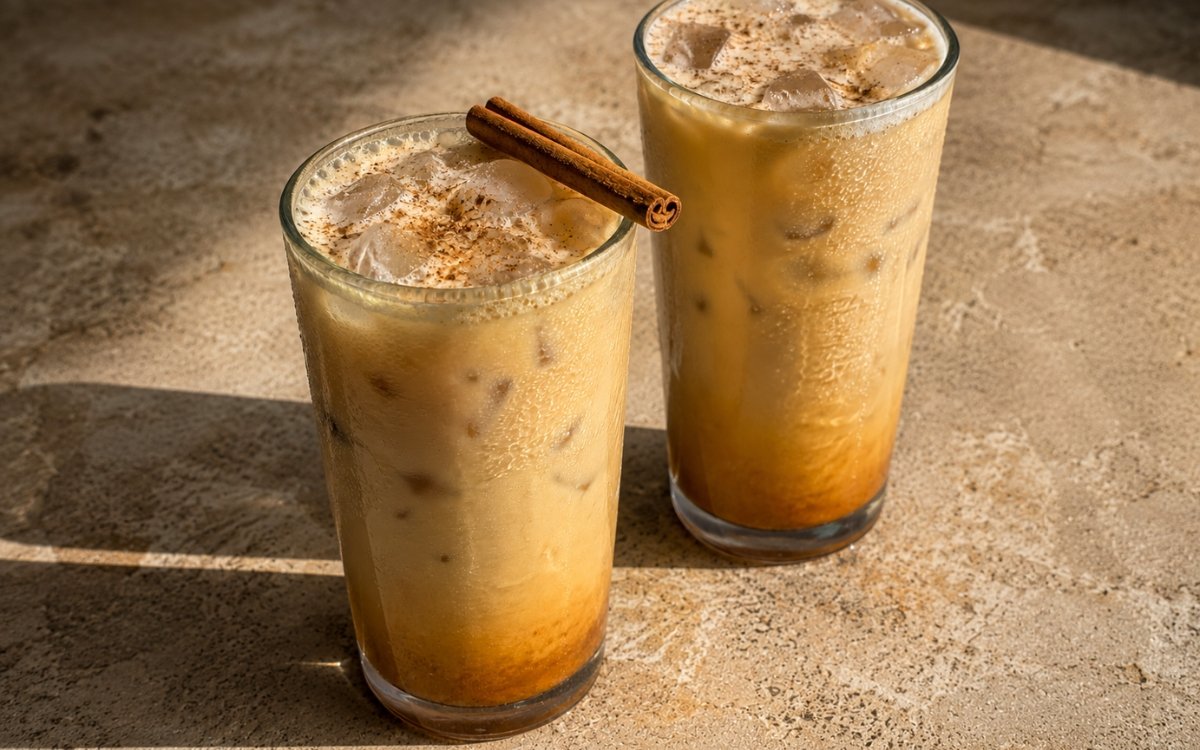
- Add 20ml pumpkin spice syrup to each glass. Do not fully stir it into the milk yet if you want the classic visual gradient. Leave it concentrated at the base. The syrup should sit as a deeper orange-brown layer at the bottom of the glass. That concentrated base is what gives the drink its layered visual before mixing. This deliberately unmixed placement, right at the very start of the build, is what establishes the drink's darkest, most concentrated point — everything added afterward is layered on top of it rather than through it.
Add Ice and Milk
- Fill each glass generously with ice. Pour 140ml cold whole milk into each glass over the ice. The milk should sit above the pumpkin syrup, creating a paler upper layer while the syrup remains deeper in tone near the base. Before the espresso goes in, you should already see a gradient beginning — darker pumpkin concentrate below and paler milk above. If everything mixes immediately, the syrup is too thin or the glass was stirred too early. Pouring the milk gently over the ice, rather than directly onto the syrup, is what lets the ice slow that milk's descent and helps it settle as a genuinely distinct upper layer rather than immediately blending with the syrup below.
Pour in the Espresso
- Pour 60ml espresso into each glass over the milk and ice. Let it fall through the drink naturally, then give only a very light stir if you want to preserve some of the visual gradient. The drink should show a deeper amber-orange tone toward the base and a lighter caramel-cream tone toward the upper part of the glass. It should not become one flat beige colour immediately. The espresso must go in after the milk and ice. That helps preserve the layered pumpkin-and-milk visual instead of collapsing everything into one uniform mixture too soon. This build order — syrup, ice, milk, espresso — is a single connected sequence rather than independent steps, and disrupting any part of it, even by reordering just one stage, works against the full gradient the rest of the process is building toward.
Create the Light Foam Finish
- Froth the extra cold milk very lightly until it forms only a thin soft foam, not a thick cappuccino cap. Spoon or pour a small amount over the top of each drink. The surface should have only a light foam layer. This is not a whipped-cream-style pumpkin drink. The foam is there only to carry the spice dusting and give a polished finish. Keeping this foam deliberately thin serves a specific functional purpose beyond presentation — a light, spoonable layer gives the cinnamon and nutmeg dusting somewhere stable and visible to sit, without adding the heavier, more filling texture a thicker cap would bring to what's meant to stay a proper iced latte.
Finish and Serve
- Dust the foam lightly with cinnamon and a very small pinch of nutmeg. Rest a cinnamon stick across the rim of one glass if desired and serve immediately. The final drink should smell warmly spiced and coffee-forward, with the top lightly aromatic from the cinnamon and nutmeg, not heavily dusty or over-spiced. This restrained final dusting is meant to add aroma right at the surface where it's noticed first with each sip, rather than a heavy coating that would overwhelm the drink's more balanced overall spice level.
Notes
Leaving the pumpkin spice syrup deliberately unmixed at the base of the glass, right from the very first step of the build, is worth understanding as the foundation the drink's entire visual identity is built on. That concentrated pool establishes the darkest, most saturated point in the glass before anything else is even added — every subsequent layer, from the ice to the milk to the espresso, is meant to sit progressively lighter above it, and disturbing that base layer too early collapses the whole gradient before it has a chance to develop.
The specific build order — syrup, then ice, then milk, then espresso poured last — deserves to be treated as a single connected sequence rather than a loose collection of steps that could be reordered without consequence. Each stage in this order is specifically calibrated to layer gently on top of what came before it; reversing or skipping any single stage, even by one position, works against the gentle layering the rest of the sequence depends on.
Keeping the espresso genuinely fresh and strong matters more in this particular drink than it might in a plainer one, given how much pumpkin and warm spice sit alongside it. Both flavours are inherently mellow and rounded, with real capacity to soften or mask a flawed or weak shot — properly fresh, bold espresso is what keeps the coffee clearly present as a defining flavour rather than fading into the background behind the syrup.
The light foam's specific, restrained purpose — carrying the spice dusting rather than functioning as a substantial topping in its own right — reflects a real distinction worth respecting. This recipe explicitly steers away from a whipped-cream-style presentation in favour of staying a proper, clean iced latte; the thin foam layer exists purely to give the finishing cinnamon and nutmeg somewhere visible and stable to sit, not to add richness or heft of its own.