Ingredients
Method
Cook the Chicken and Build the Broth
- Place the chicken, water, halved onion, garlic, bay leaves, salt, and peppercorns in a pot. Bring up slowly over medium heat until just below a boil. Skim off the foam and impurities as they rise. Lower to a very gentle simmer and cook 35–45 minutes, until the chicken is fully tender and cooked through. The meat should pull away easily from the bone but not be falling apart into threads yet. Remove the chicken to a tray. Strain the broth and discard the solids. You should have around 1.4–1.6L broth. When cool enough to handle, remove skin and bones and shred the chicken into bite-size strands. Keep the broth at a gentle simmer, never a hard boil, so it stays clean and clear in flavor rather than cloudy and flat. This clean, clear broth carries directly into every later stage of the dish — it's used to blend the verde base, thin the fried sauce, and build the finished pozole, so protecting its clarity here matters far beyond this first stage alone.
Prepare the Green Sauce Components
- While the chicken cooks, roast or blister the tomatillos, poblanos, serranos, jalapeños, chopped onion, and garlic on a tray under a broiler or in a dry skillet/comal. Turn as needed until the tomatillos soften and blister, the chiles char in spots, and the onion and garlic take on some color. Place the poblanos in a bowl and cover for 5 minutes, then rub off most of the loose charred skin. Remove seeds only if you want a milder final pozole. The serranos and jalapeños can be left as they are, with seeds removed only if you want less heat. Toast the pumpkin seeds in a dry skillet over medium heat for 2–4 minutes, stirring often, until fragrant and lightly puffed. Do not let them darken too much or they can turn bitter. The pepitas should smell nutty and aromatic, not browned hard. The tomatillos should lose their raw sharpness. Covering the roasted poblanos to steam for those few minutes loosens their charred skin considerably more effectively than trying to peel it right off the heat — trapped steam softens the skin's grip on the flesh beneath it.
Blend the Verde Base
- In a blender, combine the roasted tomatillos, poblanos, serranos, jalapeños, onion, garlic, toasted pepitas, cilantro, epazote or oregano, and 250ml hot broth. Blend until very smooth, adding a little more broth as needed. The mixture should be pourable but still fairly thick. If using parsley or spinach for color support, add it here in a small amount only. Blend long enough that the pepitas are fully broken down. The sauce should look smooth and vivid green, not gritty. Blending with the broth's own hot liquid, rather than water, means this base carries genuine chicken flavour built directly into it from this very first stage, rather than starting from something neutral.
Fry the Sauce
- Heat the lard or oil in a clean pot or the same pot over medium heat. Pour in the green puree carefully. It may sputter. Stir and cook 8–10 minutes, until it darkens slightly, smells fully cooked, and thickens a bit. This step deepens the flavor and removes the raw blended taste. The sauce should go from raw and sharp to mellow, savory, and rounded. This active frying stage is what actually transforms the blended purée into something genuinely cooked and integrated — that transformation doesn't happen automatically once the sauce is later diluted with more broth, which is exactly why it needs this dedicated stovetop time first.
Simmer the Pozole
- Add the hominy to the cooked green sauce. Pour in about 1L of the chicken broth and bring to a gentle simmer. Add the shredded chicken and simmer 20–25 minutes so the hominy absorbs the broth and the flavors come together. Add more broth as needed during simmering. Pozole Verde should be brothy, not as thick as a stew or pipián. Taste and adjust salt. Add the lime juice only if the broth needs a final lift. The finished pozole should have a light body from the pepitas, but still enough broth to clearly surround the hominy and chicken in the bowl. This simmer gives the hominy real time to absorb some of the surrounding broth's flavour while staying suspended in a genuinely brothy liquid — the goal is body from the pepitas, not thickness from over-reduction.
Garnish and Serve
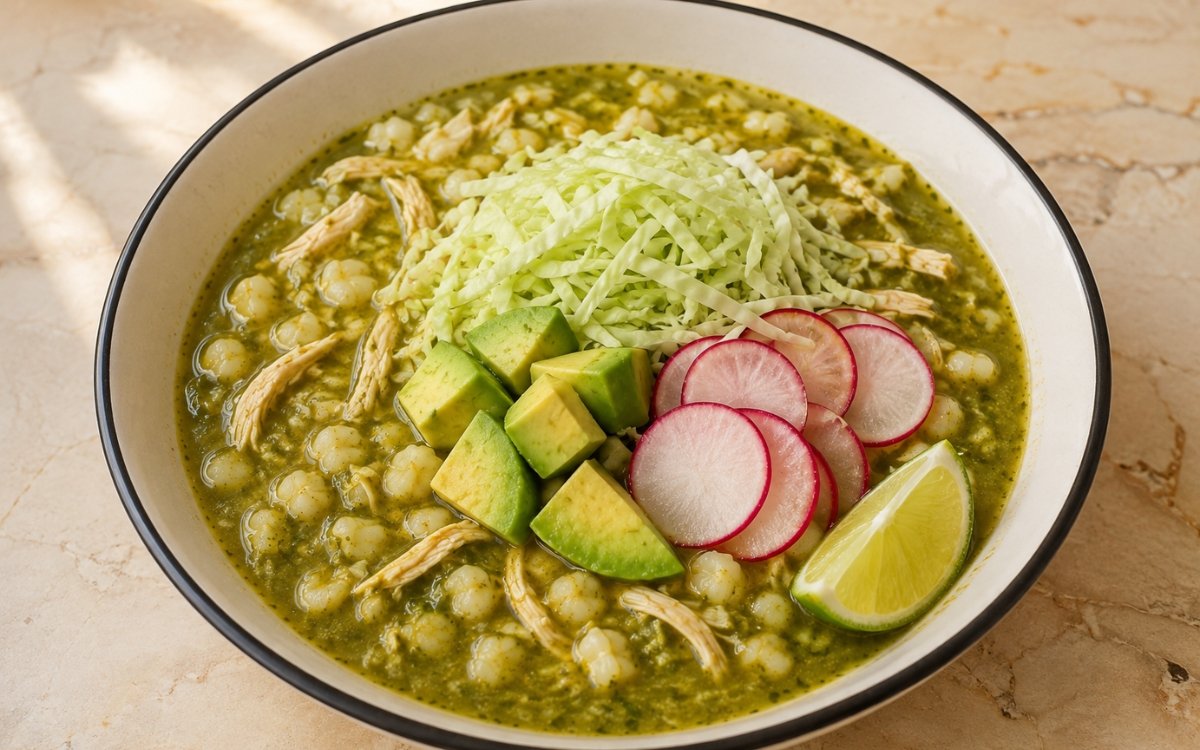
- Ladle the pozole into bowls. Top each serving with shredded cabbage, radish slices, diced avocado, and a lime wedge on the side. Serve immediately while the broth is hot and the garnishes stay cool and crisp. Adding every garnish only at the moment of serving, rather than into the simmering pot, is what preserves their genuinely cool, crisp, fresh character against the hot broth beneath them.
Notes
Keeping the chicken broth at a genuine gentle simmer throughout its cook deserves real respect as the foundation this entire dish's clarity depends on, given how many later stages rely on that same broth. A hard boil clouds the liquid with emulsified fat and proteins, and since that broth goes on to blend the verde base, dilute the fried sauce, and build the finished simmering pozole, protecting its clarity at this very first stage has consequences that ripple through the whole recipe.
Roasting the tomatillos and chiles before they're ever blended is worth understanding as the technique responsible for the sauce's actual character. Direct heat both softens these vegetables and develops real roasted depth, while simultaneously mellowing tomatillos' naturally sharp, raw acidity into something rounder — skipping this roasting step would leave the finished green base tasting noticeably sharper and less developed than the classic version this recipe is built around.
The frying stage that follows blending deserves the same attention it receives throughout this collection's other mole and pipián-style green sauces. A blended purée, however carefully its individual components were roasted and toasted, still tastes distinctly raw straight out of the blender. This active frying is what concentrates and rounds that mixture into something genuinely cooked and integrated before it's ever diluted into the larger volume of broth that makes up the finished soup.
The recipe's own explicit note that the garnishes aren't optional fluff deserves to be taken seriously. Shredded cabbage, radish, and avocado together provide crunch, freshness, and richness that genuinely complete this dish — a bowl of pozole verde without those fresh, cool toppings would be missing real textural and flavour contrast against the warm, savoury broth beneath.