Ingredients
Method
Simmer the Pork
- Place the bone-in pork shoulder pieces in a medium heavy pot with 1.8 litres water, white onion, garlic, bay leaves, kosher salt, and black pepper. Bring to a boil, skim off the grey foam from the surface, then reduce to a gentle simmer. Cook partially covered for 2 hours to 2 hours 15 minutes, until the pork is tender enough to shred but not falling into mush. The broth should stay clear and gently bubbling, not aggressively boiling. If the liquid drops below the pork, add more hot water. Skimming the grey foam in the first few minutes removes coagulated proteins that would otherwise cloud the broth as it cooks — this early pass is what keeps the base stock relatively clear before the rojo chile base is even introduced.
Prepare the Chiles
- While the pork cooks, toast the guajillo, ancho, and chile de árbol in a dry skillet over medium heat for 10–15 seconds per side, just until fragrant and pliable. Do not let them blacken or smoke; burned dried chiles will make the whole broth bitter. Cover the toasted chiles with hot water and soak for 15 minutes until softened. Drain before blending. The brief dry toast blooms each chile's specific aromatic character — guajillo's fruity, mild tang, ancho's raisin-like sweetness, árbol's sharp heat — in a way that soaking alone can't replicate, but the window between fragrant and scorched is short enough that this step needs full attention rather than being left unattended.
Build the Rojo Base
- Heat 15ml neutral oil in a small skillet over medium heat. Add the chopped onion and cook for 4–5 minutes until softened and lightly golden. Add the garlic and cook for 30 seconds. Add the tomato paste, cumin, oregano, and smoked paprika, then cook for 1 minute until the paste darkens slightly and smells roasted. Transfer this mixture to a blender with the softened chiles, apple cider vinegar, and 250ml hot pork broth. Blend until completely smooth. Strain through a fine sieve if the sauce has visible chile skin or gritty pieces. The rojo base should be deep red, thick, and glossy. Cooking the tomato paste briefly in the same fat as the onion and garlic, rather than adding it straight to the blender, is what moves it from a raw, slightly metallic tomato taste to a rounder, roasted one — the same fried-paste principle that separates a flat-tasting chile sauce from one with real depth.
Shred the Pork
- Remove the cooked pork from the broth and rest for 10 minutes until cool enough to handle. Discard the onion, garlic, and bay leaves from the broth. Pull the pork from the bone, discard the bone and any tough connective pieces, then shred the meat into medium strands. Keep some chunkier pieces for texture. The 10-minute rest isn't just about safety at the cutting board — pork straight out of a hot broth is loose and difficult to shred cleanly, while a brief rest firms the fibres just enough to pull apart into distinct strands rather than tearing into mush.
Finish the Pozole
- Return the strained pork broth to the pot. Stir in the rojo chile base and bring to a simmer. Add the drained hominy and shredded pork. Simmer uncovered for 20–25 minutes, until the hominy is hot, the pork is fully coated, and the broth turns deep ruby red. Add the whole toasted dried chile during the final 5 minutes so it softens slightly and sits visibly in the broth. Taste and adjust salt. The broth should be rich, savoury, lightly smoky, and clearly chile-forward, not watery. Simmering uncovered at this stage lets the broth reduce and concentrate slightly as the rojo base fully integrates, which is what pushes the colour from a duller orange-red toward the deep ruby tone that's the visual signature of a properly finished pozole rojo.
Prepare the Garnishes
- While the pozole finishes, slice the cabbage very thinly into fine pale shreds. Slice the radishes into thin rounds. Cut the limes into wedges. Keep the cabbage and radishes cold and crisp until serving. Slicing the cabbage genuinely thin rather than into rough shreds matters for how it behaves in the bowl — fine shreds wilt gently at the edges from the hot broth's residual heat while still keeping their crunch through the meal, where thicker pieces stay stubbornly raw or go limp too fast depending on their thickness.
Serve
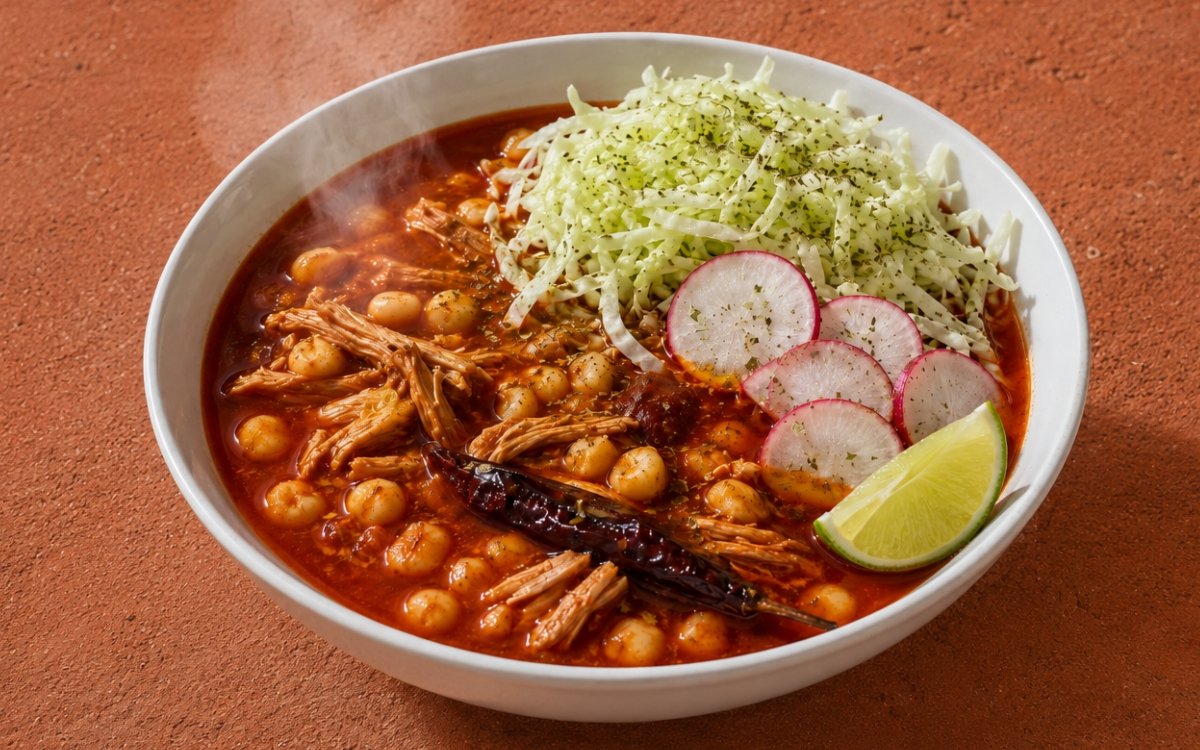
- Ladle the hot pozole into four bowls, making sure each serving gets hominy, shredded pork, and plenty of red broth. Place a generous pile of shredded cabbage on one side of each bowl. Add thin radish rounds beside it. Dust with dried oregano and place a lime wedge at the edge of the bowl. Serve immediately while steaming hot, with the cabbage still crisp and the deep red broth visible around the pale garnishes. Plating the cabbage and radish beside the broth rather than stirred in preserves both the colour contrast and the crunch — each diner folds the garnishes in themselves at the table, which is when they're at their crispest.
Notes
The choice of bone-in fatty pork shoulder over a leaner cut like pork loin is central to this recipe rather than incidental. The bone releases collagen and gelatin slowly over the two-plus-hour simmer, giving the broth a body and slight richness that a lean cut simply can't produce, while the fat marbled through the shoulder keeps the shredded meat itself juicy rather than dry and stringy by the time it's fully tender. A leaner substitute will still make a technically edible pozole, but the broth will taste noticeably flatter and thinner.
Building the rojo chile base as a genuinely separate component, rather than adding raw dried chiles directly to the simmering pork, is what gives this pozole its roasted, rounded depth. Toasting the chiles blooms their aromatic compounds, sweating the onion and garlic builds a savoury foundation, and briefly frying the tomato paste concentrates its flavour before any of it meets liquid. Skipping any one of these sub-steps and simply blending everything raw would produce a broth that tastes dustier and less complex, even with the same ingredient list.
The gentle simmer specified throughout this recipe — for both the pork broth and the finished pozole — is worth taking seriously rather than treating as a suggestion. A hard boil at either stage does real damage: during the initial pork cook it clouds the broth and toughens the meat before the connective tissue has time to properly break down, and during the final simmer it can reduce the broth too aggressively and unevenly, throwing off the balance between broth, hominy, and meat that a properly loose, spoonable pozole depends on.
The cold, crisp garnishes are not an afterthought here but a deliberate structural counterpoint to the rest of the dish. Everything else in the bowl — the broth, the pork, the hominy — is soft, hot, and richly savoury, and the thinly sliced cabbage and radish exist specifically to interrupt that uniformity with cold crunch and a slightly peppery bite. Adding them any earlier than the final plating step, or slicing them too thick, undercuts the contrast that makes each spoonful interesting rather than monotonous.