Ingredients
Method
Dry the Phyllo
- Separate the phyllo sheets loosely and spread them out on clean trays or the counter, letting them dry at room temperature for 1½ to 2 hours, until they feel papery, dry, and slightly brittle. Once dry, roughly shred or tear the phyllo into loose strips about 2.5–5 cm long, keeping the strands separated and fluffy rather than compressed.
Make the Orange Syrup
- Combine the sugar, water, orange juice, orange zest strips, cinnamon stick, and lemon juice in a saucepan, then bring to a boil, stirring just until the sugar dissolves. Reduce to a gentle simmer and cook for 5 minutes, then remove from the heat and let the syrup cool completely. Remove the cinnamon stick and zest strips before using.
Prep the Pan and Oven
- Heat the oven to 175°C conventional / 160°C fan. Grease a 9-inch / 23 cm round cake pan well — a springform pan works too, but make sure it's tightly sealed and set on a tray in case of any syrup seepage later.
Mix the Batter
- Whisk the eggs and sugar together in a large bowl until slightly thickened and pale, about 2 to 3 minutes, then whisk in the Greek yogurt, oil, orange juice, orange zest, and vanilla until smooth. Add the baking powder and salt and whisk again until fully combined.
Fold in the Phyllo
- Add the dried shredded phyllo gradually, folding gently after each addition so the strands are evenly coated, breaking up any large clumps with your fingers as you go. The mixture should look loose, evenly moistened, and full of separated strands rather than packed or pasty. Work fairly quickly once the phyllo goes in, since it can soak unevenly if left to sit before baking.
Bake the Cake
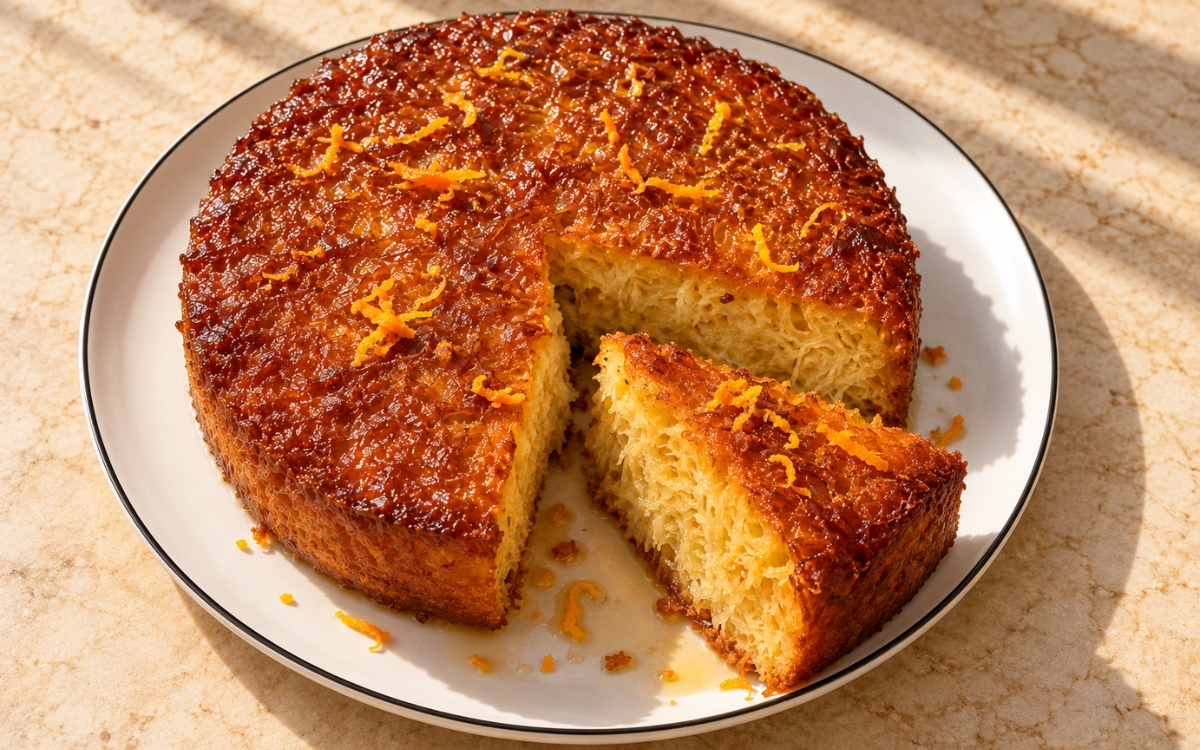
- Transfer the mixture to the prepared pan and spread it out evenly without pressing down too firmly, then bake for 50 to 55 minutes, until the cake is deeply golden brown on top, well risen, and set in the center. The surface should look richly colored and crisp, and the center should spring back lightly when touched.
Syrup the Cake
- Place the hot cake on a rack, and while it's still very hot, pierce it all over with a skewer or thin knife. Slowly pour the completely cooled syrup over the hot cake in several additions, letting each one absorb before adding more, using all of the syrup. Let the cake stand in the pan until the syrup is fully absorbed and the cake is moist throughout, at least 1½ hours.
Unmold and Serve
- Once fully rested, run a thin knife around the edge if needed and remove the cake from the pan. Transfer it to a serving plate and finish with a little extra orange zest if desired, then cut into 10 wedges.
Notes
Thoroughly drying the phyllo before shredding it isn't a step to rush, even though it adds real time to the process. Phyllo that's still soft when shredded traps moisture inside the strands, and that moisture turns the baked interior dense and gummy instead of light and distinctly strand-like.
Keeping the shredded phyllo loose rather than compressed matters all the way through mixing and panning. Pressing it down, whether while folding it into the batter or spreading it in the pan, pushes the strands together into a heavier, less airy texture than this cake is meant to have.
The temperature contrast between the hot cake and the fully cooled syrup is deliberate rather than incidental. That contrast is what lets the cake absorb the syrup evenly through its structure without the center collapsing or the texture turning soggy rather than moist.
Pouring the syrup in stages, rather than all at once, gives the cake time to actually drink each addition in before more arrives. A single large pour tends to flood the surface and run off the sides instead of soaking evenly through the crumb.