Ingredients
Method
Make the Pork Aspic
- Put the pork bones and pork skin in a large pot, cover with cold water, bring to a boil and boil for 5 minutes, then drain, rinse everything well and wash the pot clean. For deeper flavour, sear the bones in the 1 tsp of neutral oil briefly. Return the bones and skin to the pot with the 1,400ml of fresh water, scallions, ginger and 15ml of Shaoxing wine, bring to a boil, then lower to a steady simmer. Simmer partially covered for 2½–3 hours, until the liquid is rich, slightly sticky and reduced to about 500–600ml, adding the optional 2g of salt only at the end. Strain well, pour into a shallow container and chill for at least 4 hours or overnight until fully set and firm. That slow reduction and shallow chilling is what gives a stock that cuts into neat, firm cubes rather than a loose jelly.
Make the Dough
- Mix the 300g of flour and 2g of fine salt in a bowl, add the 165g of lukewarm water and stir until the dough looks shaggy. Knead for 8–10 minutes until it is smooth, elastic and fairly firm, never sticky, then cover tightly and rest for 45–60 minutes while the aspic chills or the filling comes together. A firmer dough is easier to pleat and holds the soup better. That resting period relaxes the gluten, which is what lets the dough roll out thinly without shrinking back.
Infuse the Ginger-Scallion Water
- Combine the 2 roughly chopped scallions, 15g of sliced or crushed ginger and 80ml of cold water in a small bowl, then lightly crush or muddle the aromatics to release their flavour. Let the mixture stand for 15–20 minutes, strain through a fine sieve, discard the solids and chill the liquid until the filling is ready. You will need 60–70ml of it. That infusion is what gives the filling fragrance without leaving visible green flecks that would spoil its smooth, pale texture.
Mix the Filling
- Turn out the set aspic and cut 220g of it into very small cubes, then keep it cold. Put the 420g of well-chilled ground pork in a chilled bowl with the light soy sauce, Shaoxing wine, sugar, fine salt, white pepper and sesame oil, and mix vigorously in one direction until the meat turns sticky. Add the 60–70ml of ginger-scallion water in 3–4 additions, mixing thoroughly after each until the meat absorbs it and becomes bouncy, glossy and paste-like. Fold in the aspic cubes gently and refrigerate; if they soften, chill the filling again before shaping. That gradual hydration is what lets the pork hold liquid instead of swimming in it.
Divide and Roll the Wrappers
- Roll the rested dough into a log and divide it into 24 equal pieces of about 19–20g each, keeping the pieces covered so they do not dry out. Roll each piece into a circle about 9–10cm wide, using a light dusting of flour only if needed and keeping the centre slightly thicker and the edges thinner. Stack the finished wrappers under a cloth as you go. That thicker centre is what supports the soup, while the thin edges give neat pleats and a tender steamed bite.
Fill and Pleat
- Place one wrapper in your hand and spoon about 25–28g of the cold filling into the centre without overfilling. Pleat the wrapper around the filling in fine folds, then twist gently at the top to seal completely, because even a tiny gap lets the soup escape. Set each dumpling on a parchment square or a lightly floured surface and keep the shaped dumplings chilled while you work through the rest. Work gently so the aspic stays in the centre and does not smear into the sealing edge. That careful pleating is what makes the dumpling both beautiful and leak-proof.
Steam
- Line bamboo steamers or a steamer tray with perforated parchment, cabbage leaves or lightly oiled liners, and leave space between the dumplings so they cannot touch and tear. Bring the water to a steady boil, then steam in batches for 8–10 minutes, depending on size, until the wrappers turn slightly translucent and the filling feels springy and fully cooked. Rest the dumplings for 1 minute before moving them, and handle them gently because the broth inside is very hot. That strong, steady steam is what melts the aspic into soup while the wrapper sets around it.
Make the Dipping Sauce and Serve
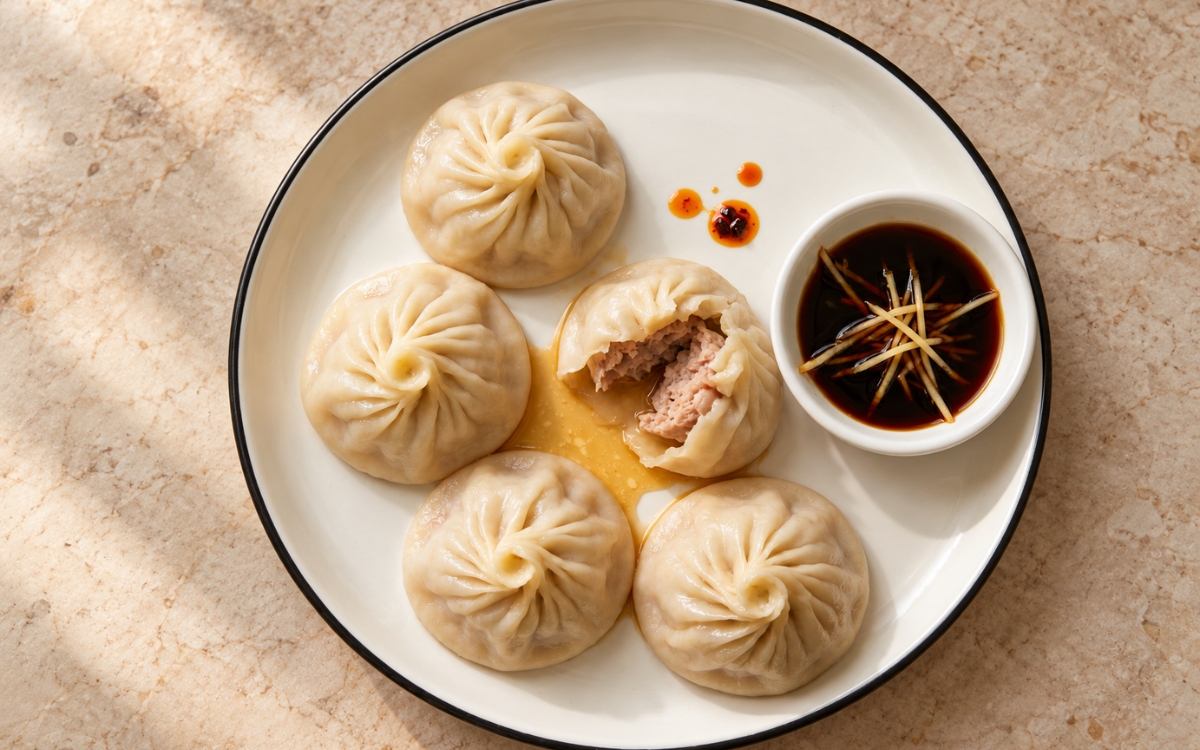
- Mix the 60ml of Chinkiang black vinegar with the 15ml of light soy sauce and stir in the julienned ginger, keeping the sauce sharp and light. Serve the dumplings immediately on a warm white plate with the sauce on the side, opening one gently to reveal the pork filling and a small pool of golden soup. To eat, lift a dumpling carefully onto a spoon, nibble a small opening, sip the broth, then dip and eat. That immediate serving is what keeps the soup hot and the wrapper silky.
Notes
Setting the pork aspic firm deserves genuine recognition as the technique most directly responsible for whether the dumplings contain any soup at all. Pork skin and bones release collagen that only gels once the stock is reduced to about 500–600ml and chilled solid — a stock that stays soft cannot be cubed and melts into the meat too early, while over-reducing turns it salty and gluey.
Mixing the filling in one direction with the water added gradually deserves the same attention this technique receives throughout this collection’s other dumpling and meatball fillings. Stirring in one direction and adding liquid in 3–4 stages builds a sticky, emulsified paste that absorbs the water, whereas dumping it in at once leaves a loose, crumbly filling that turns dense.
Wrapper thickness deserves genuine respect as the detail most directly responsible for whether the soup stays inside. A centre rolled too thin tears under the weight of the melted aspic, while thick edges turn chewy and hide the pleats, so the 9–10cm circle with a slightly thicker middle is the structural compromise.
Judging doneness by sight and feel deserves attention as a genuine, checkable readiness cue rather than a loose time estimate. Slightly translucent wrappers and a springy filling show that the pork is cooked and the aspic has melted, whereas steaming for too long leaves the wrappers chewy and the broth thin.