Ingredients
Method
Prepare the Salsa Roja
- Toss the Roma tomatoes, onion wedges, and garlic with olive oil and salt. Broil or roast on a hot tray until the tomatoes soften and blister, and the onion develops browned edges, about 8–12 minutes. Transfer the roasted tomatoes, onion, and garlic to a blender. Add the cumin, raw jalapeño, lime juice, and cilantro. Blend until chunky-smooth. Taste and adjust salt. The salsa should be vivid red, spoonable, and thick enough to sit in a small bowl or spoon over the sopes without running everywhere. Adding the jalapeño raw at the blending stage rather than roasting it alongside the tomatoes keeps its heat sharper and fresher against the roasted sweetness of the other components.
Prepare the Masa Dough
- Mix the masa harina and salt in a large bowl. Add the warm water gradually, mixing with your hand until a soft, hydrated dough forms. Add lard or oil if using and knead briefly until smooth. Cover and rest for 20 minutes. The dough should feel soft and pliable, like Play-Doh. If it cracks at the edges when pressed, add warm water 10ml at a time. If it sticks heavily to your hands, add a little more masa harina. The 20-minute rest allows the masa harina to fully hydrate, which is what determines whether the dough presses and shapes cleanly or fights back and cracks at every edge.
Shape the Sopes
- Divide the dough into 16 equal balls, about 67–68g each. Keep the dough covered at all times. Press each ball into a thick round about 9–10cm wide and roughly 8–10mm thick. Cook on a dry hot skillet or comal for 60–90 seconds per side, until lightly browned and set but still soft enough to shape. While each sope is still hot, pinch up the edges to form a raised rim. Use a towel or your fingertips carefully. The rim needs to be high enough to hold beans and toppings. This thickness, 8–10mm, is specifically what separates a sope from a tortilla or tostada — thin enough to cook through in the initial comal stage, but thick enough to still have a soft, malleable centre once it comes off the heat, which is exactly what allows the rim to be pinched up rather than simply folding or tearing.
Pan-Fry the Sopes
- Heat a thin layer of oil or lard in a skillet over medium heat. Fry the shaped sopes for 1–2 minutes per side, until golden-brown, slightly crisp outside, and still tender inside. Transfer to a rack. Do not fry them until hard like tostadas. Sopes should have crisp edges but a thick, tender masa centre. This brief fry is about building colour and a light crisp exterior, not about drying the sope through completely — pulling it while the centre is still soft and tender is the deliberate target, distinct from how a tostada is fried to full rigidity.
Cook the Chicken
- Pat the chicken breast dry. Season with salt, smoked paprika, cumin, chilli powder, oregano, garlic powder, onion powder, and black pepper. Heat neutral oil in a skillet over medium-high heat. Sear the chicken for 3–4 minutes per side, until lightly browned. Add chicken stock or water and adobo sauce. Reduce heat to medium-low, cover, and simmer gently for 12–16 minutes, until the chicken reaches 74°C internally. Do not hard-boil chicken breast. It dries out fast and turns stringy. Chicken breast has considerably less forgiveness than thigh meat here — a gentle simmer rather than a vigorous boil is what keeps this leaner cut from drying out and toughening before it reaches temperature.
Shred and Sauce the Chicken
- Rest the chicken for 5 minutes, then shred into medium strands. Return to the skillet with the adobo cooking liquid and lime juice. Cook uncovered for 2–4 minutes, stirring often, until the chicken is juicy and lightly coated but not wet. The chicken should sit on top of the beans without leaking liquid into the masa. The adobo sauce from the canned chipotles carries smoky, tangy depth into the cooking liquid from the very start, so by the time it's reduced back into the shredded chicken at the end, that flavour is fully infused rather than sitting as a separate topping.
Make the Refried Beans
- Heat oil or lard in a skillet over medium heat. Add the diced onion and cook for 4–5 minutes until softened. Add garlic and cook for 30 seconds. Add the black beans, cumin, smoked paprika, oregano, salt, black pepper, and 120ml water or stock. Simmer for 5–7 minutes, then mash until creamy but still slightly textured. Add more water or stock as needed. Stir in butter if using. The beans should be thick and spreadable, not watery. Loose beans will slide off the sopes. The beans' job here goes beyond flavour — their thick, spreadable consistency is what physically anchors the chicken and toppings on top of the sope's raised rim, functioning almost like an edible glue layer.
Prepare the Fresh Toppings
- Dice the Roma tomatoes and toss with salt. Let sit for 5 minutes, then drain off excess liquid. Shred the iceberg lettuce very thinly. Loosen the crema only enough so it drizzles in thick white lines. Do not use wet tomatoes directly on the sopes. They will soak the toppings and weaken the masa. Salting the tomato briefly draws out its internal liquid through osmosis before it reaches the sope, protecting the thick but still absorbent masa base from excess moisture it would otherwise soak up directly.
Assemble the Sopes
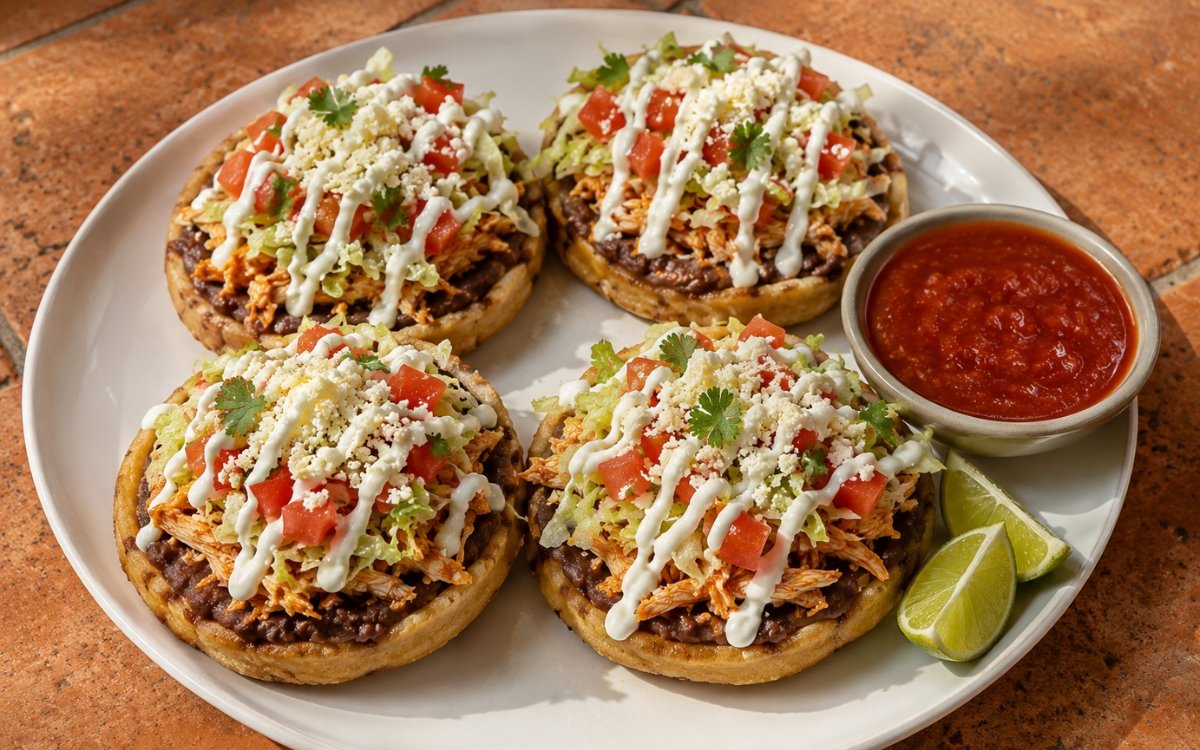
- Spread a thick layer of refried beans over each warm sope. Add spiced shredded chicken on top. Add shredded lettuce and drained diced tomato. Drizzle with crema, then scatter crumbled queso fresco generously over the top. Add fresh cilantro leaves. Building in this order — hot beans and chicken first, cool fresh toppings last — keeps the coolest, most delicate garnishes from being warmed or wilted by residual heat from the base and filling below.
Serve
- Serve 4 sopes per serving with salsa roja in a small bowl on the side, or spoon a little salsa over the toppings just before eating. Add lime wedges to the plate. Serve immediately while the sopes are still warm and crisp at the edges, with the beans creamy and the toppings fresh. The sope's crisp edge and the fresh toppings' texture both begin to soften once fully assembled, so serving without delay preserves the contrast between warm, sturdy base and cool, crisp garnishes.
Notes
The distinction between a sope and a tortilla or tostada comes down almost entirely to thickness and how that thickness is handled through cooking. At 8–10mm, the pressed dough is thick enough to retain a soft, pliable centre even after its initial comal cook — that softness is exactly what allows the rim to be pinched up into a raised edge while the masa is still hot, something that simply isn't possible with the thinner dough used for a standard tortilla, which lacks the mass to hold a shaped rim.
Timing the rim-pinching to happen while the sope is still hot off the comal is non-negotiable rather than a preference. Masa firms up considerably as it cools, and once that happens, attempting to shape or pinch the edges produces cracking rather than a clean, functional rim. This is one of the few steps in the whole recipe with essentially zero flexibility in its timing.
The refried beans' thick, spreadable consistency does double duty in this recipe as both a flavour layer and a structural one. Beyond contributing their own earthy, cumin-forward flavour, the beans function as the physical layer that keeps the shredded chicken and subsequent fresh toppings from sliding off the sope's surface — a looser, more liquid version of the same beans would fail at that second job even if the flavour were identical.
Chicken breast is used here specifically because of the cooking method's forgiveness for gentler, more controlled heat — a simmer rather than a boil, monitored to temperature rather than time. This same care doesn't automatically transfer to other preparations; a leaner cut like breast rewards exactly this kind of gentle handling in a way that a fattier cut like thigh doesn't require as strictly.