Ingredients
Method
Marinate the Pork
- If needed, trim the 1,200g of pork and slice or pound it into thin steaks about 8–10 mm thick, using boneless shoulder steaks, pork neck, or loin pounded thin. In a large bowl, combine the 2 tsp kosher salt, 1 tsp black pepper, 1 tsp dried Mexican oregano, 4 finely grated garlic cloves, 120ml sour orange juice (or 80ml orange juice, 30ml lime juice, and 10ml grapefruit juice), 1 tbsp white vinegar, and 1 tbsp neutral oil. Add the pork, turn until every piece is coated, cover, and refrigerate for 2–4 hours. Do not marinate overnight. That limit is what keeps the pork tender, since strong citrus left too long turns the outside mealy and cured.
Pickle the Red Onions
- Put the 2 thinly sliced medium red onions in a bowl and add 180ml sour orange juice (or 120ml orange juice, 45ml lime juice, and 15ml white vinegar), ½ tsp kosher salt, ½ tsp sugar, ¼ tsp dried Mexican oregano, and the optional habanero. Toss well and let stand for at least 30 minutes while the pork marinates, tossing once or twice. The onions should soften slightly and turn vivid pink while keeping a little bite. Keep them chilled until serving. That quick acid cure is what gives the plate a bright, refreshing counterpoint to rich grilled pork.
Cook the Black Beans
- Heat 2 tbsp neutral oil or lard in a saucepan over medium heat. Cook the ½ small finely diced white onion for 3–4 minutes until softened, then add the 2 minced garlic cloves and cook for 30 seconds. Add the 2 drained cans of black beans, the reserved 180ml bean liquid or water, 1 bay leaf, and ½ tsp ground cumin, then simmer for 10–15 minutes, stirring occasionally, until hot and lightly thickened. Mash some of the beans lightly, keeping most whole, season with ½–1 tsp kosher salt and black pepper, and remove the bay leaf. The beans should be spoonable, not soupy. That thickness is what lets them sit neatly on the plate as a side rather than a stew.
Preheat the Grill
- Preheat a grill or grill pan to high heat, so the cooking surface is very hot before any pork goes on, and lightly oil the grates if needed. Lift the pork out of the marinade, let the excess drip off, and discard the used marinade. Do not grill the pork dripping wet. A scorching surface and a surface-dry steak matter equally. That combination is what lets the meat sear and char on contact instead of steaming in its own liquid.
Grill the Pork and Citrus
- Grill the pork in batches without crowding, cooking about 2–3 minutes on the first side and 1–2 minutes on the second, depending on thickness, until the steaks show dark char marks and lightly crisp edges. Target a centre temperature of about 63–68°C, just cooked through, and avoid going further, because thin pork dries very fast. On a grill pan, empty any accumulated liquid between batches. Rest the pork for 5 minutes, and while it rests, place the 2–3 halved oranges cut-side down on the grill until well charred and lightly caramelised. That short rest is what lets the juices settle back into the meat before serving.
Assemble and Serve
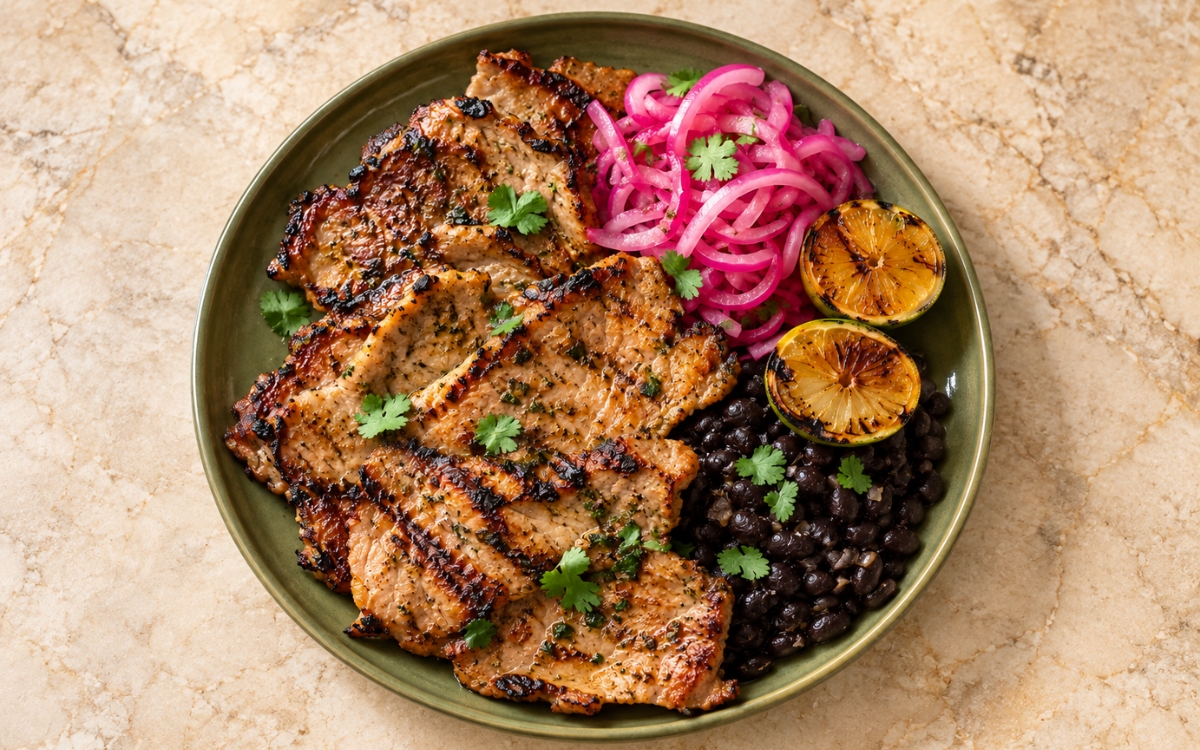
- Divide the pork between 4 plates, about 300g of raw marinated pork per serving, arranging the steaks in overlapping pieces. Add a mound of the pickled red onions and a portion of black beans beside the pork, then place the charred citrus halves on each plate. Scatter a small handful of fresh cilantro leaves over the top and offer extra lime wedges if you like. Serve immediately, squeezing the charred citrus over the pork at the table. That immediate serving is what keeps the pork smoky and juicy, with the char still crisp against the cold, sharp onions.
Notes
Grilling the pork hot and fast deserves genuine recognition as the technique most directly responsible for whether poc chuc tastes smoky and charred or dry and grey. The recipe’s own explicit instruction that the pork must be “thin and grilled hot and fast” reflects the physics — steaks only 8–10 mm thick overcook in seconds, so a very hot surface must brown them before the centre passes 68°C.
Letting the excess marinade drip off deserves the same attention this technique receives throughout this collection’s other grilled and seared dishes, because surface moisture is the genuine difference between searing and steaming. Pork put on the grate dripping wet drops the surface temperature and simmers in citrus liquid, so the dark char marks and crisp edges never form.
The 2–4 hour marinating window deserves genuine respect as the detail most directly responsible for the texture of the finished pork. Sour orange juice is acidic enough to firm the surface proteins, so a short window seasons the meat while an overnight soak leaves it mealy and cured on the outside.
The centre temperature of 63–68°C deserves attention as a genuine, checkable readiness cue rather than a loose guess based on how the steak looks. Thin pork moves from juicy to dry within a minute, so pulling it at that range and resting it for 5 minutes is what keeps every steak tender.