Ingredients
Method
Roast and Prepare the Poblanos
- Roast the 4 poblano peppers directly over a gas flame, under a hot broiler, or in a very hot skillet brushed with the 1 tsp of oil, turning as needed for 8–12 minutes until the skins are blistered and blackened on most sides. Transfer to a bowl, cover, and let them steam for 10 minutes. Peel away the loose skin by hand without rinsing, then remove the stems and seeds. Cut 3 poblanos into strips about 1cm wide and roughly chop the remaining 1, which is blended later for body. The peppers should be soft and smoky with some char flavour, never burned bitter. That covered steam and dry peel is what loosens the skins while keeping the smoky oils that running water would wash away.
Poach the Chicken
- Place the 700g of chicken and the 1.2 litres of stock in a large pot and bring just to a gentle simmer over medium heat, never a hard boil. Simmer for 12–16 minutes, depending on thickness, until the chicken is fully cooked through, tender, and no longer pink at the centre. Lift the chicken to a plate, leave the stock in the pot, and let the meat cool until you can handle it. Shred it into medium strands. The shreds should look moist and slightly glossy, not stringy or dry. That gentle poach is what keeps the proteins relaxed, because a hard boil tightens the meat and leaves it dry once shredded.
Build the Aromatic Base
- Heat the 1 tbsp of oil in a separate soup pot or Dutch oven over medium heat. Add the diced onion and cook for 5–6 minutes, stirring often, until softened and lightly translucent. Stir in the garlic and the jalapeño if using, and cook for 30–45 seconds until fragrant. Add the cumin, oregano, coriander if using, ½ tsp of salt, and the black pepper, and cook for about 20 seconds, just until aromatic. The onion should be pale and soft with no deep browning. That restraint is what protects the lighter greenish-golden colour, because browned onion would darken the whole soup.
Form the Soup Body
- Add the 1 chopped poblano to the base, along with about half of the beans (roughly 240g, one can) and 500ml of the reserved stock. Simmer for 3–4 minutes so the beans soften and the flavours join, then blend until mostly smooth with an immersion blender, or transfer carefully to a blender in small batches with the lid vented. Return the purée to the pot if needed. The mixture should look pale green, thick, and velvety. That partial blend is what gives the soup a chili-style body without a flour or cornstarch thickener, because the bean starch does the work.
Finish the Soup
- Add the remaining stock, the shredded chicken, the remaining whole beans, the 180g of corn, and the 3 sliced poblanos. Bring to a gentle simmer and cook for 10 minutes, stirring occasionally, until the corn is tender and the chicken has taken on the broth. Reduce the heat to low, stir in the 100–120ml of crema, and loosen with 60–120ml of milk or extra stock only if the soup is thicker than you want. Taste, then adjust the salt, pepper, and lime juice. The soup should coat a spoon yet still pour as a soup. That low heat after the crema is what keeps the dairy from splitting.
Serve
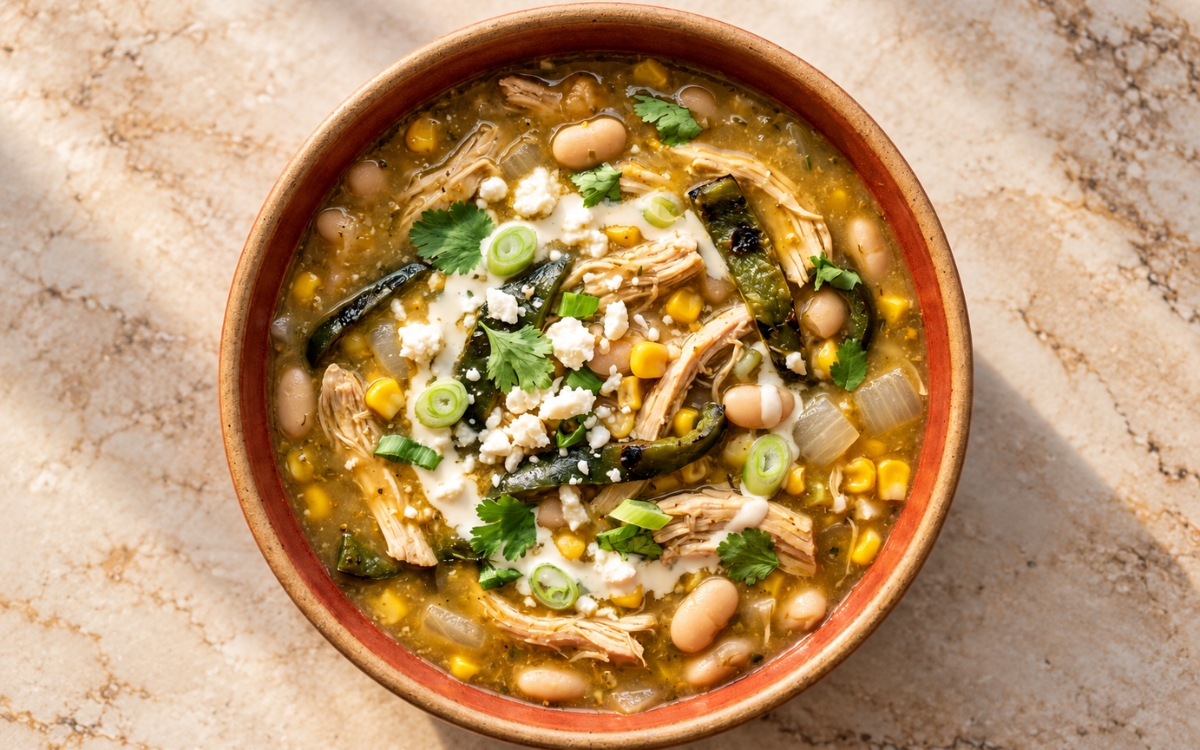
- Divide the soup among 4 warm bowls, making sure each one holds visible chicken, whole beans, corn, and poblano strips. Drizzle each bowl lightly with the 2 tbsp of crema, then scatter over the 60g of queso fresco, the sliced scallions, and the cilantro leaves. Serve hot, with extra lime at the table if you like. The bowl should show a greenish-golden creamy broth with restrained garnishes on top. That light, last-minute garnish is what adds cool, salty, fresh contrast without hiding the soup underneath.
Notes
Roasting and steaming the poblanos deserves genuine recognition as the technique most directly responsible for whether this tastes like a roasted pepper soup or simply green pepper in cream. Charring develops smoky depth that raw peppers never reach, while the covered rest loosens the skins so they peel by hand without any rinsing to wash flavour away.
Keeping most of the poblanos as strips deserves the same attention this technique receives throughout this collection’s other roasted vegetable soups and stews. Blending only the one chopped pepper gives the broth colour and body, whereas blending all four turns the pot into a smooth cream soup with no visible roasted pepper left to chew or see.
The gentle simmer for both the chicken and the crema deserves genuine respect as the detail most directly responsible for juicy shreds and a smooth broth. Hard boiling tightens the chicken fibres into dry threads, and aggressive heat after the dairy goes in splits the crema, so boneless thighs are the more forgiving choice for most cooks.
The thickness of the finished soup deserves attention as a genuine, checkable cue rather than a loose approximation. The broth should coat the back of a spoon and hold the chicken, beans, and vegetables in suspension, and because beans keep absorbing liquid as it stands, a splash of hot stock or milk is how you tune it back to the right consistency.