Ingredients
Method
Prepare the Remoulade
- In a small bowl, combine the mayonnaise, Dijon mustard, whole grain or Creole mustard, lemon juice, hot sauce, garlic, diced pickles, capers if using, parsley, and paprika. Mix until fully combined. Season with salt and black pepper to taste. Refrigerate until needed so the flavor can settle while the rest of the sandwich is prepared. The finished sauce should taste tangy, slightly sharp, lightly spicy, and rich enough to coat the bread without running like a thin dressing. Combining two different mustards rather than one gives the remoulade layered sharpness — Dijon's smoothness alongside the whole grain or Creole mustard's coarser, more assertive bite, which together produce more complexity than either would alone.
Prepare the Shrimp
- Pat the shrimp dry. Place them in a bowl and season with the salt, black pepper, garlic powder, onion powder, and paprika. Add the buttermilk and egg, then mix until the shrimp are evenly coated. Let them sit for 15 minutes. This short marination lightly seasons the shrimp throughout and gives the coating something to cling to. The shrimp should be coated but not swimming in a large excess of liquid. This brief marinade is calibrated specifically for shrimp's fast-cooking, delicate nature — long enough to season the surface and coat it for the dredge, but well short of any window where the buttermilk's mild acidity would start affecting the shrimp's texture.
Prepare the Dredge
- In a shallow dish or tray, combine the flour, cornmeal, cornstarch, and baking powder. Mix very well so the dry ingredients are evenly distributed. The flour gives body, the cornmeal gives the po' boy its more classic southern crunch, and the cornstarch helps keep the crust lighter and crisper. The finished mixture should look uniform with no visible streaks. This three-part dry mix is doing distinct work with each component — cornmeal alone would fry into something coarse and slightly gritty, while flour alone would produce a smoother but denser crust; combined with cornstarch for lightness, the blend produces the specific crunchy-but-light texture this style of fried shrimp is known for.
Bread the Shrimp
- Lift the shrimp from the buttermilk mixture, letting the excess drip off, then toss them in the dredge until fully coated. Press the dredge lightly onto the shrimp so the coating adheres well. Place the breaded shrimp on a tray or rack and let them rest for 5–10 minutes before frying. This short rest helps the coating hydrate slightly and cling better in the oil rather than falling away. The buttermilk clinging to the shrimp's surface gives the dry dredge something to bond with immediately — pressing it on lightly reinforces that bond, and the brief rest afterward lets it set fully before the coating meets hot oil.
Fry the Shrimp
- Heat neutral oil in a deep pot or fryer to 175–180°C. Fry the shrimp in batches for about 2–3 minutes, depending on size, until deeply golden and crisp. Do not overcrowd the pot. Fry only until the coating is crisp and evenly golden, the shrimp have curled and turned opaque, and the interior is just cooked through. Transfer to a wire rack or paper towel-lined tray and season lightly with a little extra salt while hot. The shrimp should stay crisp and light, not dark or heavy. Overfrying will make them rubbery very quickly. Shrimp cook through remarkably fast given their small size, which is exactly why this fry is timed so briefly and why crowding the pot is worth avoiding — a dropped oil temperature from overcrowding extends the fry time just enough to push already-fast-cooking shrimp toward tough and rubbery.
Prepare the Bread
- Split the baguette sections or semi-baguettes horizontally without cutting all the way through if you want a hinged sandwich. If the crumb is very dense, pull out a little of the interior to make room for the filling. If desired, toast the cut sides lightly until just warm and faintly crisp. A very light smear of butter or mayo on the bread is optional, but do not make the bread greasy. The bread should be sturdy enough to hold the filling, but not toasted so hard that it shatters when bitten. Removing a little of an overly dense interior crumb creates more room for the generous filling this sandwich calls for, without needing to compress or squeeze everything into a bread cavity that wasn't built to hold it.
Assemble the Sandwiches
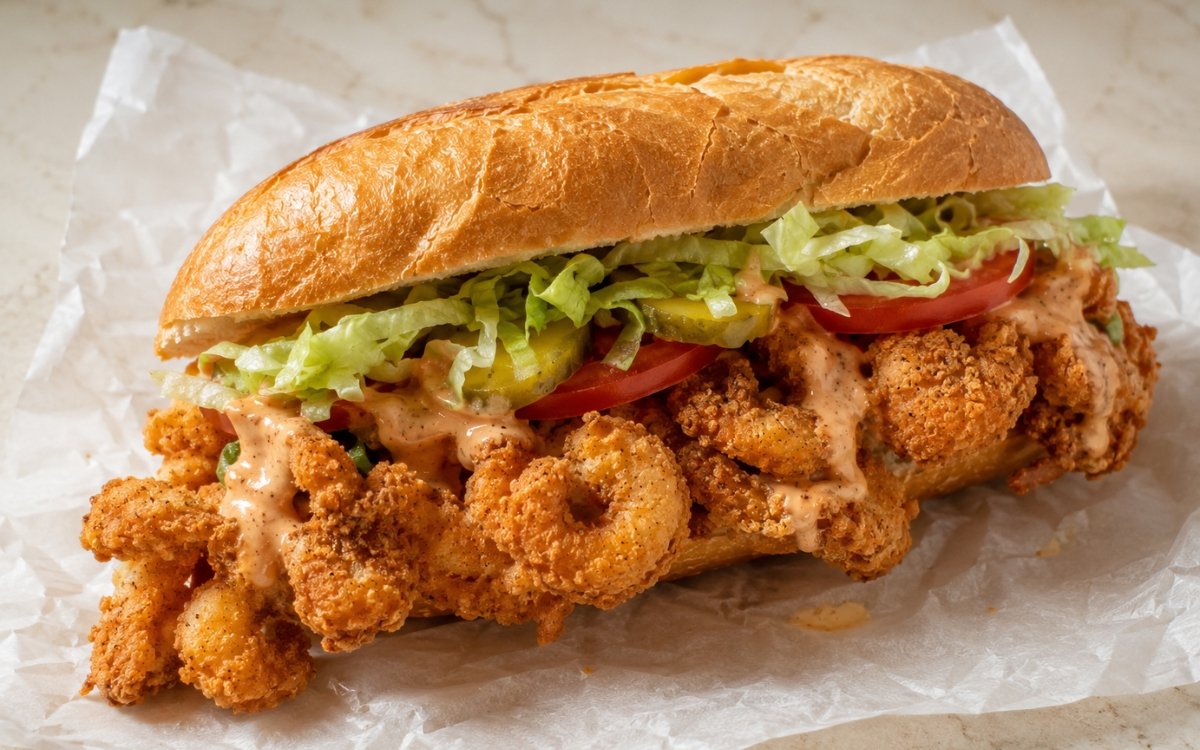
- Spread a generous layer of remoulade on both the top and bottom interior sides of each roll. Layer the bottom half with a handful of shredded lettuce, tomato slices, pickle slices, and a generous portion of hot fried shrimp. Add a little extra remoulade over the shrimp if desired, then close with the top half of the bread. Each sandwich should look full and slightly overflowing, with the shrimp extending past the edges in the classic po' boy style. Spreading remoulade on both halves of the bread, rather than just one side, ensures its tangy flavour reaches every bite rather than being concentrated only where the shrimp happens to sit.
Notes
The buttermilk-and-egg marinade followed by a three-part dry dredge is worth understanding as a deliberate two-stage system rather than a single coating step. The wet marinade does double duty, seasoning the shrimp's surface while also giving it a slightly tacky coating for the dry dredge to properly bond to. Skipping that wet stage and dredging dry shrimp directly would produce a noticeably patchier, less adherent coating, since there's nothing for the dry ingredients to cling to on contact.
The specific three-component dredge — flour, cornmeal, and cornstarch together — reflects a real understanding of what each ingredient contributes on its own. Cornmeal alone fries into something distinctly gritty and coarse; flour alone produces a smoother but comparatively heavier, denser crust. Cornstarch's inclusion lightens the whole mixture, and the combination of all three is what produces the specific light-but-crunchy texture that reads as authentically southern rather than simply battered.
Shrimp's genuinely fast cooking time deserves real respect throughout this recipe, from the brief marinade through the short fry. Unlike a larger cut of fish or a piece of chicken, shrimp moves from raw to perfectly cooked to overdone and rubbery within a very narrow window — every timing instruction in this recipe, from the 15-minute marinade to the 2–3 minute fry, is calibrated specifically around not overshooting that window.
The instruction to spread remoulade generously on both halves of the bread, rather than concentrating it in one place, reflects how central that sauce is to the sandwich's identity. A po' boy without a properly bold, tangy remoulade risks reading as simply a fried shrimp sandwich rather than something distinctly Louisiana — the sauce's presence throughout every bite, not just where the shrimp happens to sit, is part of what makes the dish recognisable as a proper po' boy.