Ingredients
Method
Make the Lemon Sugar
- Wash and dry the lemons well. Finely zest them, taking only the yellow outer peel. Place the zest and sugar in a bowl. Rub together with your fingertips for 2 to 3 minutes until fragrant and lightly damp. Let stand for 15 to 20 minutes so the sugar absorbs the lemon oils. Rubbing rather than simply mixing the zest into the sugar is what actually ruptures the peel's tiny oil glands, mechanically releasing those aromatic oils directly into the sugar without needing any heat.
Make the Pineapple Base
- Add the pineapple chunks and 150ml very cold water to a blender. Blend until completely smooth. Strain through a fine sieve, pressing gently to extract the juice and fine pulp. Do not overwork it if you want a cleaner lemonade. Set aside. Pressing gently, rather than forcing every last bit of pulp through, is a genuine choice between a cleaner strained syrup and a fuller-bodied, more textured result — how firmly this step is worked directly determines which of those two outcomes the finished drink lands on.
Make the Jalapeño Infusion
- Place the sliced jalapeños in 250ml very cold water and refrigerate for 15 to 20 minutes. Taste after 10 minutes and continue only until the heat is noticeable but still clean and gentle. Strain out the jalapeños. Reserve a few fresh slices separately for serving. Tasting partway through this steep, rather than committing to the full time blindly, is what lets the heat level be judged directly against how sharp that particular batch of jalapeños actually is — pepper heat varies enough between individual jalapeños that a fixed steeping time alone can't reliably predict the final result.
Make the Lemon Base
- Add the lemon juice to the lemon sugar and stir well until the sugar mostly dissolves. Strain through a fine sieve, pressing well on the zest, to make a fragrant lemon syrup. The lemon juice's own acidity helps dissolve the sugar while carrying the already-released lemon oils fully into the base, and pressing the spent zest firmly before discarding it captures as much of that flavourful syrup as possible.
Build the Lemonade
- In a large pitcher, combine the lemon syrup, the pineapple base, the jalapeño infusion, 900ml cold water, and the pinch of salt, if using. Stir very well. Taste and adjust with a little more cold water if needed. The finished lemonade should be bright, pineapple-forward, lemony, and gently spicy, with a total yield close to 2 liters. This final tasting checkpoint matters directly given how three separately variable components — pineapple ripeness, lemon sharpness, and jalapeño heat — all come together here at once, making a deliberate adjustment stage genuinely necessary rather than optional.
Chill
- Refrigerate for 20 minutes, until thoroughly cold. That resting period lets the lemon, pineapple, and jalapeño infusion fully integrate together, producing a more unified flavour than serving the drink immediately after mixing.
Serve
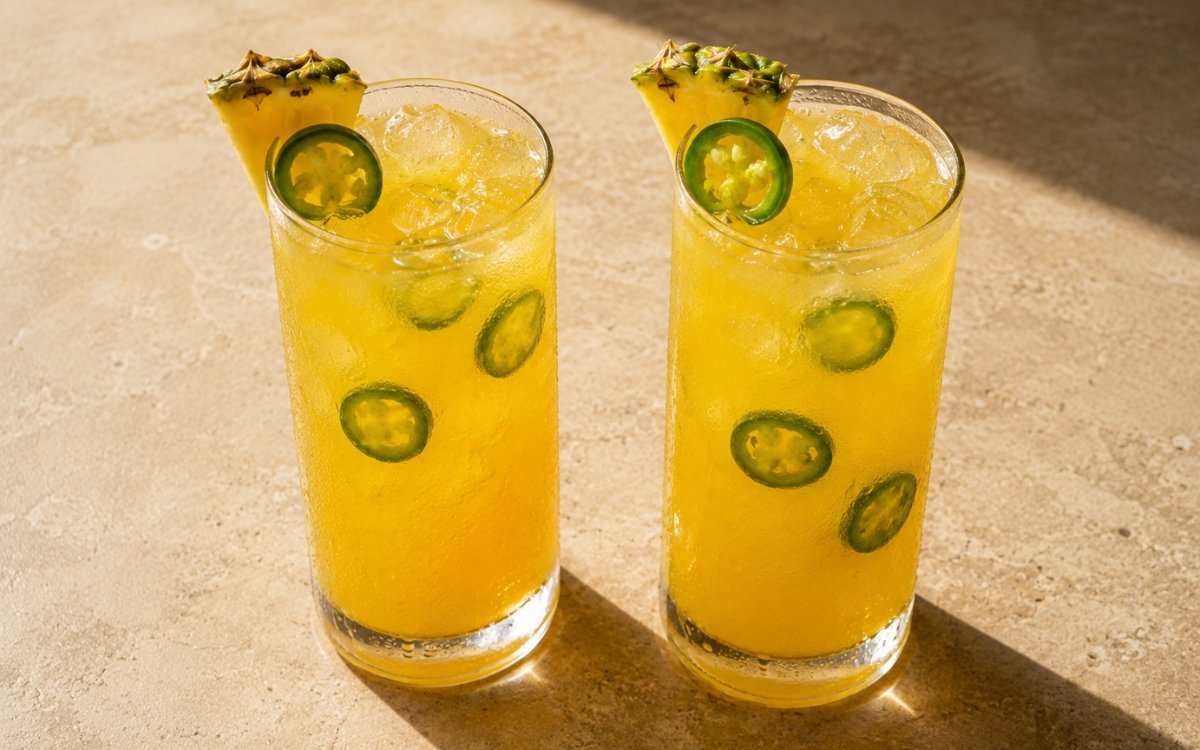
- Fill glasses with ice. Garnish each glass with a few thin jalapeño rounds and a small pineapple wedge on the rim. Pour in the lemonade and serve immediately. Reserving a few fresh, uninfused jalapeño slices specifically for garnish, rather than reusing the spent infusion slices, keeps the visual garnish looking genuinely fresh and vivid rather than dulled from steeping.
Notes
Steeping the jalapeño in cold water, rather than cooking it into the drink in any way, deserves recognition as the technique responsible for this lemonade's genuinely clean heat. Cold infusion extracts capsaicin and pepper flavour without the flatter, more muted character that heat and cooking would introduce — the same underlying principle behind why so many of this collection's fruit-based lemonades avoid cooking their fresh components whenever possible.
Tasting the jalapeño infusion partway through its steep, rather than trusting a fixed time to always produce the same result, deserves real respect given how genuinely variable pepper heat can be from one jalapeño to the next. Some peppers carry noticeably more capsaicin than others even within the same batch, and a steeping time calibrated for a milder pepper could produce sharply different results with a hotter one — active tasting is what accounts for that variability directly rather than guessing.
Choosing fresh pineapple specifically over canned, as the recipe's own notes explicitly recommend, deserves genuine attention rather than being treated as a minor preference. Canned pineapple typically carries a heavier, more processed character from its own packing syrup and the canning process itself — fresh fruit, blended and strained directly, produces a noticeably brighter, cleaner result more in keeping with this drink's overall fresh, clean identity.
The strict avoidance of white pith throughout zesting deserves the same careful attention it receives across every citrus-forward drink in this collection. Lemon pith carries a real, distinct bitterness entirely separate from the fruit's natural tartness — even a small amount worked accidentally into the zest can introduce a flavour that muddies this drink's careful balance between sweet pineapple, bright lemon, and controlled jalapeño heat.