Ingredients
Method
Combine the Pineapple-Coconut Base
- Pour the 200ml of pineapple juice and 400ml of coconut water into a pitcher or large container. The ratio is specifically 1:2 pineapple to coconut water rather than equal parts: pineapple juice is intensely flavoured, sweet, and sharply acidic — at equal parts with the more delicate coconut water it would dominate the combination rather than the two working as complementary equals. At 1:2, the pineapple's tropical intensity sets the primary character while the coconut water's mild, slightly sweet, specifically tropical hydration character provides the base that distributes the pineapple flavour and rounds its sharpness into a balanced, harmonious combination. Fresh pineapple juice — produced by blending 250g of fresh pineapple chunks and straining through a fine-mesh sieve — provides the most vivid, most specifically tropical result: the live enzymes, the specific aromatic freshness, and the particular sharp sweetness of raw ripe pineapple that pasteurisation mutes in commercial juice. High-quality, minimally processed store-bought pineapple juice is a fully acceptable alternative provided it smells and tastes specifically of fresh pineapple rather than a cooked, tinned note — taste before using and discard any juice that smells flat or processed.
Cold Mint Infusion
- Take the 12 fresh mint leaves and clap them between your palms — the same technique from the watermelon mint fizz. The sharp palm-clap compresses the leaves momentarily, rupturing just the surface cells and releasing the aromatic oils onto the leaf surface without the deeper bruising and chlorophyll extraction of muddling. Add the clapped mint leaves to the pineapple-coconut base. Cover the pitcher and refrigerate for 20–30 minutes. The cold infusion at refrigerator temperature extracts only the volatile surface aromatic compounds from the mint during this window — specifically the cool, fresh, menthol-adjacent character that makes mint a refreshing addition to tropical drinks without making the drink taste of mint. The pineapple and coconut water's tropical sweetness is vivid enough that the mint's role as a subtle, barely-detectable refreshing note is the appropriate contribution rather than a prominent herbal flavour. After 20–30 minutes, strain out and discard the mint leaves before proceeding.
Assemble and Serve
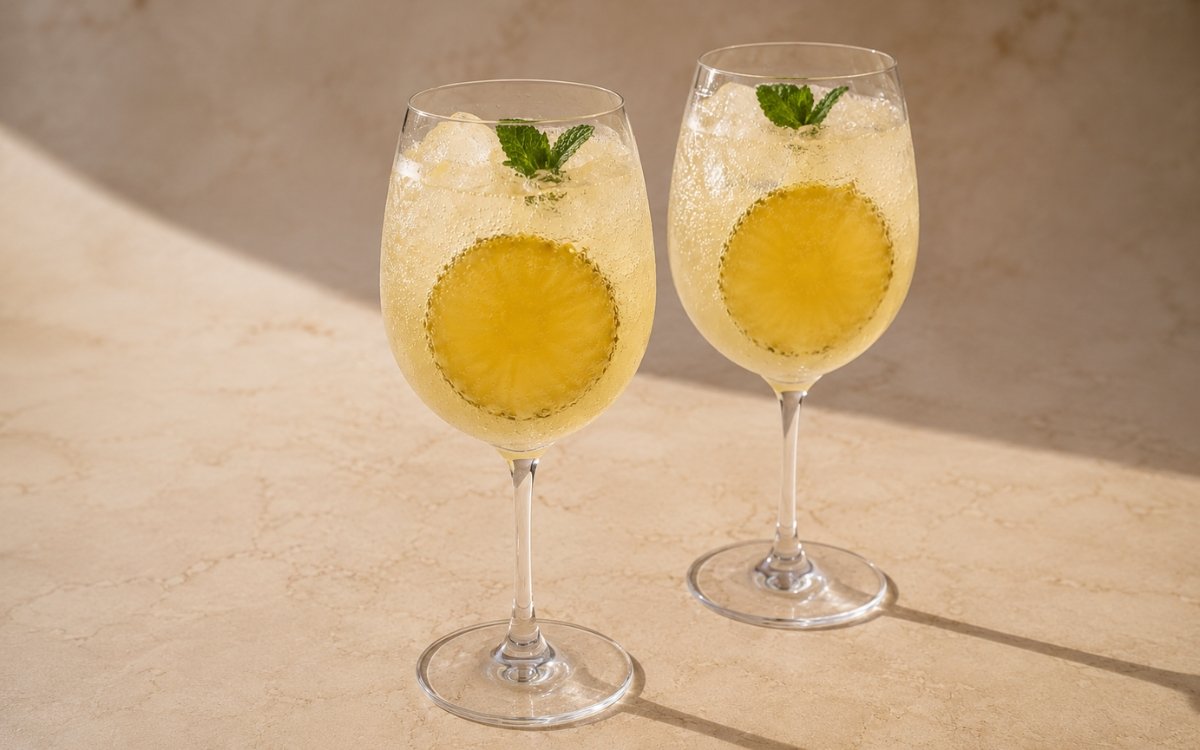
- Fill four large wine glasses generously with ice cubes. The large wine glass format is the specific serving choice for this mocktail — the wide bowl shape allows the garnish to be arranged elegantly and shows the drink's light, golden colour against the glass more effectively than a tall straight glass. Divide the chilled mint-infused pineapple-coconut base evenly among the four glasses — approximately 150ml per glass. Top each glass with approximately 100ml of chilled club soda, pouring gently down the inner side of the glass to preserve the carbonation. The base-to-soda ratio here is 3:2 rather than the 1:1 of the watermelon fizz — the coconut water's mild character means more base is required to maintain the tropical flavour against the diluting effect of the soda. Stir gently once or twice to combine. Prepare the pineapple garnish — cut thin rounds from a pineapple cross-section approximately 5mm thick, trim to fit if needed, and press each round against the inside of the glass so it is visible through the pale golden drink. Rest a small mint sprig on the ice with the leaves above the rim. Serve immediately.
Notes
The distinction between coconut water and coconut milk is fundamental to this recipe and to the specific character of the finished mocktail. Coconut water — the clear liquid from inside a young green coconut — is light, slightly sweet, mildly mineral, and specifically hydrating, with approximately 45 calories per 240ml. Coconut milk — produced by blending mature coconut flesh with water — is thick, rich, creamy, and high in fat. This mocktail uses coconut water: it combines cleanly with the pineapple juice and club soda, it is light enough not to dull the carbonation, and its mild tropical character provides the correct background. Coconut milk would produce a creamy, dense, opaque drink that is a different preparation entirely.
The different preparation that uses both pineapple and coconut milk together — the combination the user might think of as a natural companion to this recipe — is specifically the Piña Colada Mocktail. That preparation is richer, creamier, and more dessert-adjacent; this sparkling version is lighter, more refreshing, and more specifically suited to occasions where a long, cool, summer drink is the requirement.