Ingredients
Method
Marinate the Chicken
- Pat the 8 chicken thighs completely dry with paper towels, including the skin side, so the marinade clings and the skin can brown later. In a large bowl, mix the 6 grated garlic cloves with the soy sauce, 2 tbsp lime juice, vinegar, 2 tbsp oil, 2 tsp kosher salt, black pepper, cumin, smoked paprika, oregano, sugar, and the ají panca paste if using into a loose, brick-red paste. Coat the chicken thoroughly, rubbing the marinade over and under the skin as far as you can reach, then cover and refrigerate for at least 4 hours, ideally overnight. That long, cold rest is what carries the salt and spices into the meat instead of leaving them as a surface coating.
Cook the Rice
- Rinse the 300g of rice under cold water until the water runs mostly clear, then put it in a saucepan with the 450ml water, 1 tbsp butter or oil, and ½ tsp salt. Bring to a boil, stir once, cover, reduce the heat to very low, and cook for 15 minutes without lifting the lid. Turn off the heat and let the rice rest, covered, for 10 minutes, then fluff gently with a fork until the grains look separate and dry on top. That covered rest is what lets the grains finish steaming and stay fluffy instead of wet.
Blend the Ají Verde
- Add the 120g mayonnaise, 60g sour cream or yogurt, 1 packed cup cilantro, 1–2 green chilies, the garlic clove, 2 tbsp lime juice, 2 tbsp oil, and ½ tsp salt to a blender. Blend until the sauce is smooth, thick, and vividly green, scraping down the sides once, then add 1–2 tbsp water only if needed to make it spoonable and softly drizzling. Taste and adjust the salt, lime, and heat, then chill until serving. That restraint with water is what keeps the sauce thick enough to cling to the chicken instead of sliding off it.
Slice the Red Onion
- Slice the small red onion as thinly as you can, into near-translucent half-moons, so it adds freshness without overpowering the plate. If the onion is very sharp, rinse it briefly in cold water, drain it well, and pat it dry so no excess water thins the sauce later. Keep it raw and crisp in a small bowl and hold it for plating alongside the lime wedges. That thin, raw slicing is what lets the onion lift the rich chicken and creamy sauce instead of competing with them.
Grill or Roast the Chicken
- For the preferred grill method, preheat to medium-high, around 220–230°C surface temperature, and oil the grates lightly. Place the thighs skin-side down for 5–7 minutes until marked and lightly charred, then turn and keep grilling for 18–25 minutes total, moving the pieces as needed to avoid scorching and brushing lightly with any marinade left in the bowl only early in cooking. For the oven method, heat to 220°C / 425°F, set the thighs skin-side up on a lined tray, roast for 30–35 minutes, and broil for 1–3 minutes if needed for extra char. The chicken is done when the thickest part reaches 74°C / 165°F and the juices run clear. If the exterior darkens too fast, move the chicken to a cooler part of the grill or lower the oven rack. That patient, hands-off browning is what builds dark, charred skin instead of burnt garlic on pale meat.
Rest and Plate
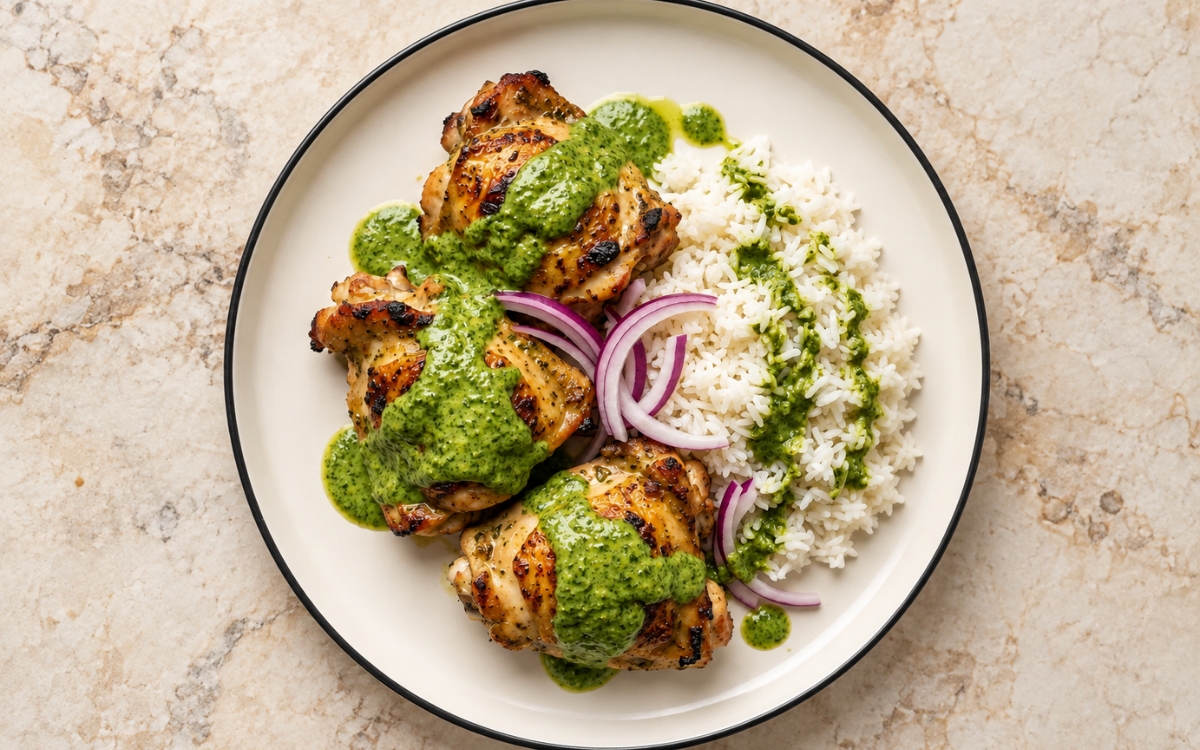
- Rest the cooked chicken for 5–10 minutes so the juices settle, then spoon a portion of rice onto each plate and add 2 thighs per serving. Spoon or drizzle the cold ají verde generously over part of the chicken, leaving some browned surface visible, then add a small pile of red onion on the side and a lime wedge. Add the sauce only just before serving so it stays bright and green. That restraint with the sauce is what keeps the crisp skin visible and the contrast between warm chicken and cool sauce sharp.
Notes
The long marinade deserves genuine recognition as the technique most directly responsible for whether this chicken tastes deeply seasoned or merely grilled. Salt, soy, lime, and garlic need hours to travel beyond the skin into thick thigh meat, and an overnight rest also deepens the paprika colour that gives the finished skin its dark, handsome look.
Drying the thighs and leaving them undisturbed on the grate deserves the same attention this technique receives throughout this collection’s other grilled and roasted dishes. Surface moisture and constant flipping both prevent a proper crust — a dry surface left skin-side down lets the sugar and paprika caramelise into genuinely marked, lightly charred skin instead of steaming pale and sticking.
The 74°C / 165°F reading in the thickest part deserves attention as a genuine, checkable doneness cue rather than a guess from skin colour. A dark, soy-lacquered exterior can look finished long before the centre is, and bone-in thighs that are cooked through and then rested stay juicy instead of staying undercooked near the bone.
The thickness of the ají verde deserves genuine respect as the detail most directly responsible for how the finished plate eats. A sauce loosened only by the spoonful genuinely clings to the chicken and keeps its bright cilantro colour, while a runny one slides off the skin, pools around the rice, and washes out the charred flavour it should sharpen.