Ingredients
Method
Prepare the Dough
- If using your pre-made Homemade Pizza Dough, make half a batch, ferment it fully, and divide it into 4 dough balls of about 250g each. If making the dough here from the half-batch formula: combine the flour and yeast in the bowl of a stand mixer. Add the water and olive oil and mix with the dough hook on low speed until a rough dough forms. Let it rest for 10 minutes, then add the salt and knead on low to medium-low speed for 8–12 minutes, until the dough is smooth, elastic, and only lightly tacky. It should clear most of the bowl but still feel supple, not dry. Divide into 4 equal dough balls and round each tightly. Place each into a lightly oiled covered container or tray. Refrigerate for 24–48 hours. The long cold fermentation is important. It improves flavour, relaxes the dough, and helps the crust brown and blister better. Under-fermented dough stays tight, resists stretching, and bakes up flatter and less flavourful. That extended cold time gives the yeast genuine room to build real, developed flavour that a same-day dough simply couldn't match within a few hours.
Bring the Dough to Room Temperature
- Remove the dough balls from the refrigerator 2–3 hours before baking. Keep them covered so they do not skin over. The dough should be soft, gassy, and relaxed by the time you shape it. If it is still cold and tight, it will spring back and may tear while stretching. That tempering window lets the cold, tightened gluten network genuinely relax and warm through before it ever meets the stretch this pizza's shaping requires.
Make the Sauce
- In a bowl, stir together the tomatoes, olive oil, salt, oregano, garlic powder or grated garlic, sugar if needed, and red pepper flakes if using. The sauce should be thicker than a Neapolitan-style sauce. It should spread easily, but not run. If the tomatoes are very watery, drain off a little excess liquid first. A loose sauce can soak the dough and slow browning in the center. That deliberately thicker consistency, distinct from a classical Margherita sauce, protects the dough beneath it from absorbing excess liquid during the bake, giving the center a real chance to set and brown properly.
Prepare the Cheese and Toppings
- Grate the low-moisture mozzarella and keep it chilled until needed. Separate the pepperoni slices so they are easy to place quickly. Low-moisture mozzarella is the right cheese here. It gives the classic Italian-American melt, stretch, browning, and clean bubbling surface. Fresh mozzarella releases too much water and makes this style less stable and less classical. Keeping the grated cheese genuinely cold until assembly protects it from softening and clumping prematurely, letting it distribute evenly and melt properly once it actually reaches the oven's heat.
Preheat the Oven
- Place a pizza steel or pizza stone in the oven and preheat at the highest temperature your oven can reach, ideally 260–290°C, for at least 45–60 minutes. If your oven has a broiler / grill element, turn it on for the final 10 minutes of preheating if your oven setup allows. A fully saturated steel or stone is critical. If the baking surface is not thoroughly heated, the crust sets slowly, the bottom stays pale, and the toppings can overcook before the base is done. That extended preheat ensures the steel or stone itself, not just the surrounding air, has genuinely reached its target temperature throughout, rather than merely being warm on the surface.
Shape the First Pizza
- Dust the work surface lightly with flour or semolina. Place one dough ball on the surface and coat it lightly. Press from the center outward with your fingertips, leaving a rim of about 1.5–2cm untouched. Stretch gently into a round of about 28–30cm / 11–12 inches. This is not a Neapolitan ultra-soft center, but it also should not be thick and bready. Aim for a thin, even center with a defined outer rim. Do not use a rolling pin — it crushes the gas structure and gives a denser crust. If the dough snaps back, let it rest for 10–15 minutes, then continue. Forcing tight dough usually leads to tearing. Letting resistant dough rest before continuing, rather than forcing it through the tear, gives the gluten a genuine chance to relax further and stretch cleanly on the next attempt.
Top the Pizza
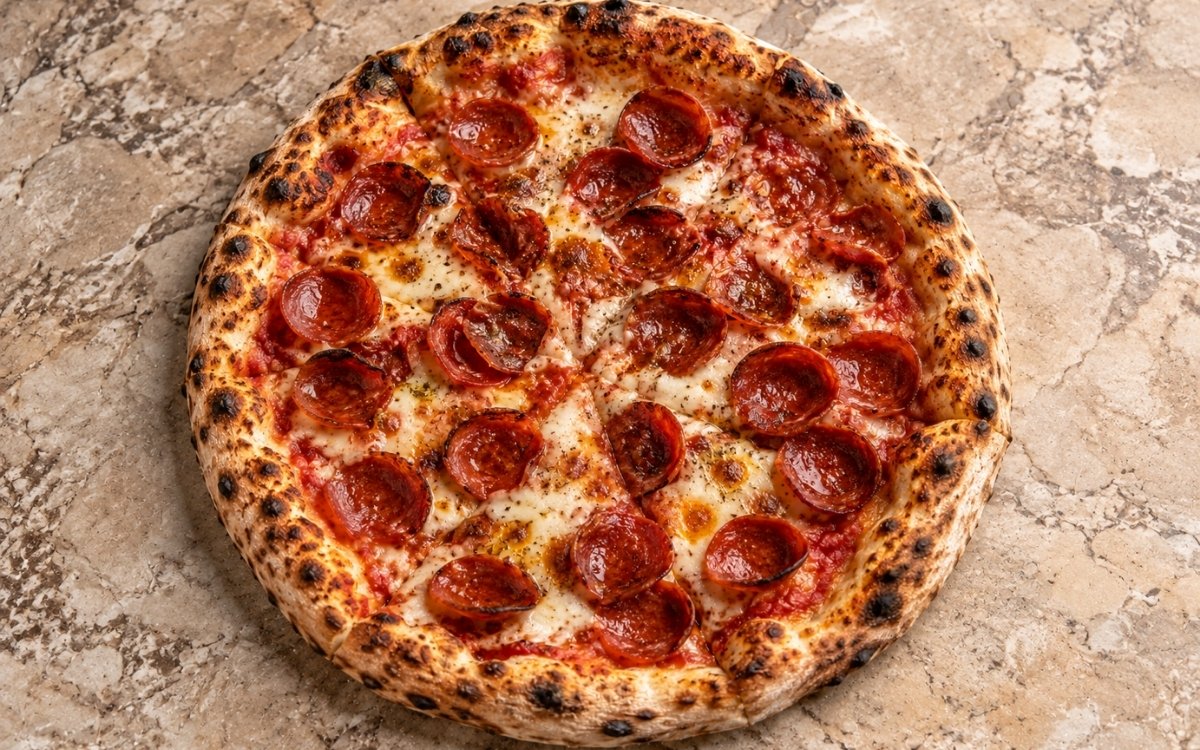
- Transfer the shaped dough to a lightly floured peel. Spread about 100–120g sauce over the dough, leaving the rim bare. Add about 110–125g grated mozzarella evenly over the sauce. Scatter 45–55g pepperoni across the cheese. Add a small sprinkle of Parmesan or Pecorino if using. Pepperoni should sit on top of the cheese so it can crisp and curl into cups. Do not overload the pizza. Too much sauce, cheese, or pepperoni makes the center heavy and slows bake-through. Placing the pepperoni directly on the cheese's surface, rather than tucked beneath it, is exactly what lets each slice curl freely as its edges render and crisp in the direct oven heat.
Bake
- Launch the pizza onto the hot steel or stone. Bake for about 5–7 minutes, then rotate if needed. Continue baking another 2–3 minutes, or until the crust is golden and blistered, the cheese is fully melted with browned spots, and the pepperoni is curled and crisped at the edges. If the bottom is done but the top needs more colour, switch briefly to the broiler / grill for 30–90 seconds, watching closely. The pizza is ready when the rim is puffed and browned, the underside is crisp and well-coloured, the cheese is bubbling with some toasted spots, the pepperoni has released a little fat and formed cups, and the center is cooked through and not wet or soupy. That rotation partway through accounts for how unevenly a home oven's heat is often distributed, protecting the crust from browning considerably faster on one side than the other.
Bake the Remaining Pizzas
- Repeat with the remaining dough balls, shaping and topping one pizza at a time. Keep the remaining dough covered while you work. If your stone or steel loses heat between pizzas, give it a few minutes to recover before launching the next one. Giving the baking surface real time to recover its heat between pizzas protects each subsequent pie from the slower, paler bake a cooled stone or steel would otherwise produce.
Finish and Serve
- Let each pizza sit for 1–2 minutes after baking so the cheese and sauce settle slightly. Finish with a light pinch of dried oregano and a little black pepper if desired. Slice and serve hot. That brief rest lets the molten cheese firm up just enough to hold together cleanly when sliced, rather than sliding off the crust the moment a knife touches it.
Notes
Choosing low-moisture mozzarella specifically, rather than reaching for fresh, deserves genuine recognition as the detail most responsible for this pizza's classic Italian-American character. Fresh mozzarella carries considerably more water, and that excess moisture would work directly against the clean, stable, browning melt this style depends on — low-moisture mozzarella is what actually delivers the bubbling, spotted surface this pizza is known for.
Placing the pepperoni on top of the cheese rather than underneath it deserves the same attention this technique receives throughout this collection's other topped, baked dishes. That positioning gives every slice direct exposure to the oven's heat, letting its edges render and curl into the characteristic little cups this style of pepperoni pizza is specifically prized for — tucked beneath the cheese, it simply couldn't develop that same texture.
Keeping the sauce genuinely thicker than a classical Margherita sauce, rather than loose, deserves real attention given how directly it protects the crust beneath it. A looser sauce soaks into the dough during baking, slowing the center's ability to brown and set properly — the thicker consistency specified here is a deliberate choice suited to this pizza's own style and topping load.
The recipe's own explicit guidance to keep toppings measured rather than generous deserves genuine respect as a real, functional principle rather than a stylistic preference. Too much sauce, cheese, or pepperoni together adds real weight and moisture that the pizza's brief bake time simply isn't built to cook through completely, risking a center that stays heavy and underbaked.