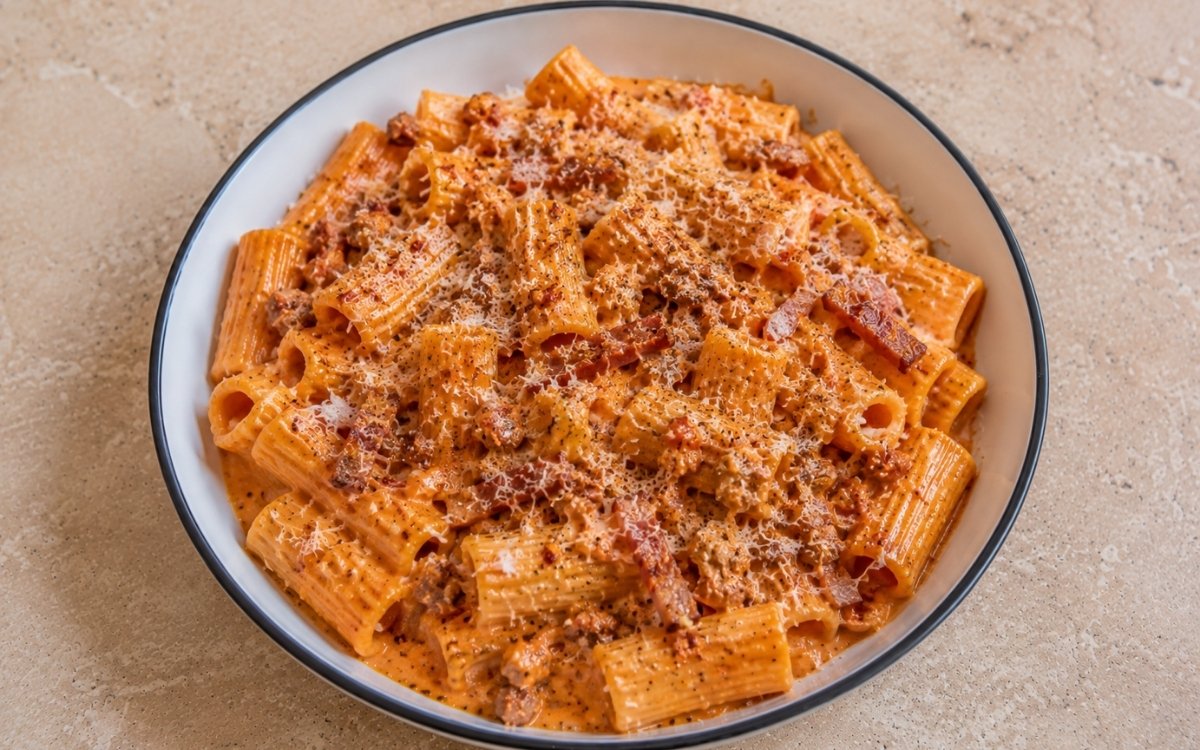
Ingredients
Method
Heat the Water and Prepare Everything
- Fill a large pot with 4 litres of water, cover it and set it over high heat straight away, so it reaches a full rolling boil by the time the sauce needs the pasta. While it heats, cut the 150g of guanciale into 5mm strips, remove the casings from the 120g of sausage, mince the 2 garlic cloves and measure the passata, red pepper flakes and olive oil. Once the water boils, stir in approximately 40g of fine sea salt, enough that it tastes assertively like the sea, then keep it at a gentle boil. Set out a ladle, a heatproof jug for pasta water and tongs beside the stove. That complete preparation is what leaves no time for searching during the 30-second egg window later.
Make the Egg and Cheese Paste
- In a medium bowl, combine the 3 egg yolks, 80g of finely grated Pecorino Romano, 40g of finely grated Parmigiano-Reggiano and 2g of freshly cracked black pepper. Whisk vigorously with a fork or small whisk until completely smooth, with no streaks of unincorporated yolk and no lumps of dry cheese; it should be a thick, paste-like mixture. Leave the bowl at room temperature beside the stove for the few minutes the sauce needs, because a cold paste lowers the pan temperature and can make the proteins tighten before they emulsify. That pre-dispersed yolk and cheese is what makes the final emulsion forgiving, and the sharp Pecorino with the milder Parmigiano gives a more balanced cheese flavour than either alone.
Render the Guanciale from Cold
- Place the guanciale strips in a large, deep skillet over medium heat, starting cold rather than adding them to a preheated pan. Cook for 6–8 minutes, stirring occasionally, until the edges are deep golden and the fat has melted into a pool of clear, sweet pork fat. Use a slotted spoon to move the guanciale to a plate, leaving every drop of rendered fat in the pan, because that fat is a primary flavour ingredient of the sauce. Setting the guanciale aside now stops it drying out while the sausage browns. That gradual cold start is what renders the fat from within each strip and leaves the edges crisp but the centres slightly yielding.
Brown the Sausage
- Add the 15ml of olive oil to the guanciale fat in the pan and increase the heat to medium-high. Crumble the sausage meat directly into the pan, breaking it into irregular pieces no larger than 1–1.5cm so it spreads evenly through the sauce but still shows as distinct pieces. Cook for 5–6 minutes, stirring only now and then, so the pieces sit in direct contact with the hot pan for 60–90 seconds at a time. Continue until no pink remains and most surfaces are deeply browned. That contact browning is what gives the sauce savoury depth that simply cooked-through sausage cannot provide.
Build the Tomato Base and Start the Pasta
- Reduce the heat to medium-low, add the minced garlic and cook for 60 seconds, stirring continuously, until fragrant but not browned. Add the 200g of passata and the 1g of red pepper flakes, scraping up the browned bits from the pan, then lower the rigatoni into the boiling water and cook it for 1 minute less than the package directions. Simmer the base for 3–4 minutes until it looks slightly reduced and tastes deeper and sweeter, then stir in the guanciale and turn the heat to its lowest setting, stirring occasionally. If it thickens, loosen it with a spoonful of pasta water. That overlap is what lets pasta and sauce finish together.
Finish the Pasta in the Sauce
- Before lifting any pasta, ladle out 300ml of the starchy cooking water and set it aside. Use tongs to move the rigatoni straight into the skillet, which brings roughly 40–50ml of pasta water with it, then toss vigorously over medium heat for 1 minute so every tube is coated. Add 100ml of the reserved water and keep tossing; the pasta finishes cooking in this flavoured medium and should be perfectly al dente after about 1 more minute. The ridged exterior and hollow centre of rigatoni are what carry the chunky sauce and survive the vigorous tossing without breaking.
Create the Creamy Egg Emulsion
- Remove the skillet from the heat completely and rest it for exactly 30 seconds; do not shorten this to save time. Pour in the egg paste and begin tossing at once and without pausing, lifting the pasta from the bottom and folding it over the top in a continuous circular motion. Add the reserved water in 30ml increments if the sauce tightens, and keep tossing for 2–3 minutes until it flows slightly when the pan is tilted and coats every tube rather than pooling. That 30-second rest is what drops the pan below the point where the yolks scramble on contact.
Serve Immediately
- Divide the pasta among four warm bowls without delay, because the emulsion tightens as it cools and the sauce loses its flowing creaminess within 2–3 minutes of plating. Scatter extra finely grated Pecorino Romano generously over each bowl and finish with a confident crack of fresh black pepper. Carry the bowls straight to the table. That immediate serving is what keeps the sauce glossy and clinging instead of heavy and set.
Notes
The 30-second rest deserves genuine recognition as the technique most directly responsible for whether the sauce turns out silky or scrambled. The skillet and pasta hold enough residual heat to warm the egg paste into an emulsion, but a pan straight off the burner makes the yolk proteins seize into curds that no amount of tossing can undo.
Starting the pasta water early and adding the rigatoni while the tomato base simmers deserves the same attention any multi-pan timing needs in a busy kitchen. With the paste, the pan fat and the pasta water all ready at once, the sauce never sits tightening while the pasta catches up, which is what makes a 25-minute cook realistic.
Browning the sausage in the rendered guanciale fat deserves genuine respect as the detail most directly responsible for the savoury depth of the tomato base. Pieces left in contact with the hot pan for 60–90 seconds at a time brown and leave fond that dissolves into the passata, whereas constant stirring only steams the sausage and leaves the sauce flat.
Reserving 300ml of starchy pasta water deserves attention as a genuine, checkable cue for sauce consistency rather than a loose guess. The finished sauce should flow slightly when the pan is tilted, and adding water in 30ml increments lets the starch loosen the emulsion precisely instead of flooding it before the yolks and cheese have properly bound.