Ingredients
Method
Prep the Ingredients
- Cube the guanciale (it will shrink by half while cooking). Slice the garlic, grate all the Pecorino Romano, and separate 3 egg yolks into a large heatproof bowl.
Make the Pecorino–Egg Base
- To the bowl with egg yolks, add black pepper and about ¾ of the grated Pecorino Romano. Mix to form a thick paste. Set aside.
Render the Guanciale
- Place guanciale into a cold pan, then turn on medium heat. Slowly render the fat, stirring occasionally, until the guanciale turns deeply golden and crispy. Remove the crispy pieces and reserve. Carefully pour off half of the guanciale fat into a heatproof container — let it cool.
Brown the Sausage
- Return the pan to medium-high heat with the remaining guanciale fat. Add the hot Italian sausage and break it apart with a wooden spoon. Cook until most liquid evaporates and the sausage starts to fry and brown.
Toast the Garlic & Build the Tomato Sauce
- About 2 minutes before the sausage is fully browned, add the sliced garlic. Toast lightly until golden at the edges. Add tomato passata and a splash of water to rinse the container clean—add that too. Season with a pinch of salt and bring to a gentle simmer.
Cook the Pasta
- Bring a medium pot of salted water to a boil. Add rigatoni and cook 2 minutes less than package al dente time (e.g., if the box says 12 minutes, cook for 10).
Temper the Egg Mixture
- Add the cooled guanciale fat to the egg–pecorino mixture. Then whisk in a few tablespoons of hot pasta water to loosen and gently warm it. You’re building the creamy base that will become the final sauce.
Combine Pasta with Sauce
- Transfer the undercooked pasta directly into the sausage–tomato sauce. Simmer for 3–4 minutes, stirring often, until the pasta is al dente and coated.
Create the Final Sauce
- Turn off the heat under the pasta water pot. Place the bowl with the egg mixture on top so that only gentle steam warms it — do not overheat. Pour the hot pasta and sauce mixture into the egg bowl. Stir gently with a spatula until it becomes thick, glossy, and velvety. Add pasta water as needed to adjust consistency.
Serve
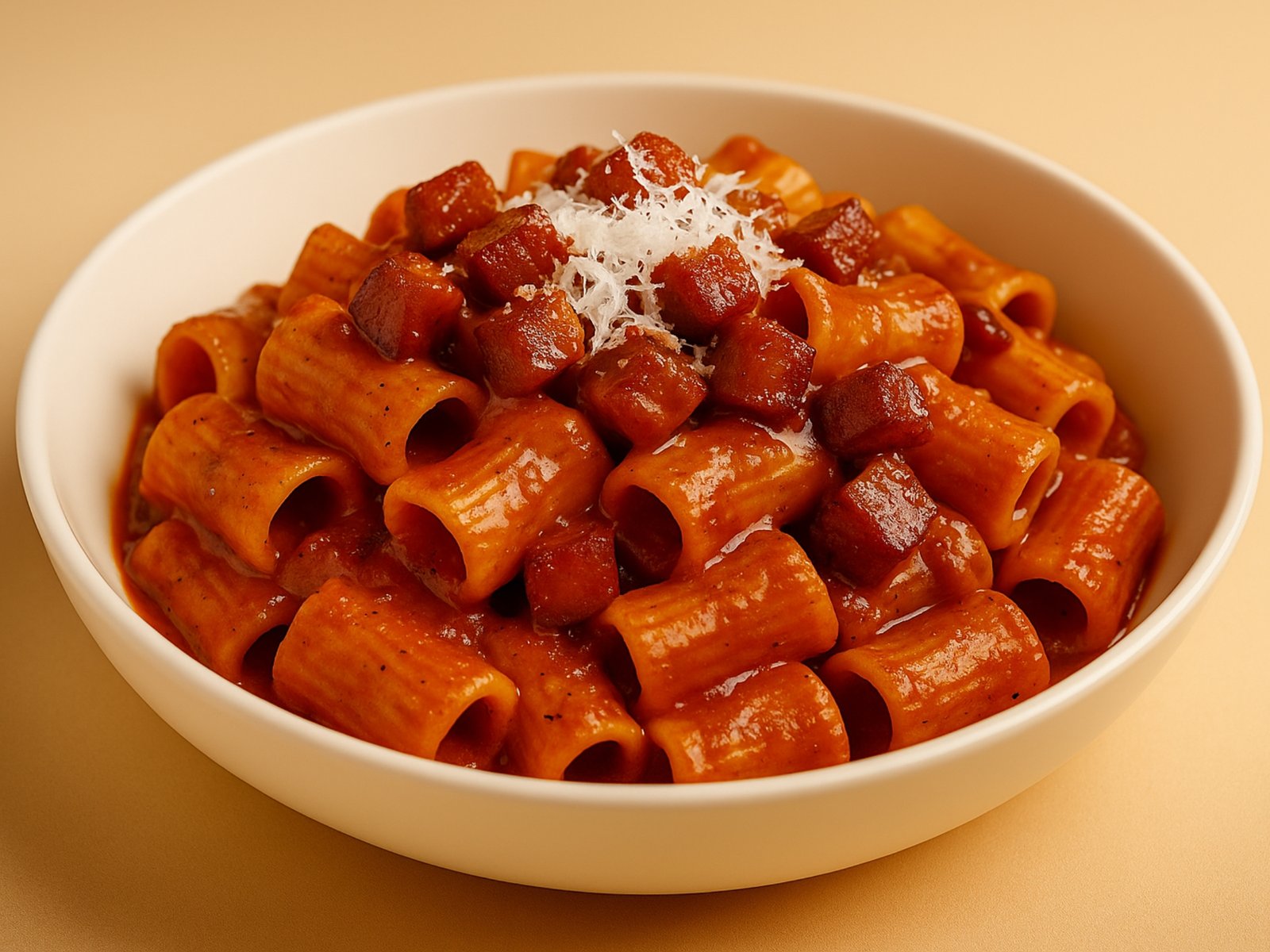
- Plate in warm shallow bowls. Top each serving with crispy guanciale and a generous snowfall of Pecorino Romano.
Notes
- Start guanciale in a cold pan — slow rendering = maximum flavor and perfect crispness.
- Don’t overheat the egg mixture. Only steam should warm it, never direct heat.
- Rigatoni is ideal, but mezze rigatoni, paccheri, or even penne rigate work well.
- For a richer sauce, add an extra tablespoon of guanciale fat when tempering the egg mixture.
- If your sauce looks too thick, thin with tablespoons, not cups, of pasta water.