Ingredients
Method
Boil the Pasta Water
- Bring a large pot of water to a rolling boil and salt it well. Keep it ready while you make progress on the sauce. The pasta water should taste properly seasoned. This is your only chance to season the pasta itself from within. That genuinely well-seasoned water is the only real opportunity to flavour the pasta at its own core, from the inside out, rather than relying entirely on the surrounding sauce and cheese to carry all the seasoning.
Build the Meat Sauce Base
- Heat the olive oil in a wide heavy pan or sauté pan over medium heat. Add the diced onion and cook for 5–7 minutes, stirring regularly, until softened and lightly translucent. Add the garlic and cook for 30–45 seconds, just until fragrant. Do not brown the garlic deeply. Burnt garlic makes the entire sauce bitter and muddy. That brief, watched garlic step reflects how little margin finely minced garlic actually has between fragrant and burnt — a distinction genuinely worth respecting given how far that bitterness would carry through the entire finished sauce.
Brown the Meat Properly
- Add the ground beef and ground pork shoulder. Break the meat up well and cook over medium to medium-high heat until the moisture cooks off and the meat begins to brown rather than steam, about 10–12 minutes. This step is critical. If the pan is crowded or the heat is too low, the meat releases liquid and stews instead of browning. You want real color on the meat for depth of flavor. Continue cooking until most of the pink is gone and you can see browned bits forming on the bottom of the pan. Season with the salt, black pepper, oregano, and chili flakes if using. That real, developed browning — distinct from simply losing the meat's raw colour — is specifically what builds the fond responsible for this sauce's actual depth, a distinction the recipe's own notes treat as one of the most important flavour steps in the whole dish.
Add Tomato Paste and Deglaze
- Add the tomato paste and cook it into the meat for 1–2 minutes, stirring constantly, until it darkens slightly and smells sweeter and more concentrated. Pour in the wine and scrape up the browned bits from the bottom of the pan. Simmer for 1–2 minutes until the alcohol smell cooks off and the liquid reduces noticeably. The tomato paste should taste cooked, not raw, before the tomatoes go in. That deglazing step lifts every bit of the fond built during browning directly into the liquid, working real, concentrated flavour back into the sauce rather than leaving it stuck to the bottom of the pan.
Simmer the Sauce
- Add the crushed tomatoes or passata and 120ml water. Stir well and bring to a gentle simmer. Lower the heat and cook uncovered for 20–25 minutes, stirring occasionally. The finished sauce should be rich and cohesive but still slightly looser than a stovetop pasta sauce, because the pasta will continue absorbing moisture in the oven. If it becomes too thick, add a little more water. If it is very sharp in acidity, add the sugar only if needed. Taste and adjust salt at the end. If using fresh basil, stir it in at the end of the simmer. That deliberately looser consistency, distinct from a typical stovetop sauce, accounts directly for how much additional liquid the pasta will keep absorbing throughout the bake still ahead.
Cook the Pasta Just Shy of Al Dente
- While the sauce simmers, cook the rigatoni or penne in the boiling salted water until 2–3 minutes less than package al dente time. This is a key turning point. The pasta must be undercooked slightly because it finishes cooking in the sauce and oven. If you boil it fully now, it becomes swollen and soft after baking. Reserve about 120ml pasta water, then drain the pasta. That deliberate undercooking leaves genuine structural headroom for the two remaining cooking stages ahead — pasta boiled to full al dente now would have nowhere left to go but soft and overcooked by the time the casserole finishes baking.
Combine Pasta and Sauce
- Preheat the oven to 220°C / 425°F. Transfer the drained pasta to a large mixing bowl or back to the pot. Add about three-quarters to four-fifths of the meat sauce and toss thoroughly. Add a small splash of reserved pasta water only if the mixture seems too tight. Fold in about 170g of the shredded mozzarella and about 30g of the Parmigiano-Reggiano. The pasta should look generously coated and slightly saucy, not dry. If it already looks dry before baking, it will be too dry after baking. That specific, checkable visual cue — saucy rather than dry, before the dish ever reaches the oven — is a genuine, reliable safeguard, since the bake's own dry heat only ever pulls moisture further, never adds it back.
Assemble the Pasta al Forno
- Grease a medium baking dish lightly with olive oil or butter. Spread a thin layer of the remaining sauce on the bottom. Add the pasta mixture and level it gently without compacting it too hard. Spoon the remaining sauce over the top in patches so the surface stays moist. Top with the remaining shredded mozzarella, the torn fresh mozzarella if using, and the remaining Parmigiano-Reggiano. Keep the cheese distributed evenly, but do not bury the top under an excessively thick layer. Too much cheese can insulate the surface and make the bake greasy rather than properly browned. Leveling the pasta gently, rather than pressing it down firmly, protects its own airy structure from being compacted before it ever has a chance to bake through properly.
Bake
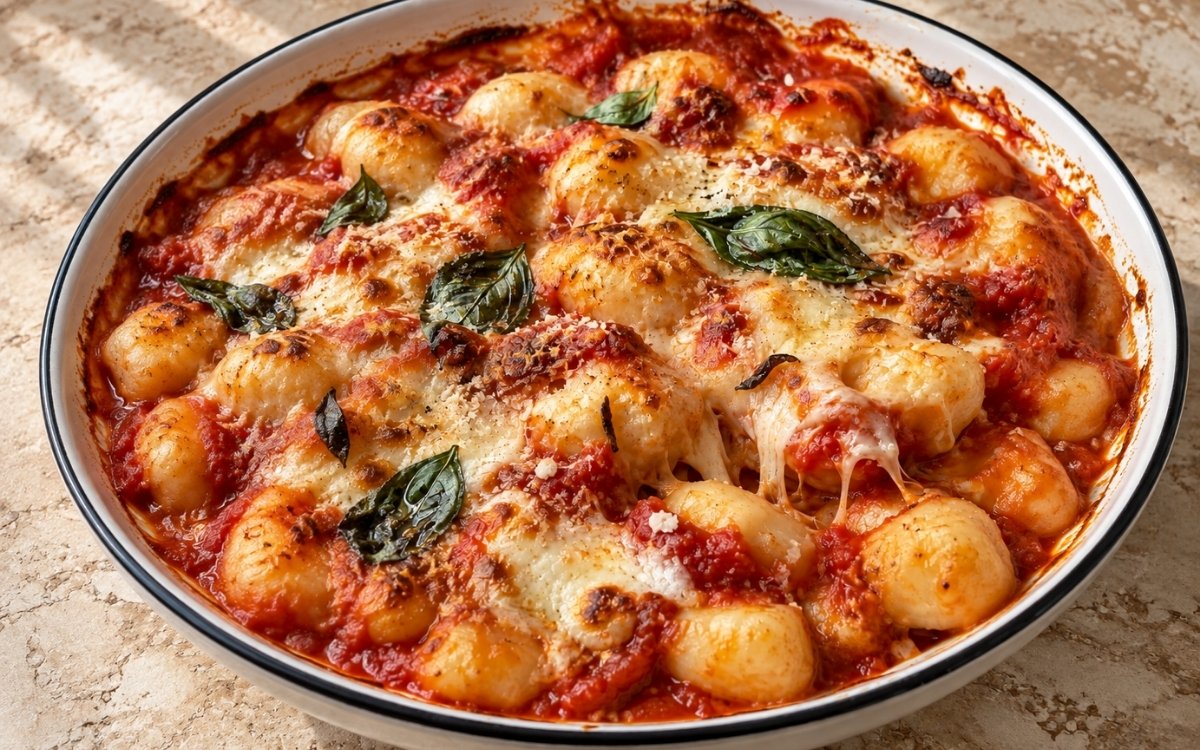
- Bake uncovered at 220°C / 425°F for 18–22 minutes, until the cheese is fully melted, the edges are bubbling vigorously, and browned patches begin to form on top. If needed, finish under the broiler/grill for 1–2 minutes to deepen the top color, but watch closely. The top should be browned and bubbling, not burnt. The edges should show clear signs of caramelization, and the center should be visibly hot and fluid. That brief, closely watched broiler finish, used only if needed, builds real extra colour on top quickly without extending the overall bake long enough to dry the casserole out.
Rest Before Serving
- Remove from the oven and let the dish rest for 10 minutes before serving. This rest is important. Straight from the oven, the sauce is too loose and the cheese is still aggressively molten. The short rest allows the structure to settle so the portions lift cleanly while still staying creamy and saucy. That extended rest lets the whole casserole's internal structure firm up just enough for clean, well-defined portions, without letting it sit so long that the sauce and cheese cool past their intended creamy, fluid state.
Notes
Cooking the ground beef and pork until they actually brown, rather than release liquid and stew, deserves recognition as the technique most directly responsible for this sauce's real depth. The recipe's own explicit warning that a crowded pan or too-low heat causes the meat to steam instead of browning reflects a genuine, common failure point — real colour on the meat is specifically what builds the fond this whole sauce depends on for its final flavour.
Deglazing with wine right after the tomato paste has been cooked into the meat deserves the same attention this technique receives throughout this collection's other browned-meat sauces. That step lifts every bit of the fond stuck to the pan's bottom directly into the liquid, working concentrated flavour back into the sauce rather than leaving it wasted on the cookware.
Keeping the sauce deliberately looser than a normal stovetop pasta sauce before assembly deserves genuine attention as a real, functional adjustment rather than an inconsistency. The pasta continues absorbing considerable moisture throughout its full time in the oven, and a sauce built to a typical stovetop consistency would leave the finished casserole noticeably drier and tighter than intended.
Undercooking the pasta by a full 2 to 3 minutes deserves genuine respect as the recipe's own explicitly named key turning point and non-negotiable step. That pasta still faces both a sauce toss and a complete oven bake ahead of it, and pasta boiled to normal al dente simply lacks the structural headroom to survive both stages without turning swollen and soft.