Ingredients
Method
Prepare and Parboil Potatoes
- Wash 800g baby potatoes and cut in half. Place in a pot, cover with water, salt the water generously (no additional salt beyond what’s listed is required), and bring to a boil. Cook 8 minutes until just tender when pierced—there should be slight resistance; they’ll finish in the oven. Drain thoroughly and let steam dry 2 minutes in the colander.
Season the Potatoes
- Preheat oven to 210°C (410°F). Toss parboiled potatoes in a large bowl with 40ml olive oil, 8g smoked paprika, 6g salt, 3g garlic powder, 2g dried rosemary, and 2g black pepper until evenly coated. Make sure seasoning gets into the cut surfaces; that’s where browning happens.
Roast Until Crispy
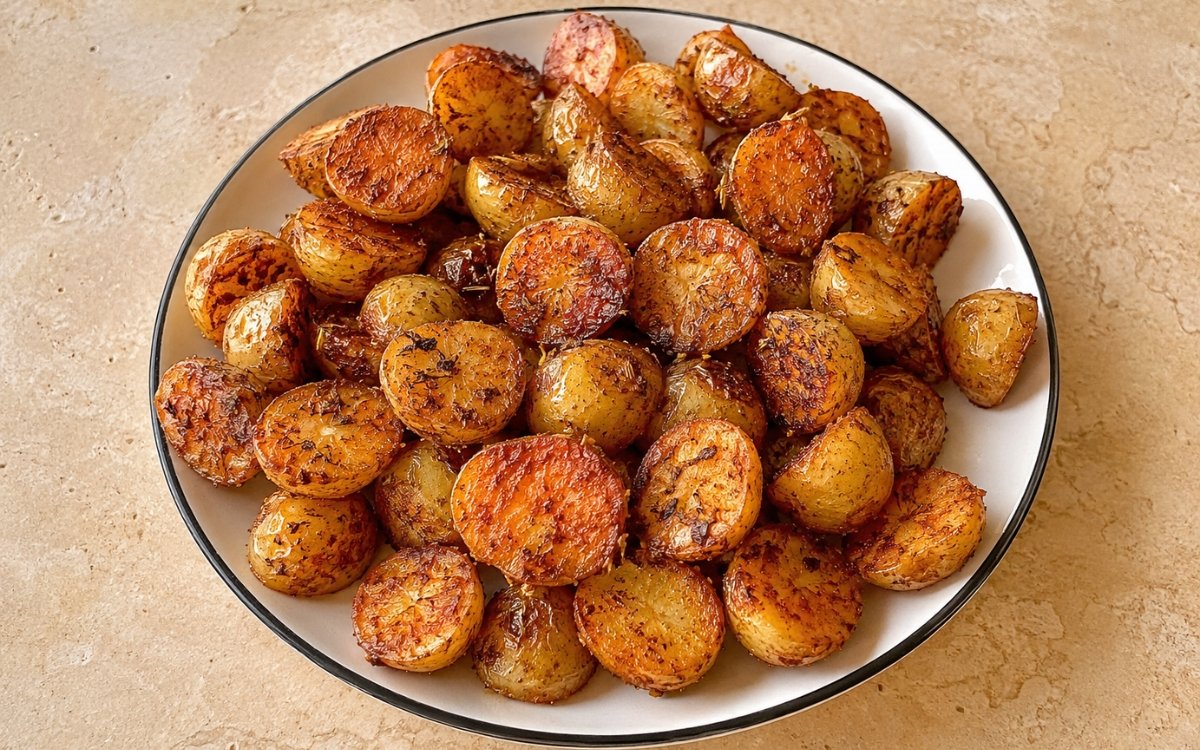
- Spread potatoes cut-side down on a parchment-lined baking sheet in a single layer. Roast 25–30 minutes without stirring so the cut faces can brown and crisp; you’re looking for golden bottoms and crackled skins. If your oven runs hot and paprika darkens quickly, rotate the tray once (don’t flip the potatoes).
Finish with Lemon
- Remove from oven and immediately drizzle with 15ml lemon juice. Toss gently and serve hot—lemon should taste fresh and bright, not cooked.
Notes
Parboiling for exactly 8 minutes, aiming for slight resistance rather than full tenderness, is a deliberate calibration rather than an approximate step. Potatoes boiled too far before roasting risk falling apart once they hit the hot oven and are tossed with oil and seasoning; potatoes not boiled enough won't have the head start on tenderness that lets the roasting stage focus primarily on crisping rather than cooking through.
Working the seasoning specifically into the cut surfaces, rather than just coating the rounded skin side, matters because that flat, exposed cut face is where the most direct, sustained pan contact — and therefore the most browning — happens during roasting. A well-seasoned skin with a bare cut face wastes the potential of the most crisp-prone part of each potato.
Adding the lemon juice only after the potatoes come out of the oven, rather than earlier in the seasoning stage, preserves its brightness. Lemon juice exposed to sustained oven heat mellows and loses some of its fresh, sharp character — finishing with it at the very end keeps that citrus tasting genuinely vivid.