Ingredients
Method
Prep the Sauce
- In a small bowl, combine the oyster sauce, light soy sauce, fish sauce, dark soy sauce, sugar, and white pepper. Stir until the sugar dissolves. Set aside. Having the sauce fully mixed and ready before the wok ever heats up matters directly given how fast this dish actually moves — there's no real time to measure and stir individual seasonings once the noodles are already in the pan.
Prep the Noodles
- If using fresh rice noodles, separate them gently by hand. If they are cold and stuck together, warm them very briefly: 10–20 seconds in the microwave, or a few seconds of steam exposure. Do not soak them in water. If using dried noodles, boil until just shy of tender, drain well, and toss very lightly with a little oil if needed. They should finish cooking in the wok. Warming cold, stuck-together fresh noodles just enough to separate them, rather than soaking them in water, is what protects them from picking up excess moisture that would otherwise prevent proper charring once they hit the hot wok.
Prep the Chicken and Vegetables
- Slice the chicken thinly so it cooks fast and stays tender. Wash and prep the Chinese broccoli as described above. Keep stems and leaves separate because they cook at different speeds. That genuine speed difference between stems and leaves is exactly why they're kept apart through prep — combining them from the start would force a real compromise between undercooked stems and overcooked, wilted leaves.
Cook in Batches for Best Wok Hei
- For the most classical result, cook this recipe in 2 batches rather than crowding the pan. Heat a wok or large heavy skillet over high heat until very hot. Add 1 to 1½ tbsp oil. Add half the chicken and stir-fry until just cooked and lightly browned. Remove. Add a little more oil if needed, then add half the garlic and half the Chinese broccoli stems. Stir-fry briefly, about 20–30 seconds. Add half the Chinese broccoli leaves and toss just until wilted. Push everything to one side. Crack in 2 eggs and scramble lightly. Add half the noodles and half the sauce. Toss and stir-fry, but also let the noodles sit against the hot wok in places to pick up char. Return the chicken to the wok and toss everything together until glossy and lightly smoky. Transfer out and repeat with the second half. That deliberate batching, rather than cooking everything at once, is what keeps the wok's own surface genuinely hot throughout — a full batch of ingredients dropped in together would drop the temperature considerably, steaming the noodles rather than letting them char.
Important Cooking Technique
- The key to good Pad See Ew is high heat plus restraint. Do not constantly stir every second. After tossing, let the noodles sit briefly against the wok so they develop dark caramelized spots, smoky char, and slightly chewy edges. That charred noodle flavor is one of the defining features of the dish. That deliberate restraint — genuinely letting the noodles sit still against the hot metal rather than tossing continuously — is precisely what gives direct, sustained contact enough time to actually build real char, something constant motion would never allow to develop.
Final Stage
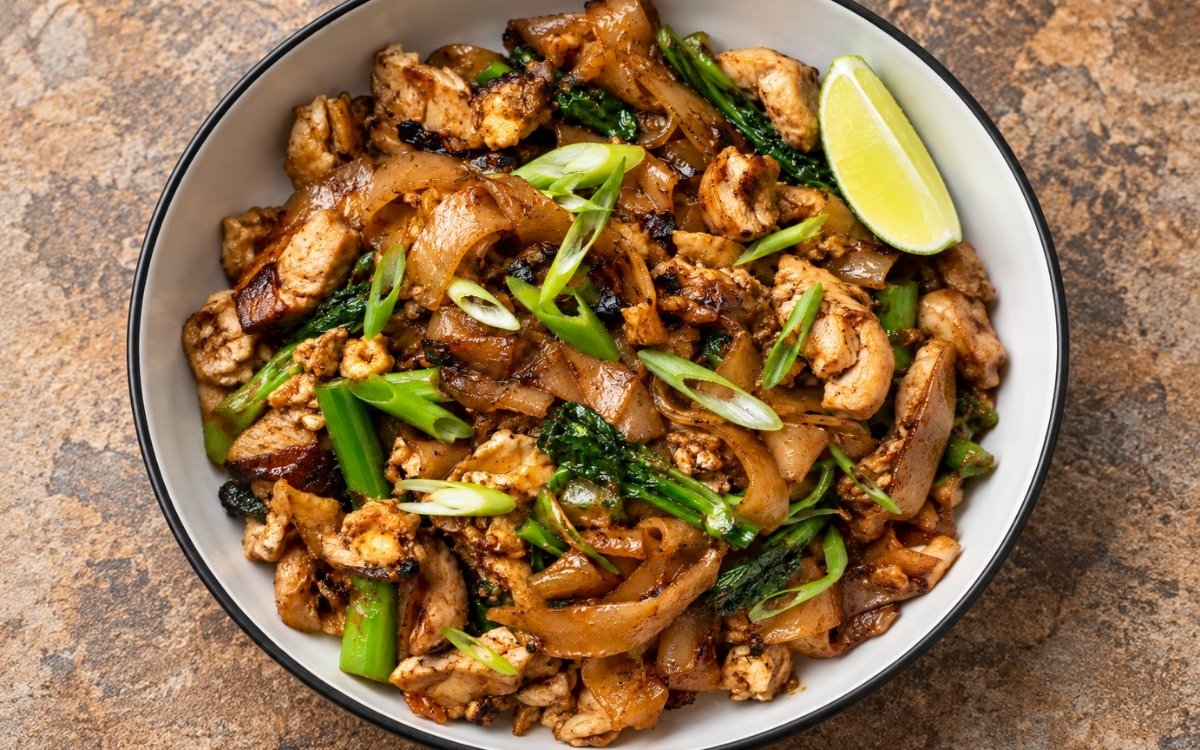
- Taste and adjust if needed: a touch more light soy for salt, a pinch more sugar if it tastes too sharp, a few drops of fish sauce for depth. Serve immediately. Top with sliced scallions if using, a lime wedge on the side, and chili flakes or chili vinegar if desired. Serving the moment each batch comes together captures the dish at its genuinely glossy, hot, and smoky best — that specific, freshly charred quality fades noticeably the longer the noodles sit.
Notes
Cooking in two separate batches, rather than attempting the full recipe at once, deserves genuine recognition as the technique most directly responsible for whether this dish achieves real wok hei. The recipe's own explicit note that an overcrowded pan causes the noodles to steam instead of char reflects a real, common failure point in home stir-frying — batching is specifically what keeps the wok's surface hot enough to actually build that char.
Letting the noodles sit briefly against the hot wok after tossing, rather than stirring continuously, deserves the same attention this technique receives throughout classical Thai and Chinese wok cookery generally. The recipe's own framing of "high heat plus restraint" as the real key to this dish reflects genuine understanding that constant motion, however instinctive, actually works against the dark, caramelized spots this dish depends on for its defining flavour.
Keeping the Chinese broccoli's stems and leaves separate all the way through preparation and cooking deserves attention as a deliberate, functional choice given how differently the two parts actually cook. Adding them together from the very start would force a genuine compromise — either the leaves overcook and wilt too far while the stems catch up, or the stems stay undercooked while the leaves are already done.
Having every single component fully prepped and staged before the wok is ever heated deserves genuine respect as a real, necessary discipline for this particular dish. The recipe's own explicit warning that "once the wok is hot, the dish moves very fast" reflects a real timing reality — there simply isn't room to measure, chop, or slice anything once the actual cooking has begun.