Ingredients
Method
Prepare the Fruit
- Peel the oranges and cut away as much white pith as possible, because too much pith can make the smoothie taste bitter. Separate into segments and remove any seeds. Use frozen mango for the best thick, creamy texture. If using fresh mango, dice it and freeze it first until very cold and firm. Cold fruit is what gives this smoothie its thick creamsicle texture without watering it down. That thorough, deliberate pith removal protects the smoothie's own clean, bright flavour — any residual pith left clinging to the segments would introduce real, unwanted bitterness directly into the blend.
Build the Blender
- Add the Greek yogurt, 180ml milk, vanilla, orange zest, salt, and orange segments to the blender first. Then add the frozen mango on top. Blend until smooth, stopping once or twice to scrape down the sides. If the blender struggles, add a little more milk or a splash of orange juice, 1 tablespoon at a time. The smoothie should be thick, glossy, and completely smooth, with no orange fibre chunks or mango lumps left. That specific layering order gives the blades genuine liquid and yogurt to work with immediately, letting the frozen mango settle into an already-moving mixture rather than sitting resistant above the blades.
Adjust the Texture and Sweetness
- Taste and adjust. Add honey or maple syrup only if the fruit is not sweet enough. Blend again briefly. If the smoothie is too thick to pour, add a small amount of milk. If it becomes too thin, add a little more frozen mango. Keep the smoothie thick enough to support the yogurt swirl and fruit garnish on top. That deliberate attention to thickness protects the smoothie's own structural ability to visibly hold its garnish — a smoothie thinned too far would simply let that swirl and fruit sink in rather than sitting on top.
Fill the Glasses
- Divide the smoothie evenly among 4 chilled glasses, about 250ml each. Tap each glass lightly on the counter to settle the smoothie and level the top. That brief tapping settles any trapped air pockets and levels the surface, giving the garnish still to come a clean, even base to sit on.
Garnish
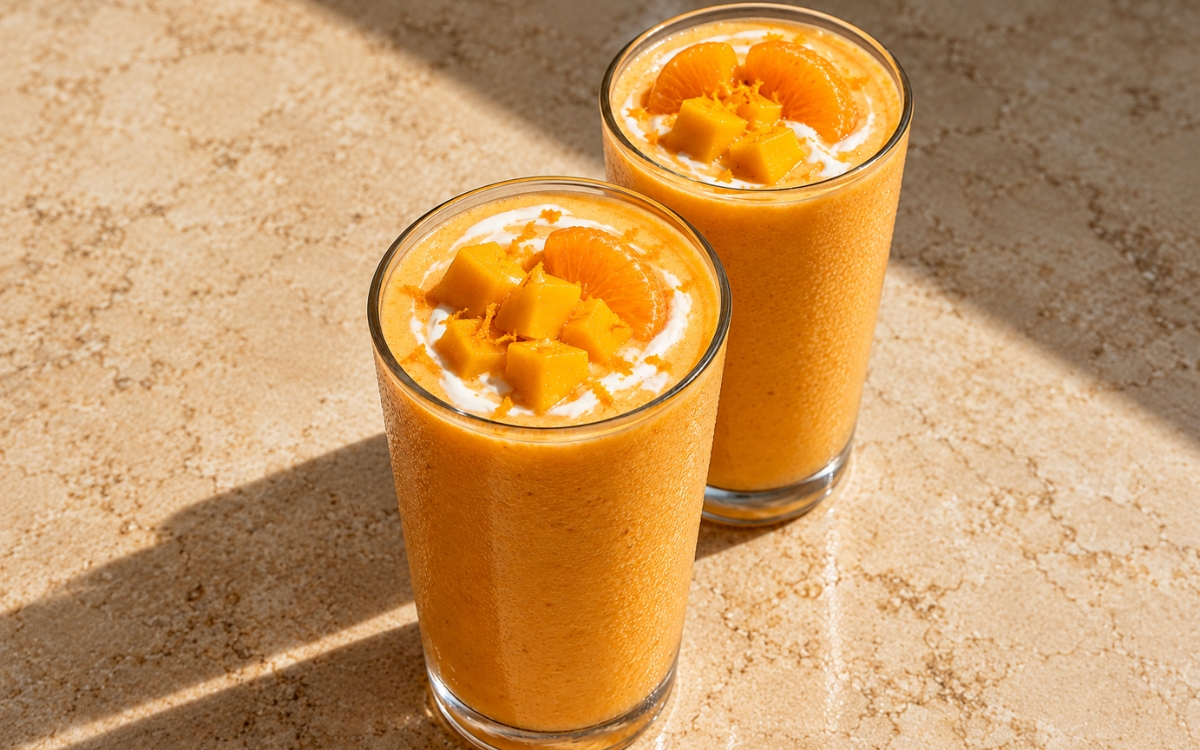
- Stir the extra Greek yogurt with a small splash of milk until just loose enough to drizzle. Spoon or swirl a little over each smoothie. Top with mango cubes, orange segments, and a little fresh orange zest. Serve immediately. That deliberately loosened yogurt, just fluid enough to drizzle, is what lets it actually swirl visibly over the smoothie's own surface rather than sitting as a thick, separate dollop.
Notes
Removing as much white pith as possible from the oranges deserves genuine recognition as the technique most directly responsible for this smoothie's real, clean sweetness. The recipe's own explicit warning that "too much pith can make the smoothie taste bitter" reflects a real, direct cause this preparatory step is specifically built to avoid before the fruit ever reaches the blender.
Using genuinely frozen mango, rather than fresh, deserves the same attention this technique receives throughout this collection's other thick, fruit-based smoothies. The recipe's own explicit note that "cold fruit is what gives this smoothie its thick creamsicle texture without watering it down" reflects a direct trade-off that fresh, room-temperature fruit simply couldn't match without diluting ice.
Keeping the finished smoothie genuinely thick enough to support its own garnish deserves genuine attention as a real, deliberate technique rather than an afterthought. The recipe's own explicit instruction to "keep the smoothie thick enough to support the yogurt swirl and fruit garnish on top" reflects real understanding of how directly the drink's own consistency affects whether that garnish stays visible or simply sinks in.
Starting with less liquid and adding more only as needed deserves respect as the detail responsible for this smoothie staying properly thick rather than thin. The recipe's own explicit framing of this as "the key to a thick smoothie instead of a thin drink" reflects real understanding of how easily excess liquid, added too liberally upfront, would compromise the whole finished texture.